Secondary Student Teaching
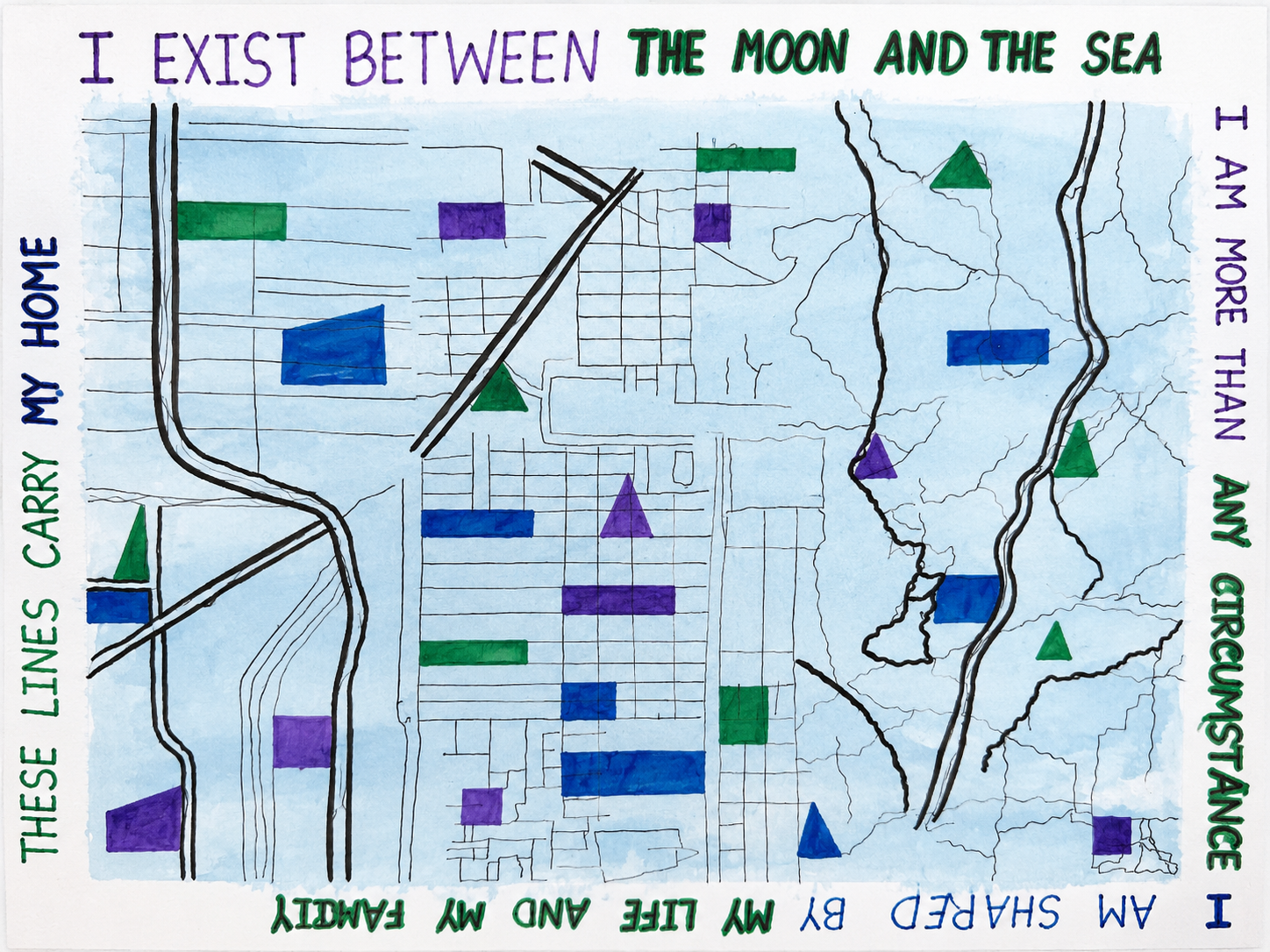
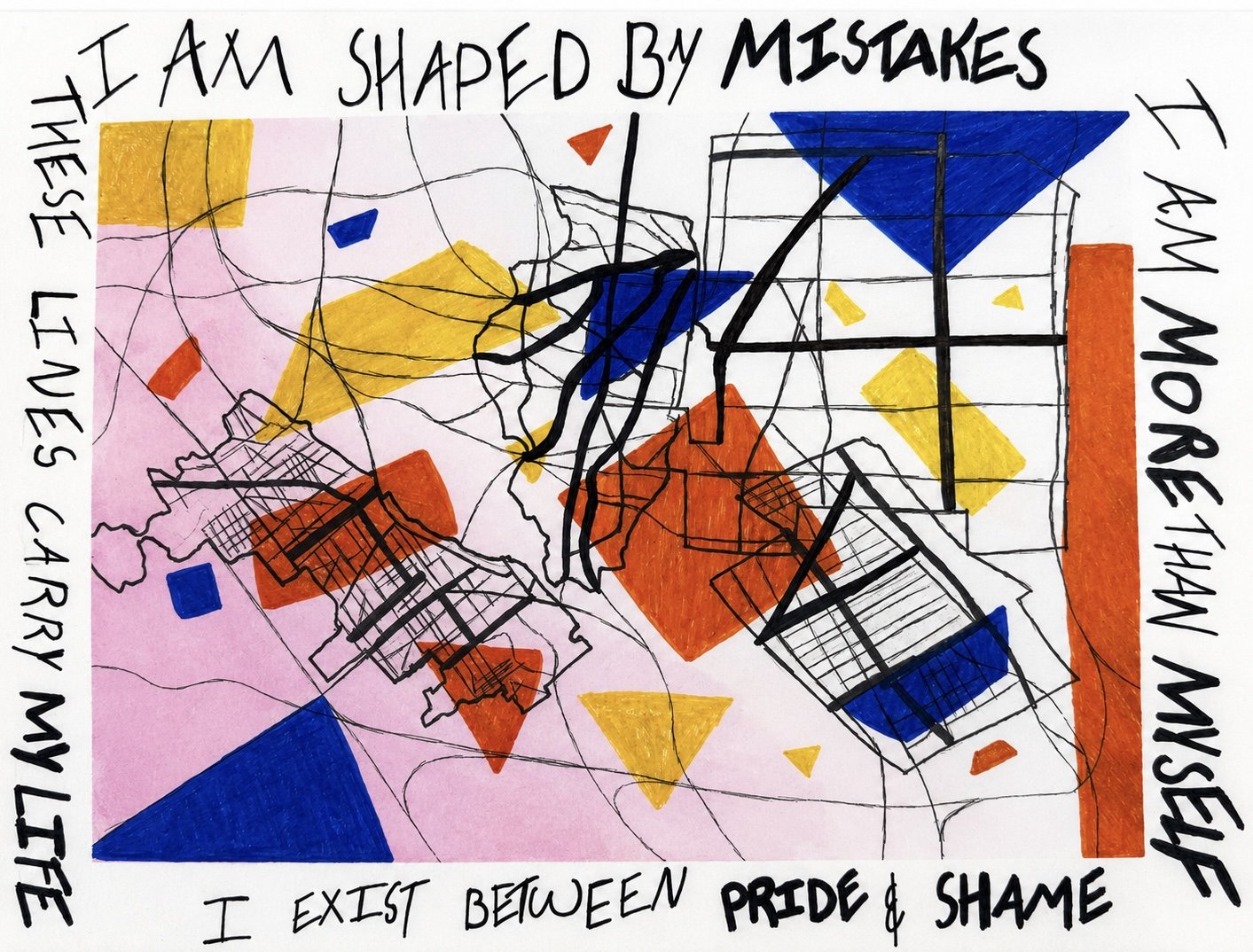
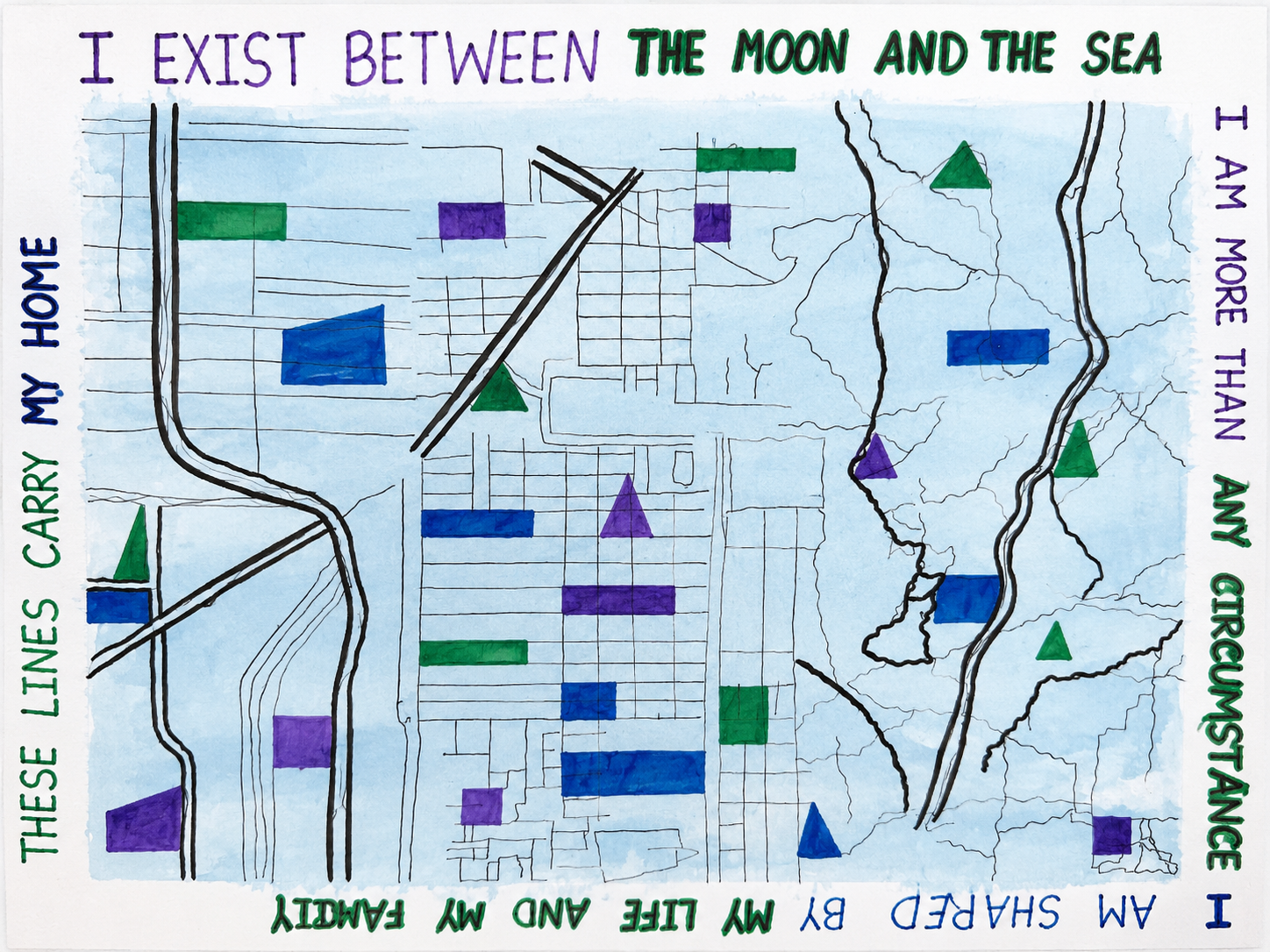
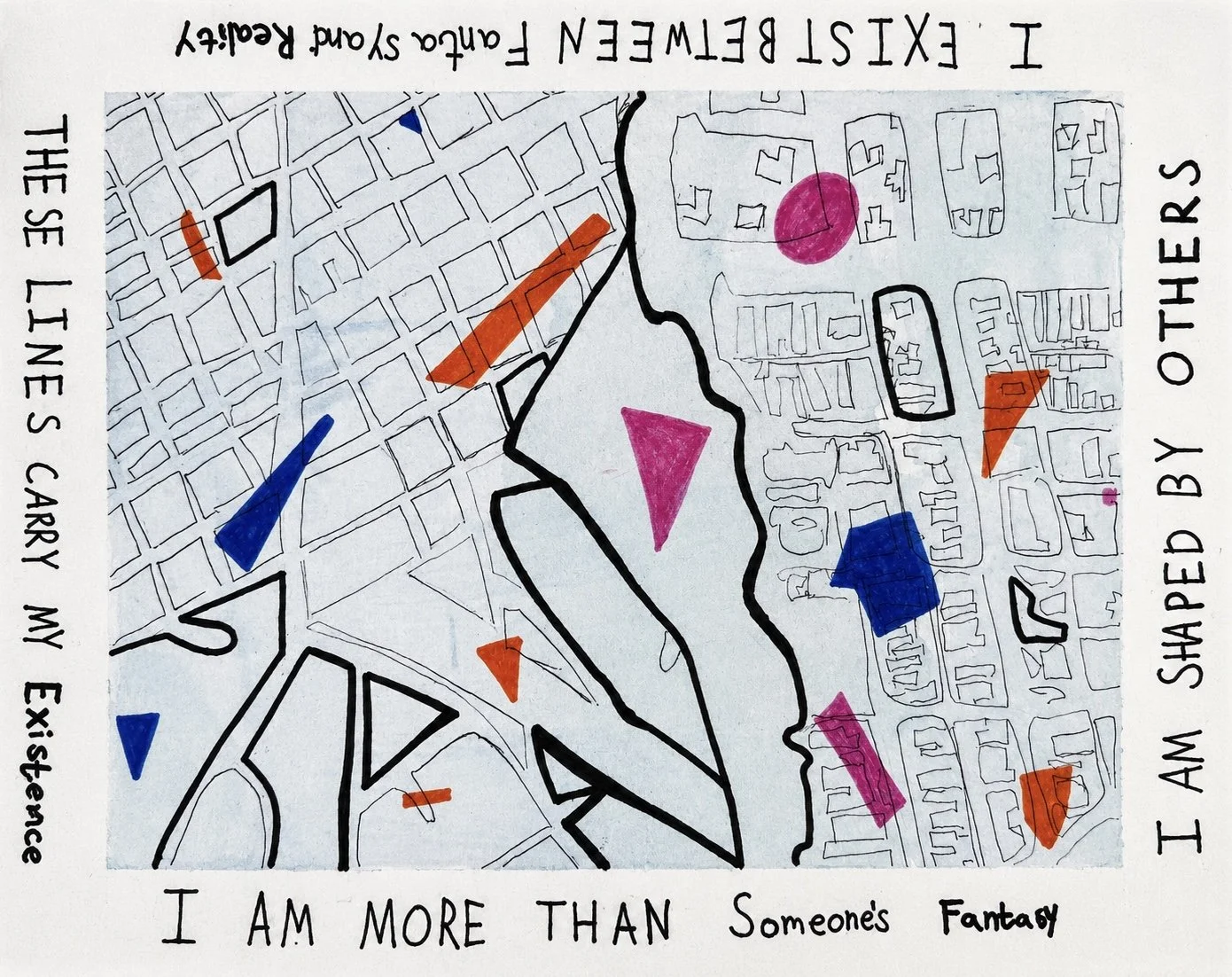
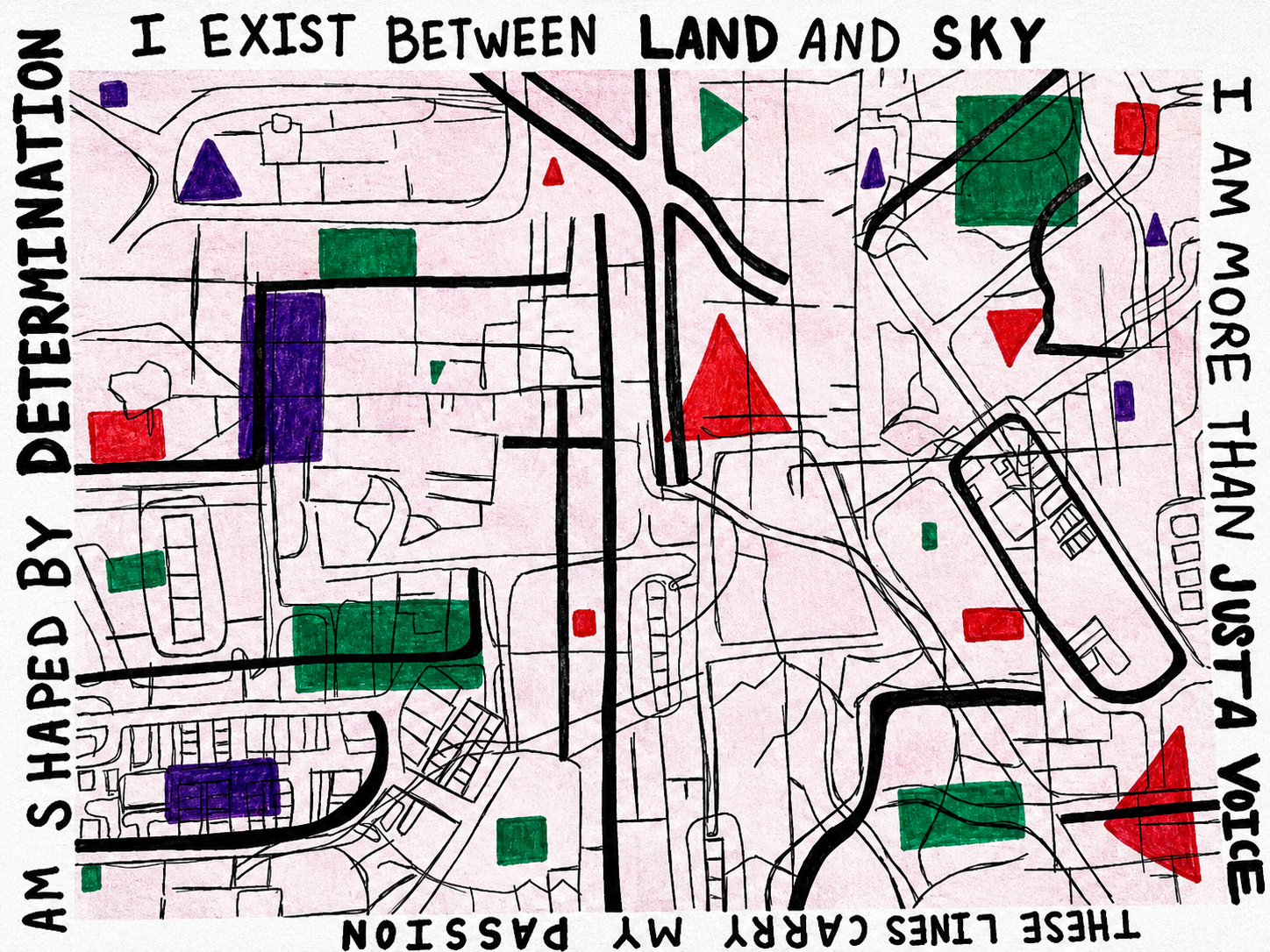
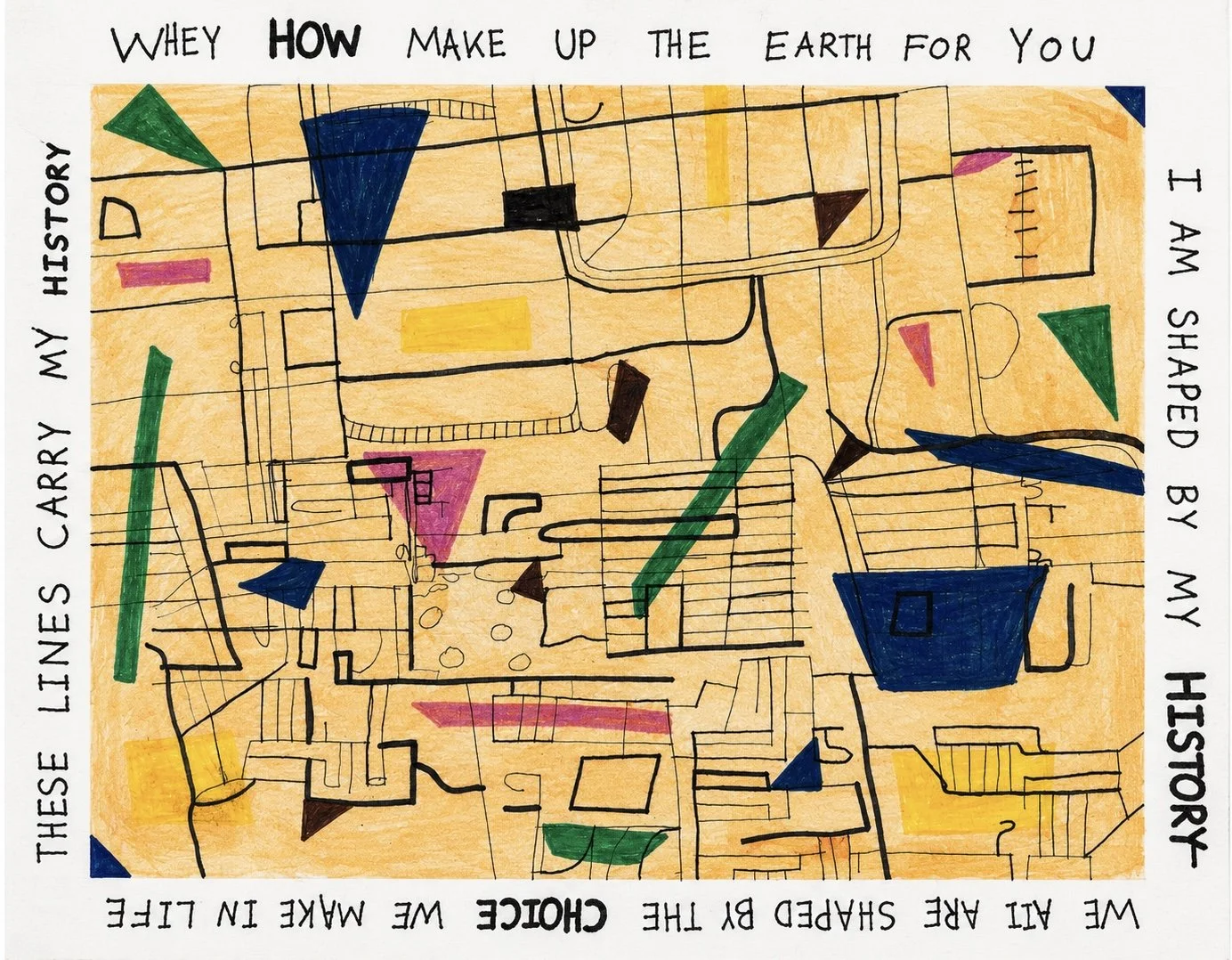
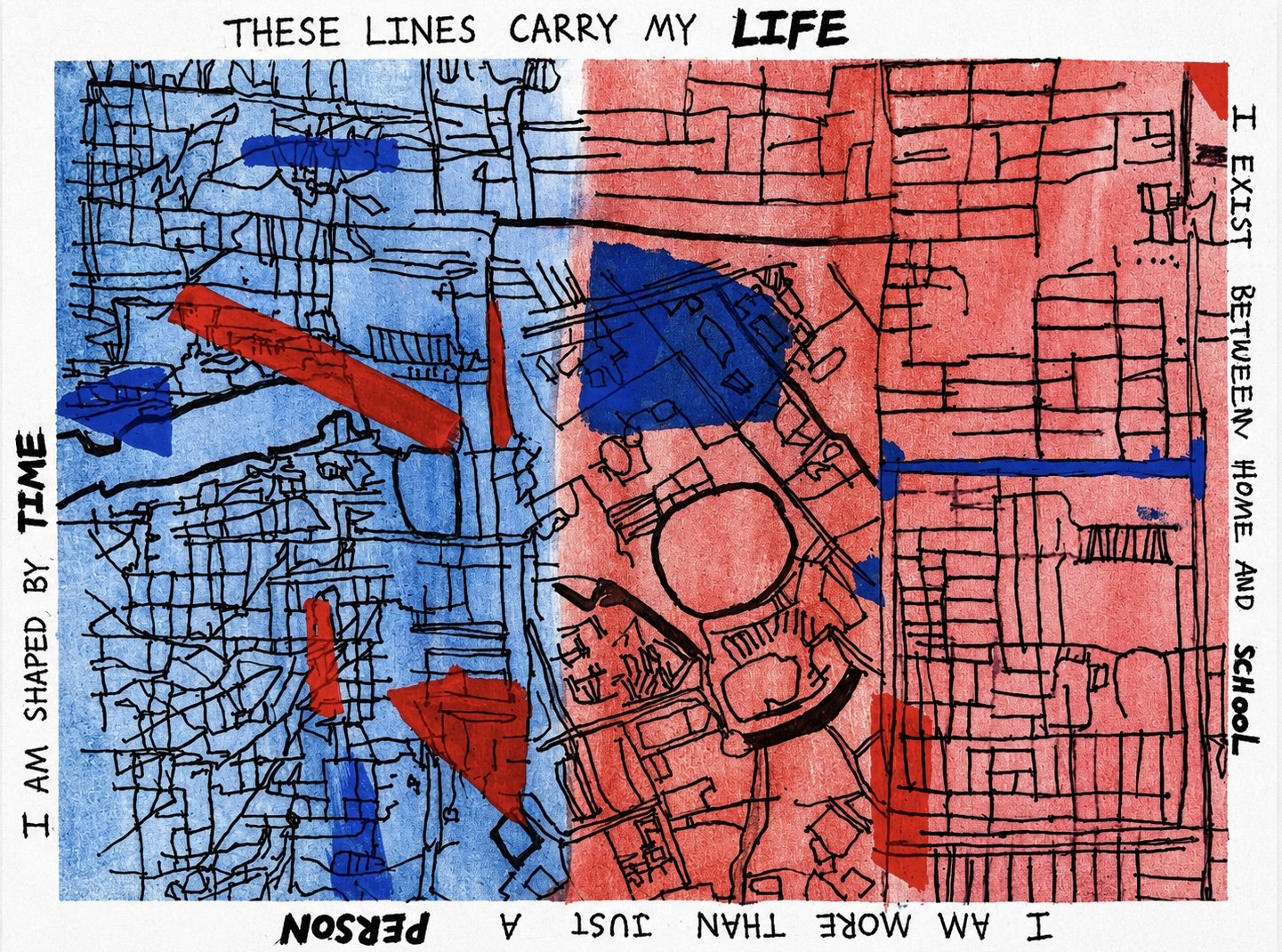
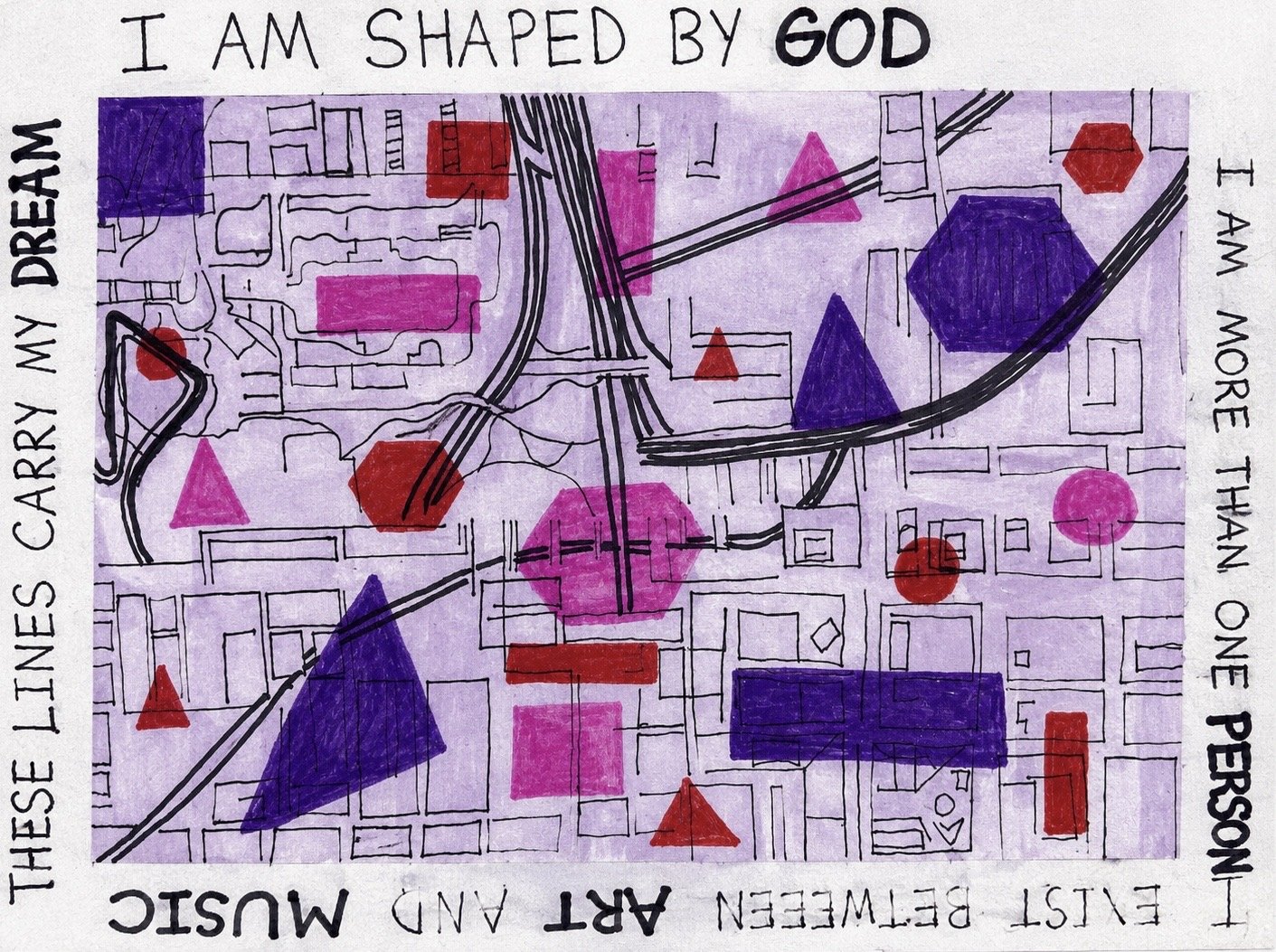
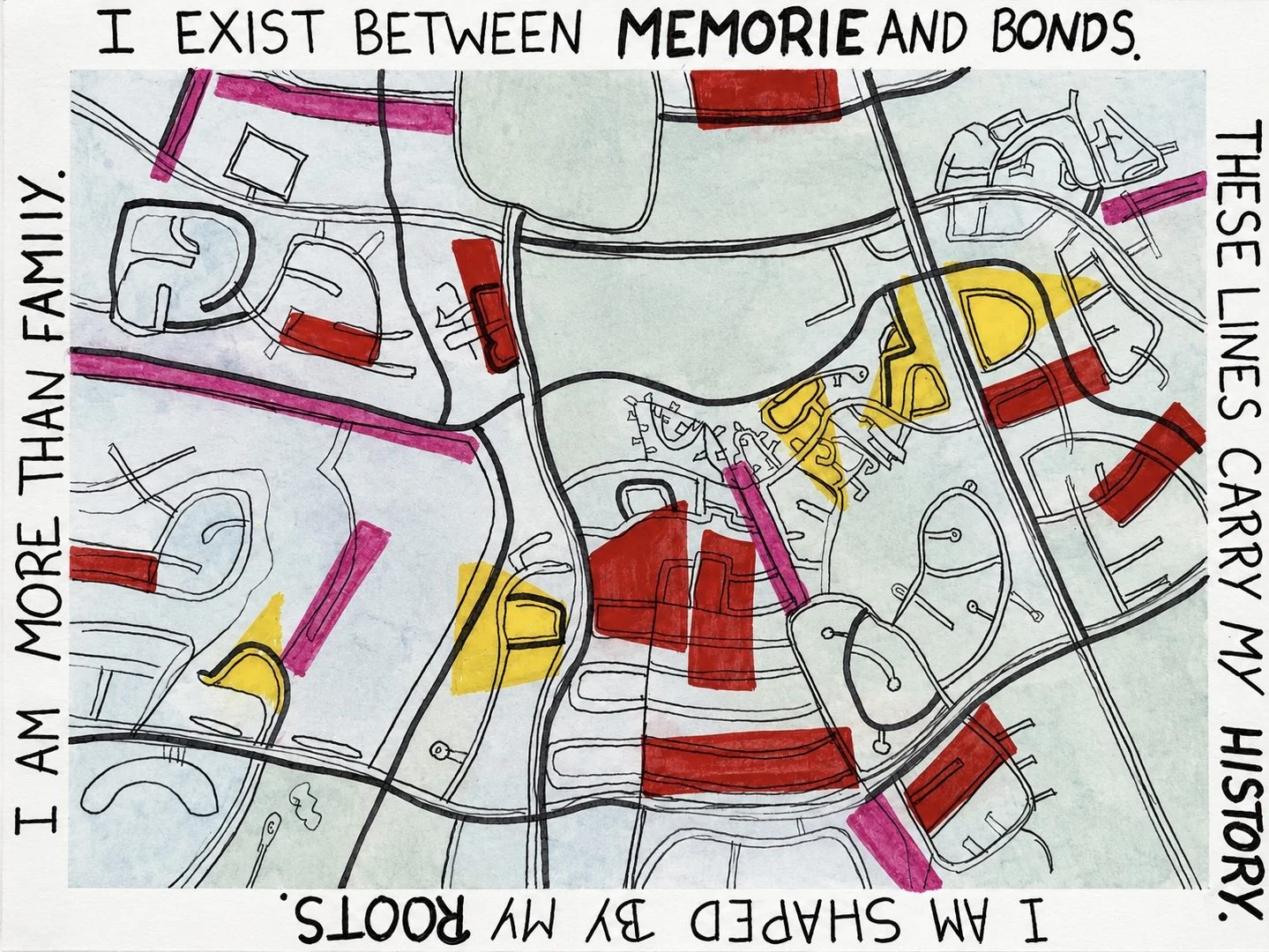
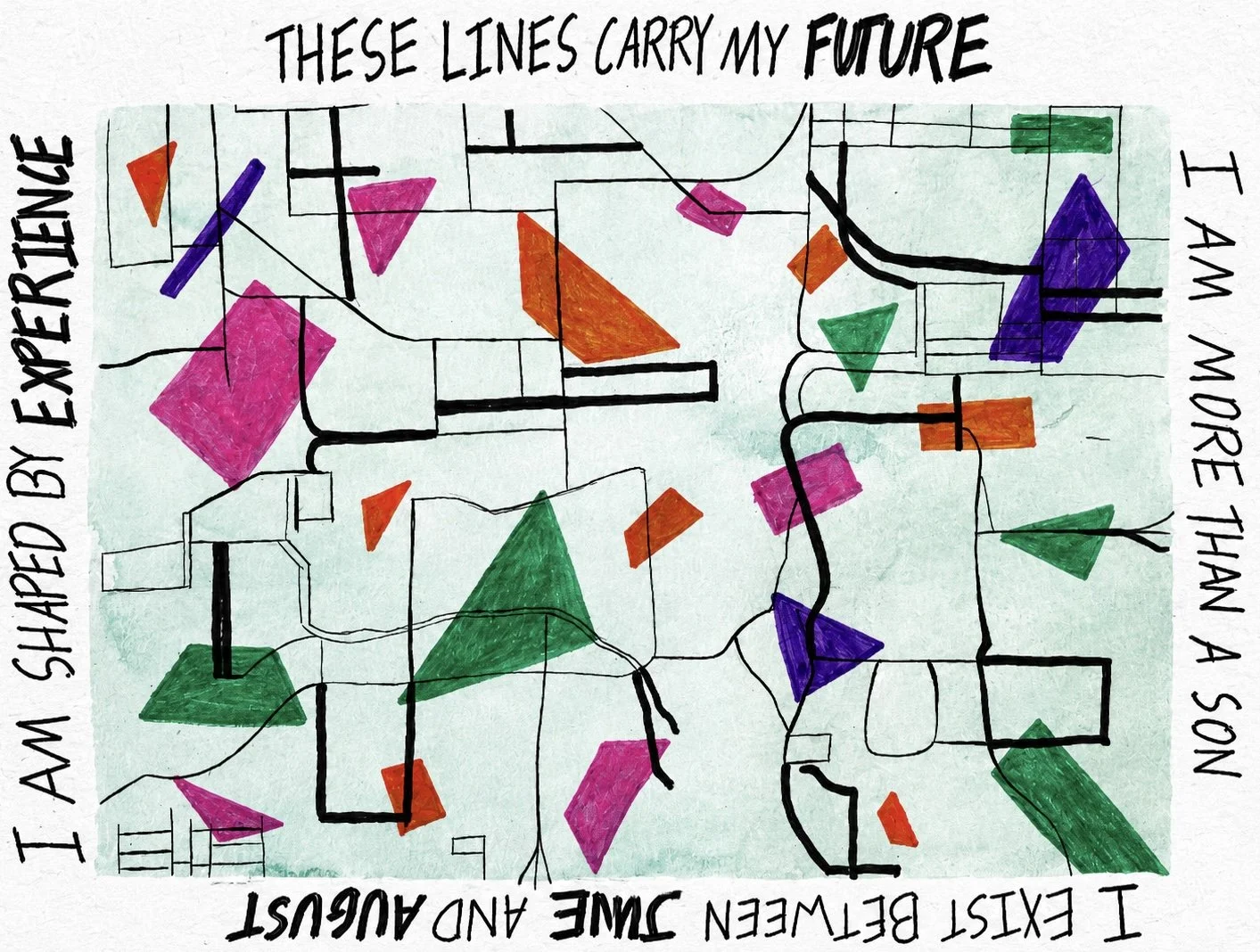
Where have you moved through, and how did it shape who you are? This unit asked my high school Art 1 students at Sullivan to answer that question without words at first—through line.
Inspired by Julie Mehretu's layered maps and Barbara Kruger's bold text, students built abstract compositions from three maps tied to their own lives, overlapping them into dense fields of line that traced personal movement through space. Over five classes, they developed contrast and hierarchy through line weight, density, and color, then added short, deliberate text statements about identity and place. The result was abstract, personal, and unmistakably theirs.
Mapping Movement
High School · Art 1 · 5-Day Unit · Sullivan High School, CPS
Aligned to National Core Arts Standards—connecting contemporary practice, culture, and personal identity.
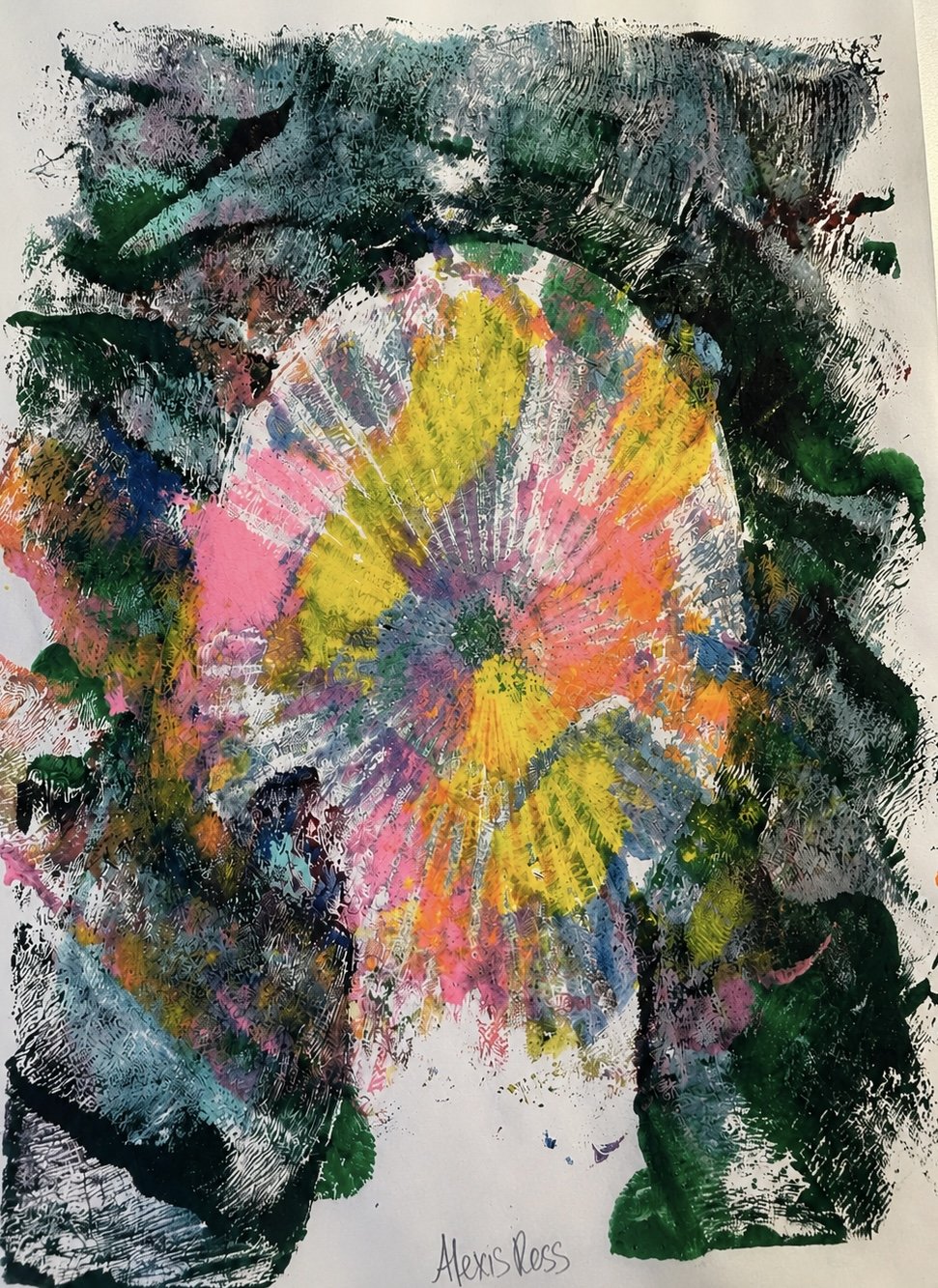
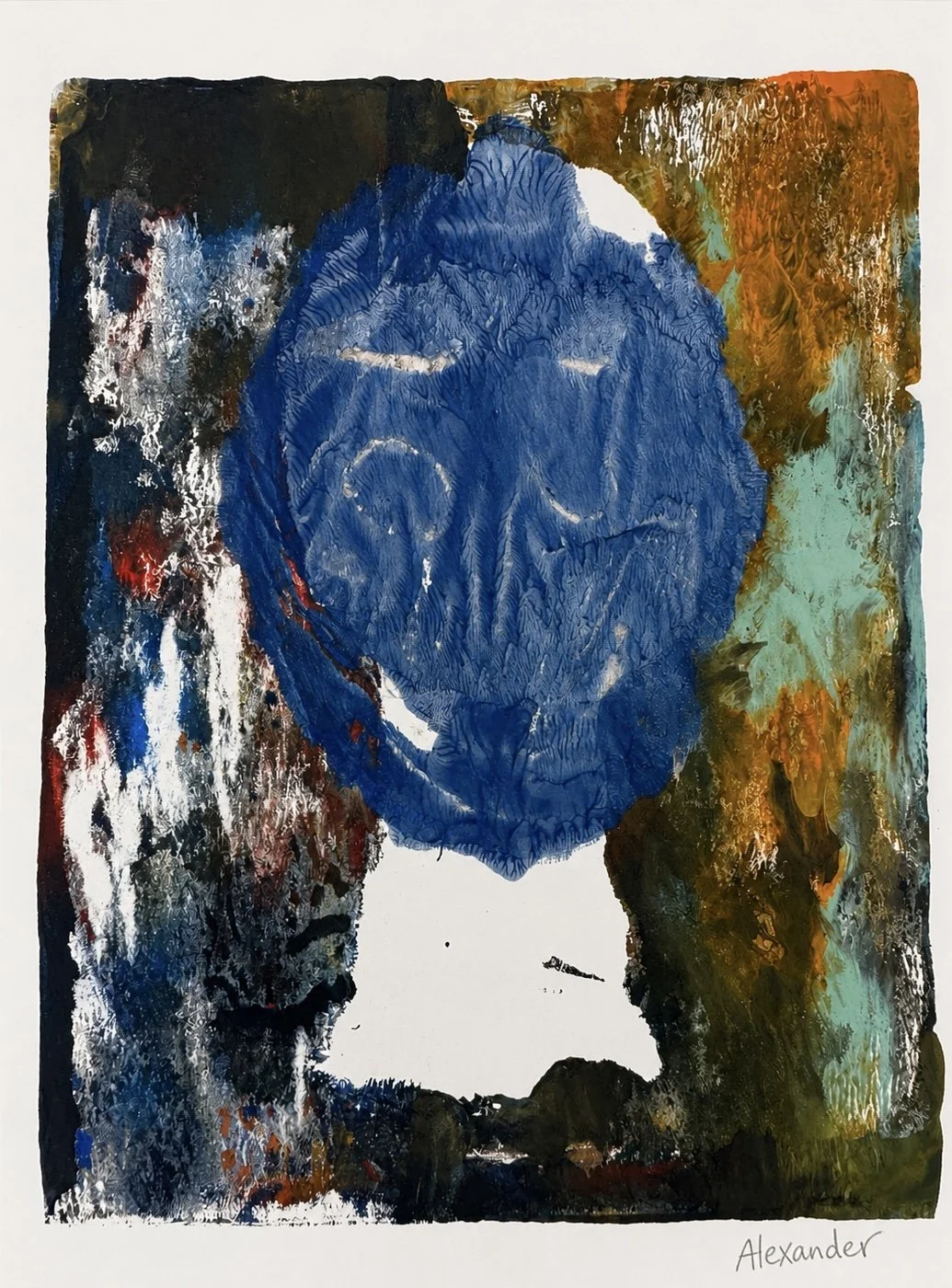
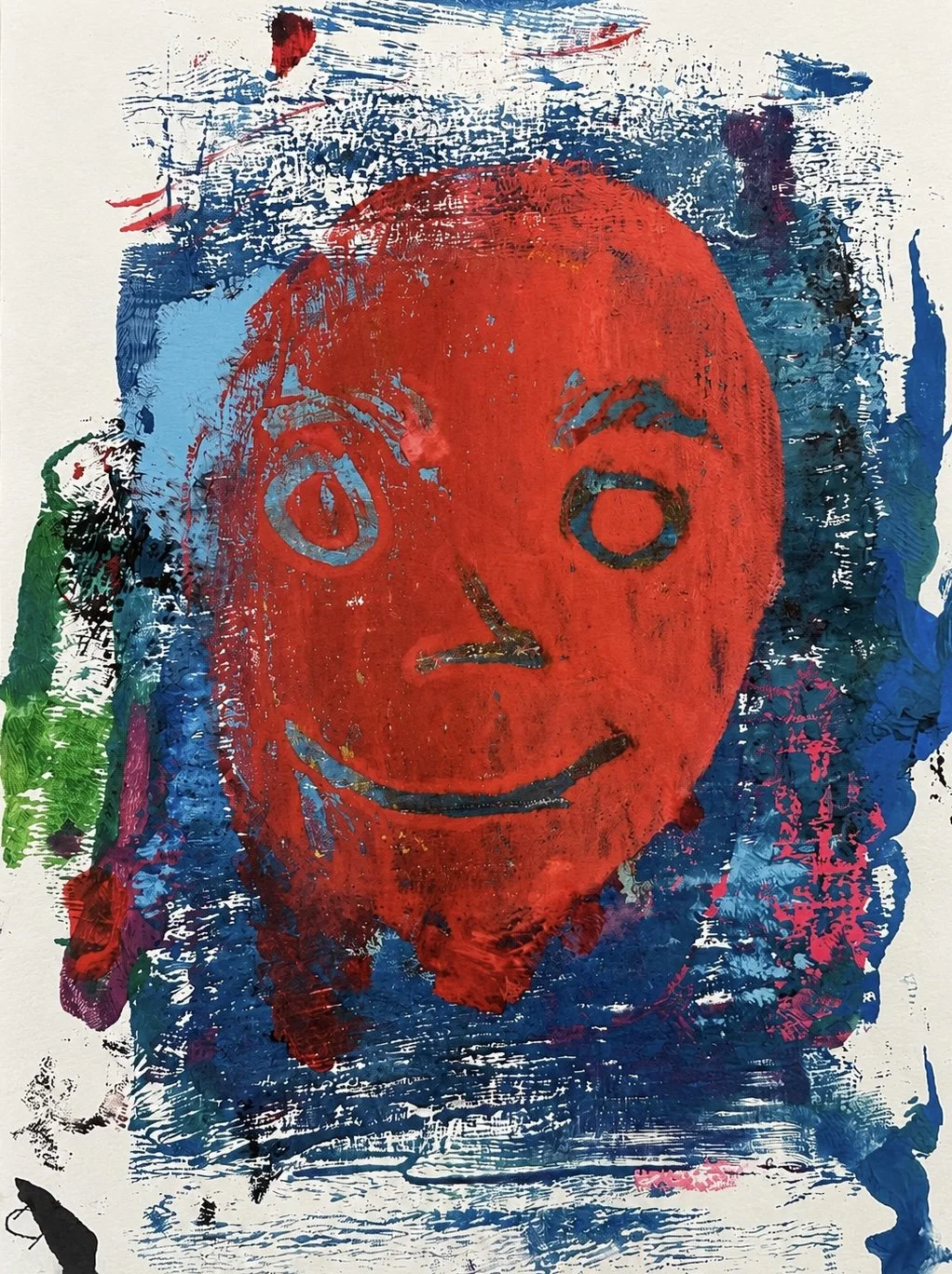
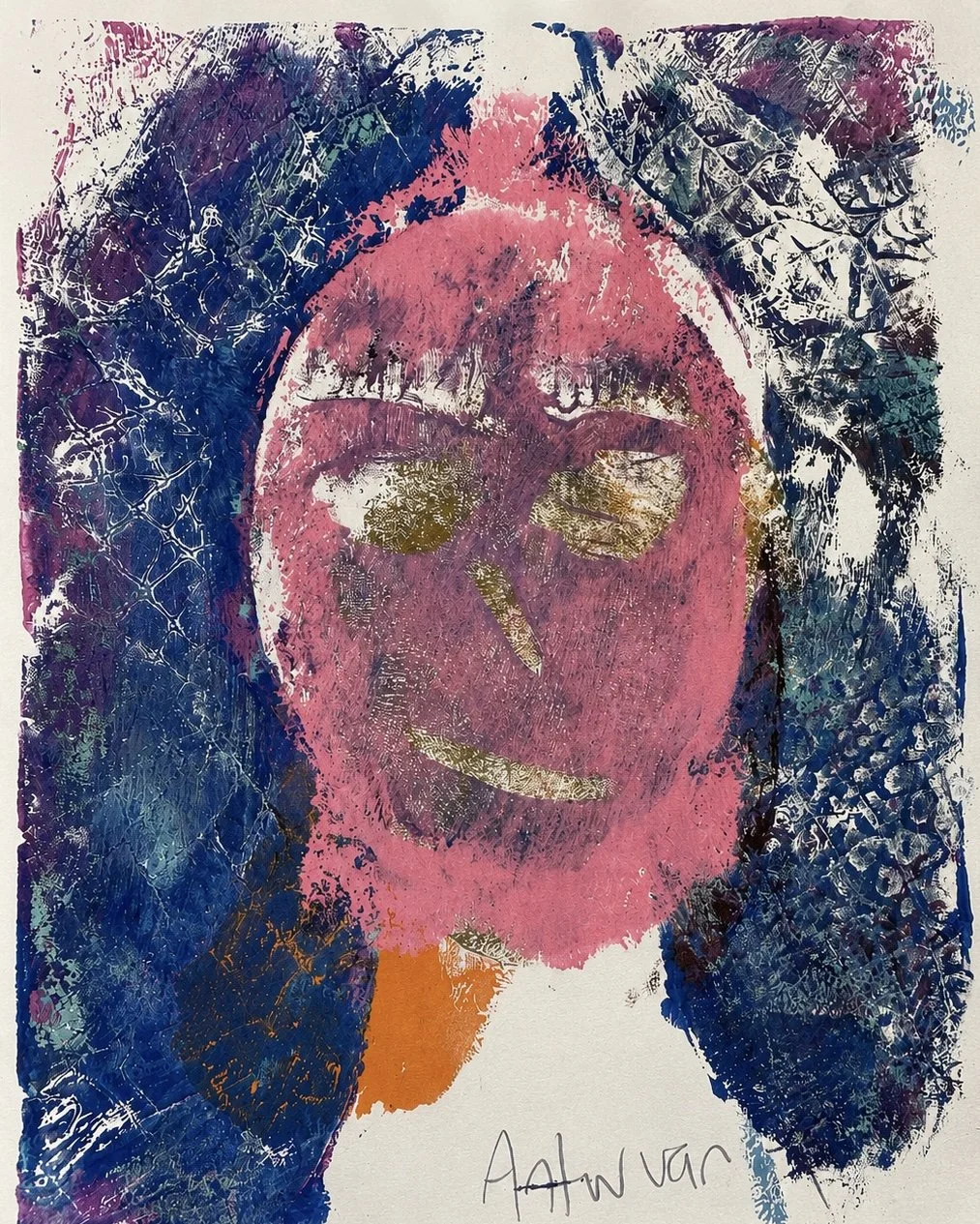
For this eight-day printmaking unit, my high school Art 1 students at Sullivan treated the face not as a likeness, but as a structure—a shape that could hold the textures of a place that mattered to them.
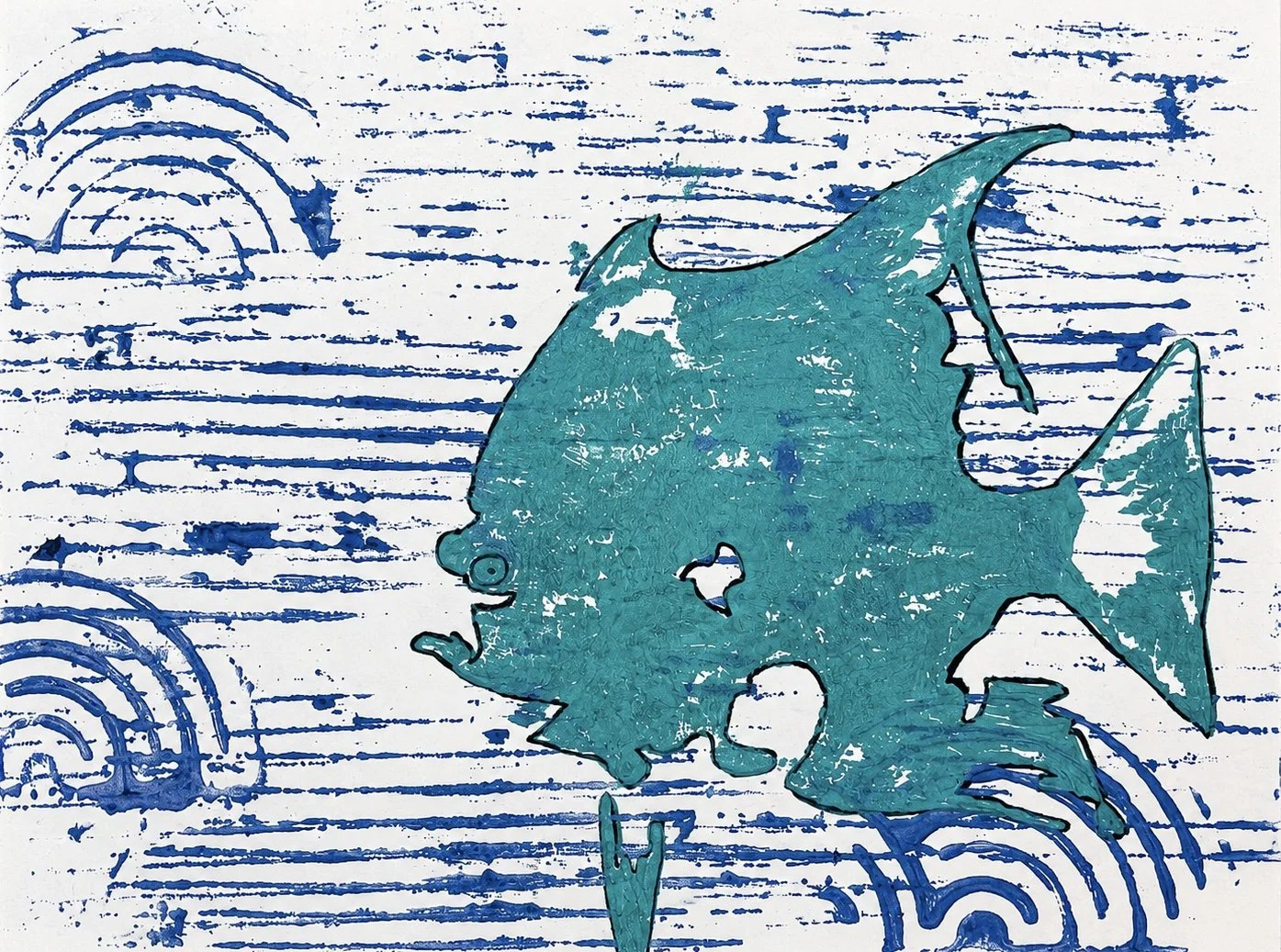
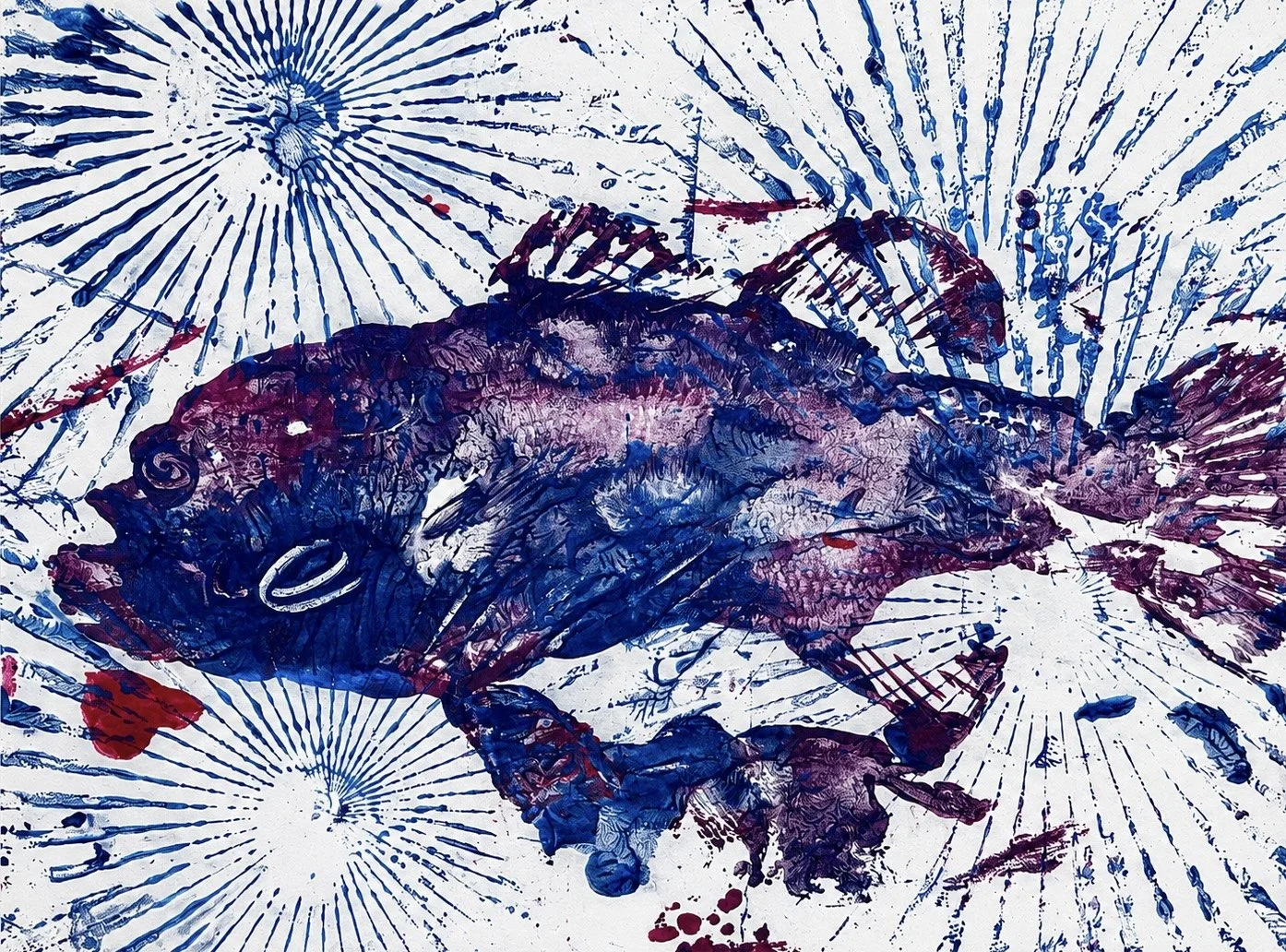
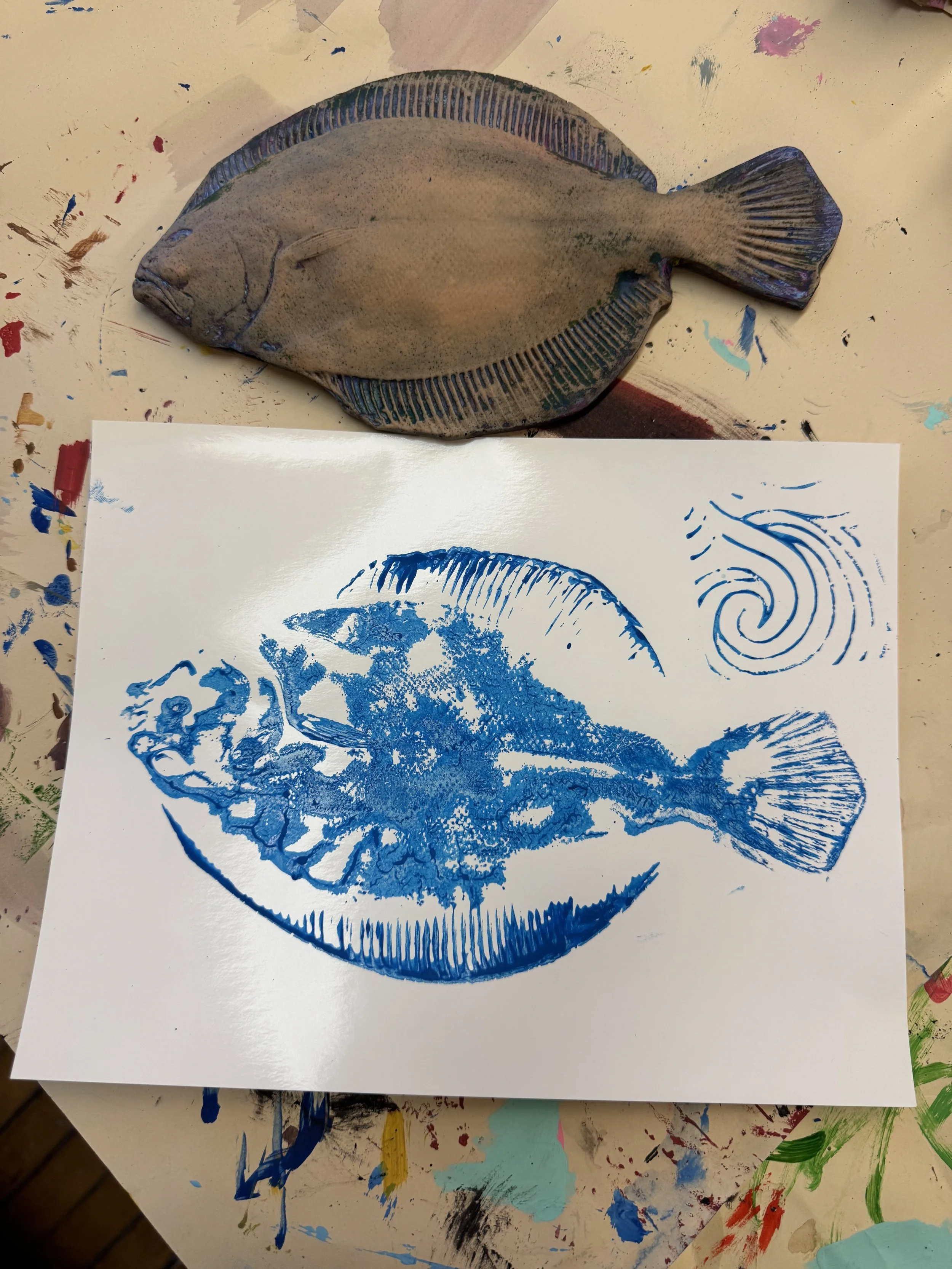
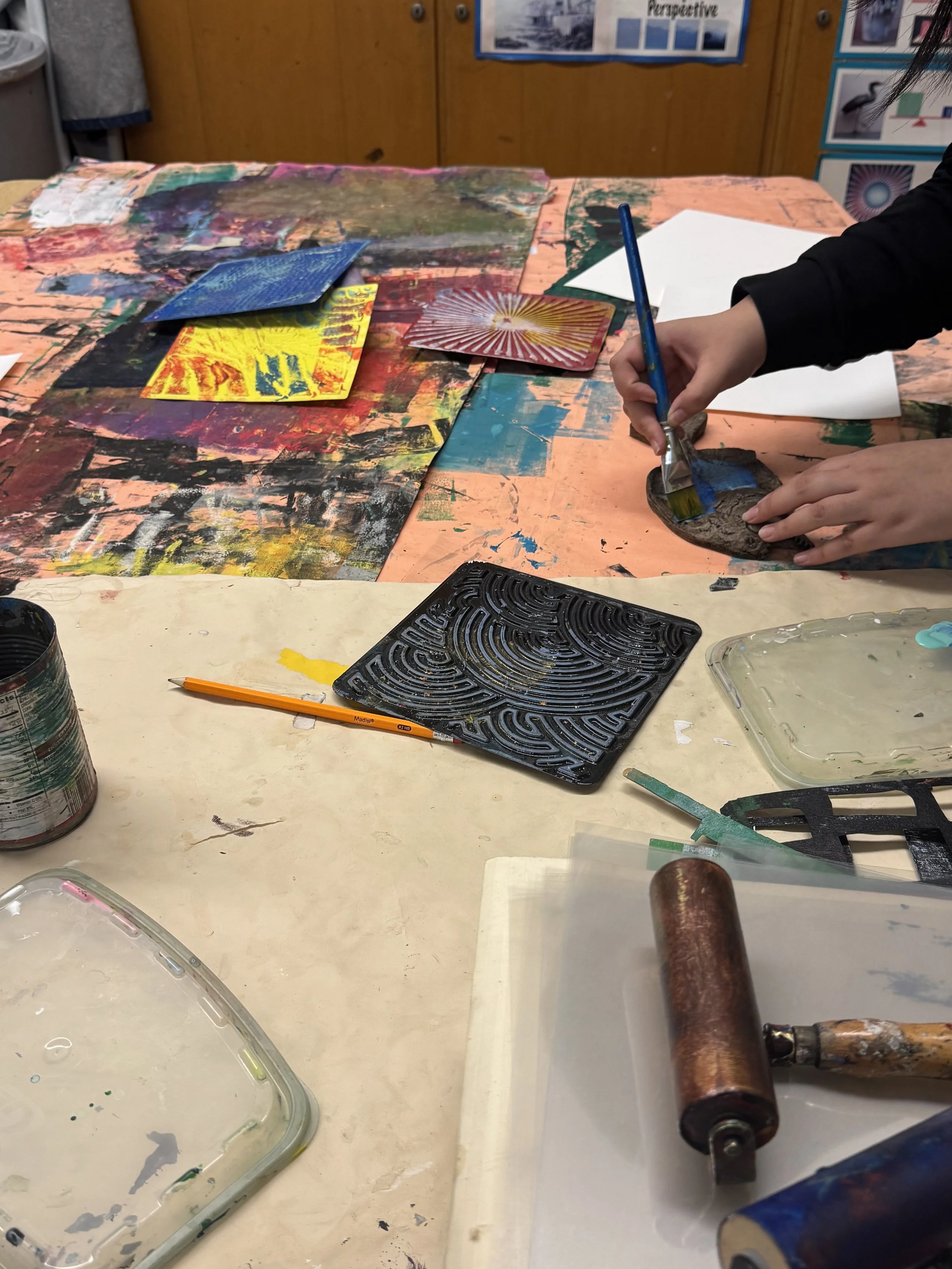
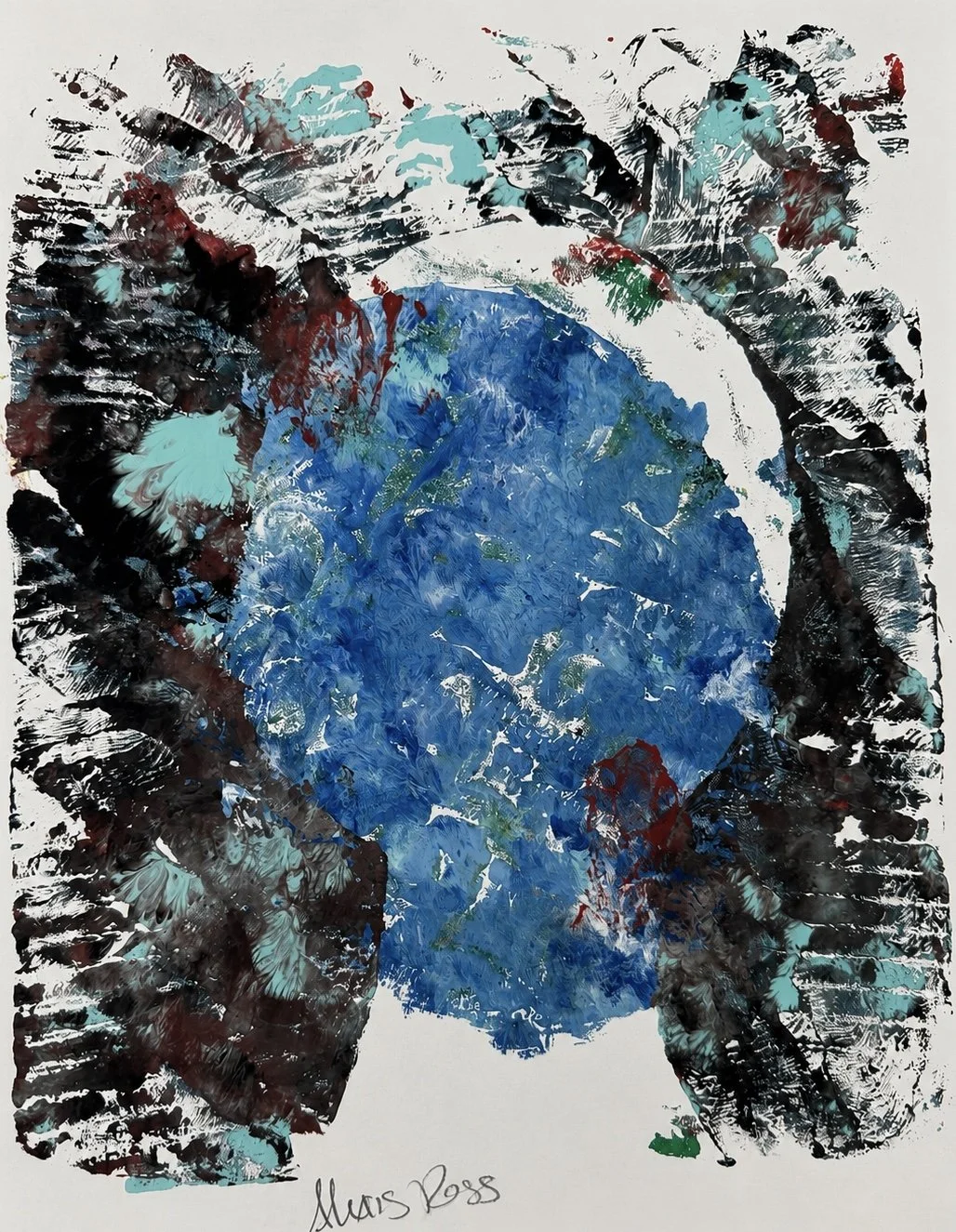
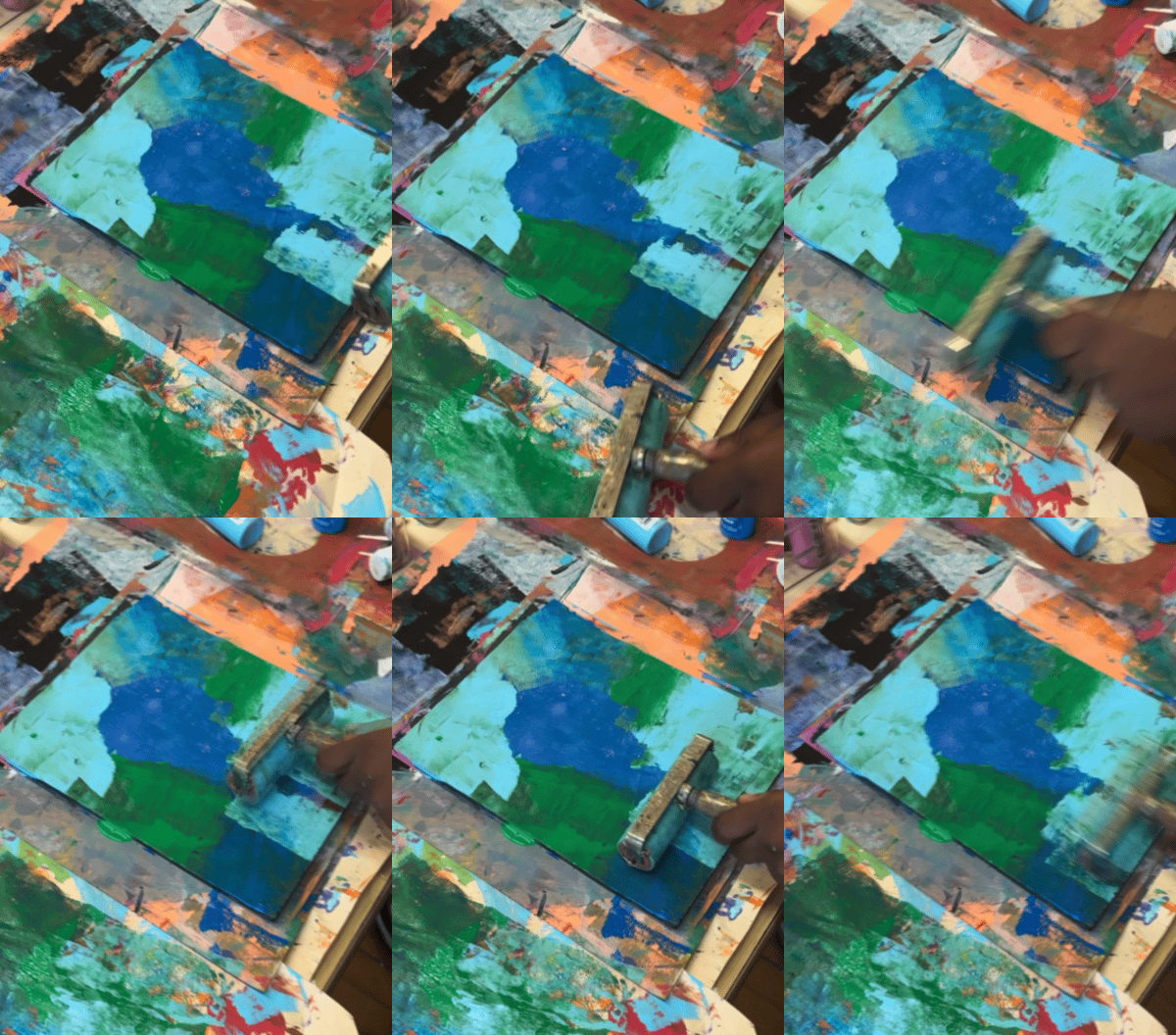
Inspired by the contemporary artist David Driskell, who built portraits from simplified shapes, layers, and bold color, students worked entirely through gel plate monoprinting—no realistic drawing allowed. They began with fish prints to learn pressure, ink control, and layering, then carried those skills into a three-print portrait series. Each face was built in layers: a head shape, the texture of a chosen place, and printed features—structure over likeness, process over perfection.
The Face of a Place
High School · Art 1 · 8-Day Unit · Sullivan High School, CPS
Aligned to National Core Arts Standards—printmaking process, layering, and place as personal expression.
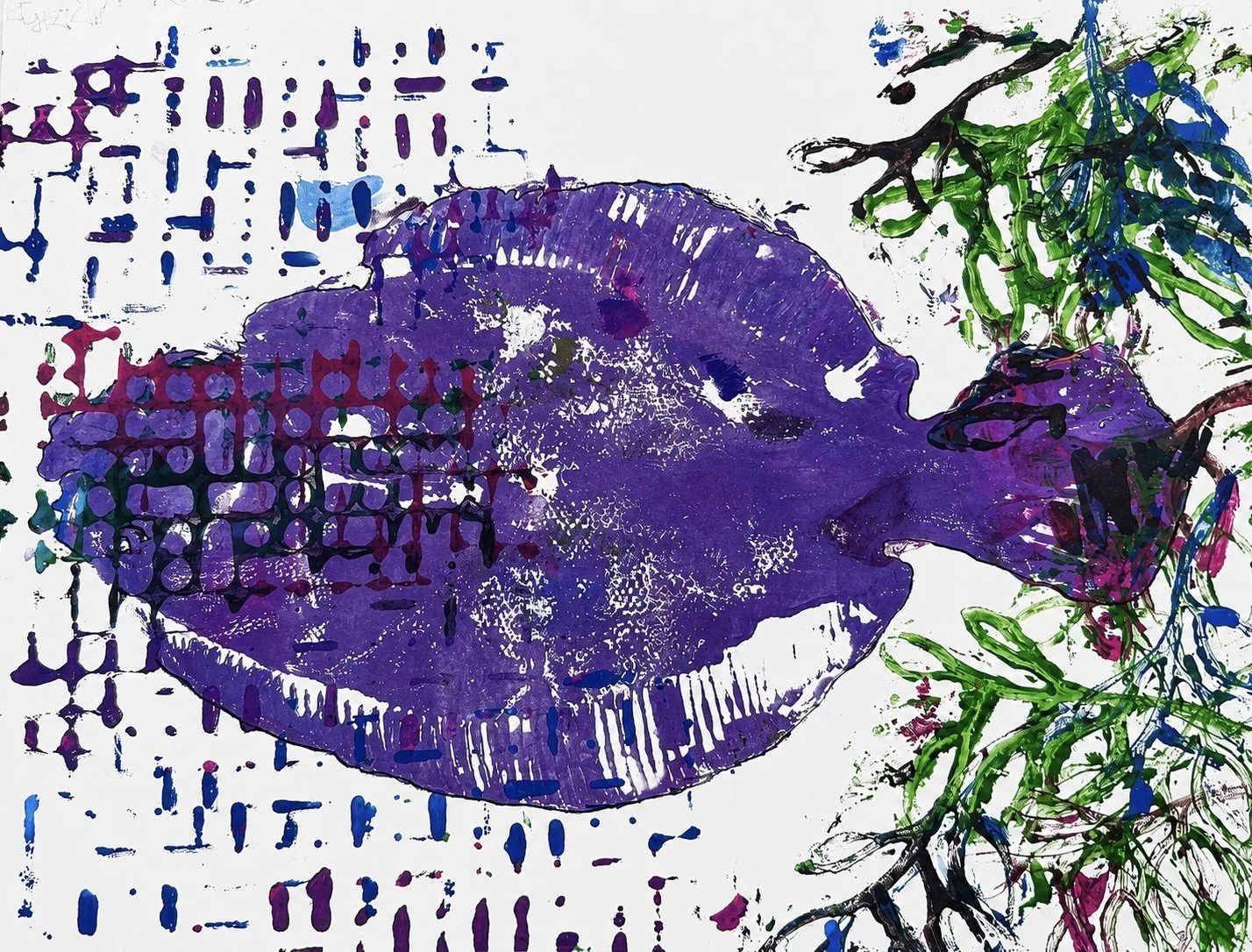
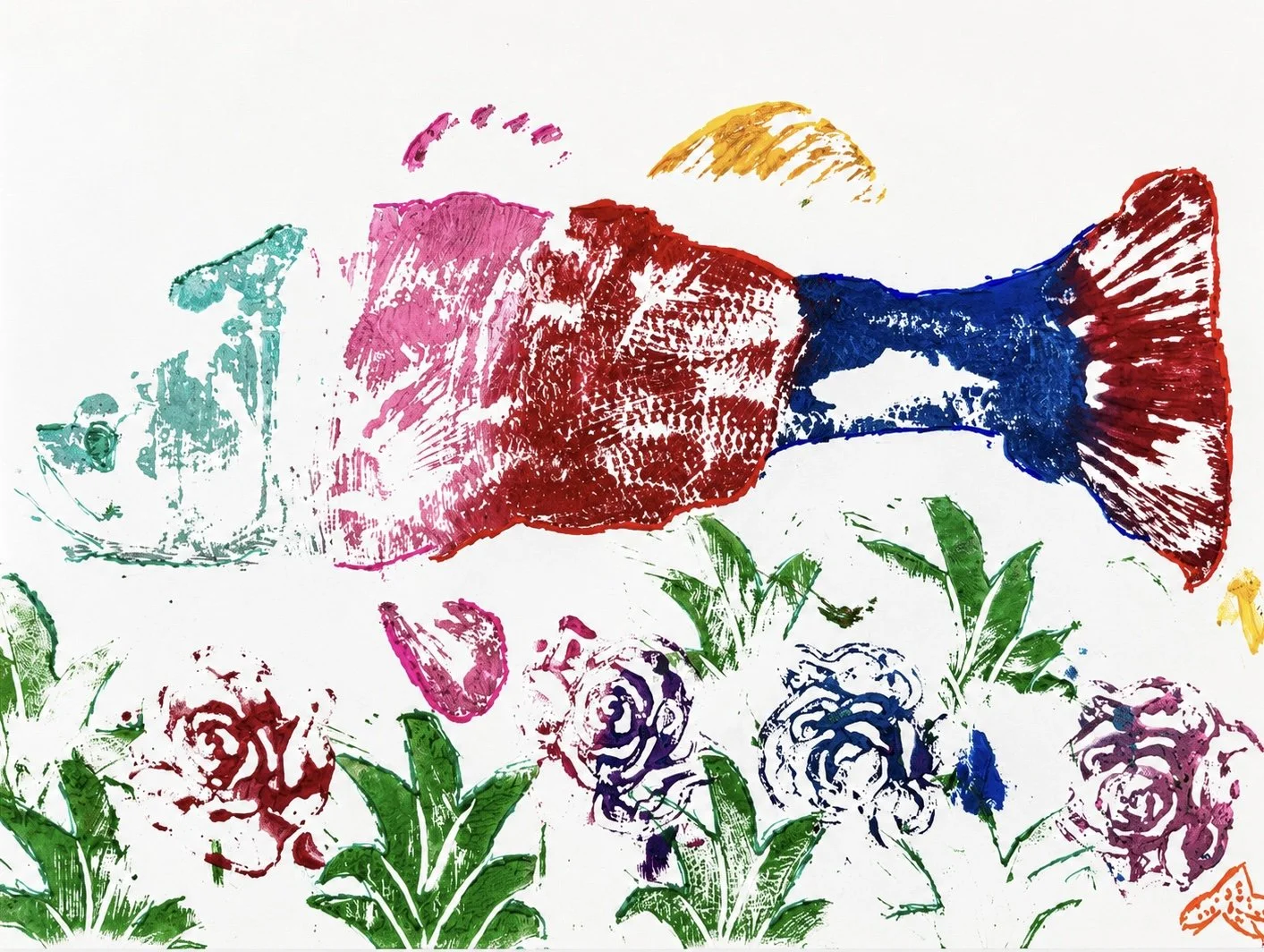
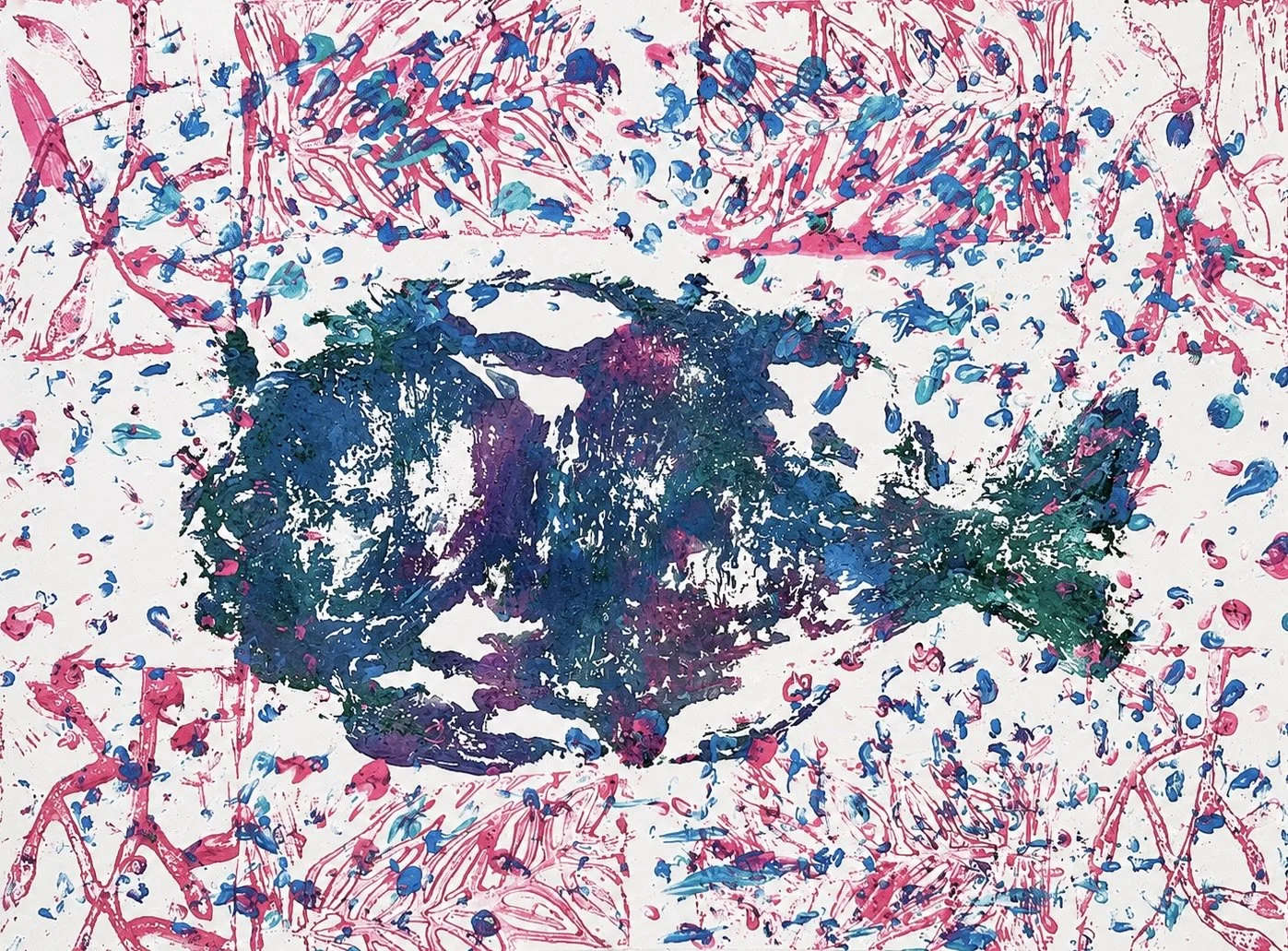
Students built their printing foundation through fish prints—learning pressure, ink control, texture, and layering before turning the same skills toward portraits.
Starting with Fish Prints
Students created a series of three monoprint portraits—same place and structure, varied color and texture—then reflected on their process.
A Three-Print Series
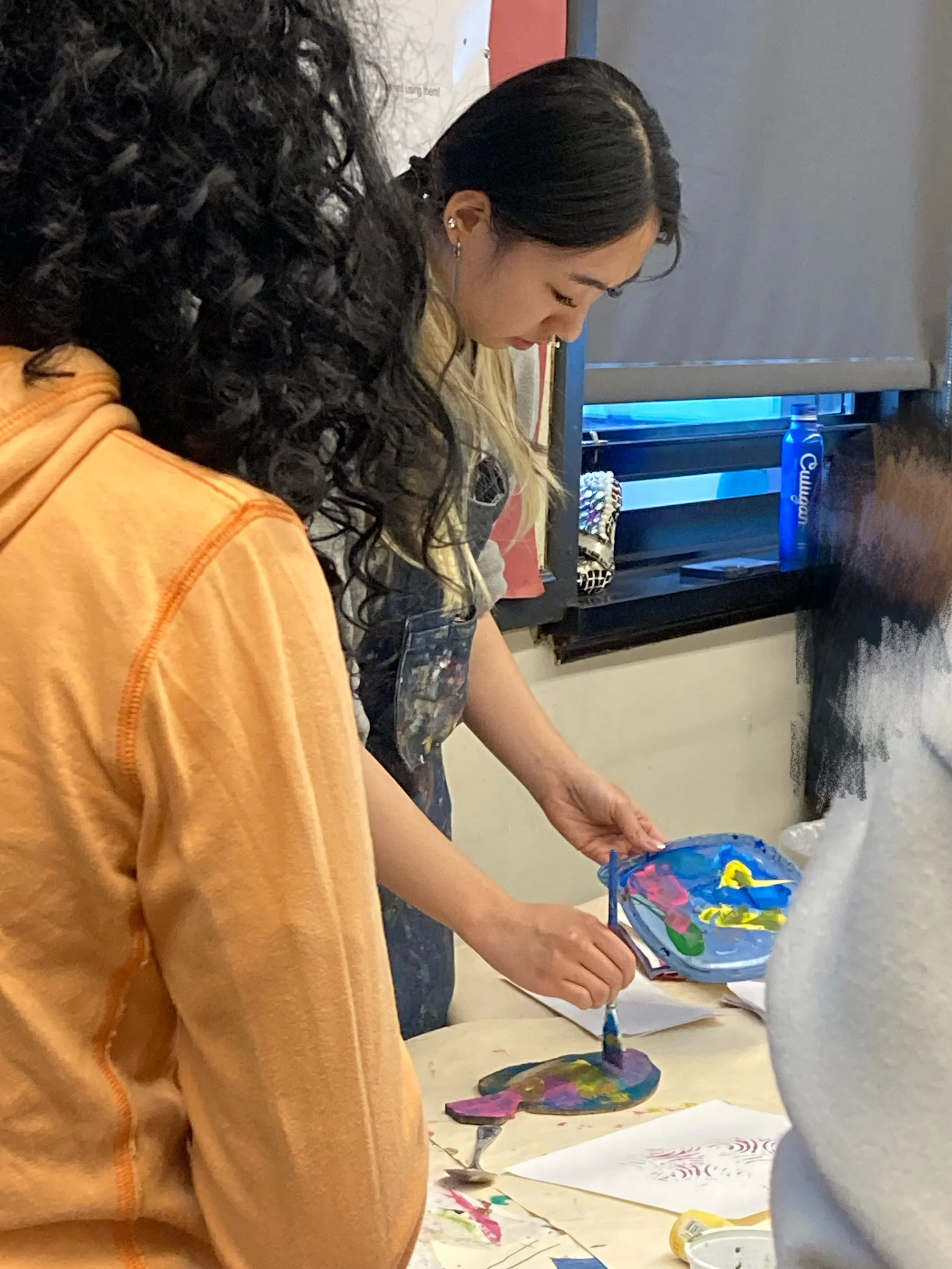
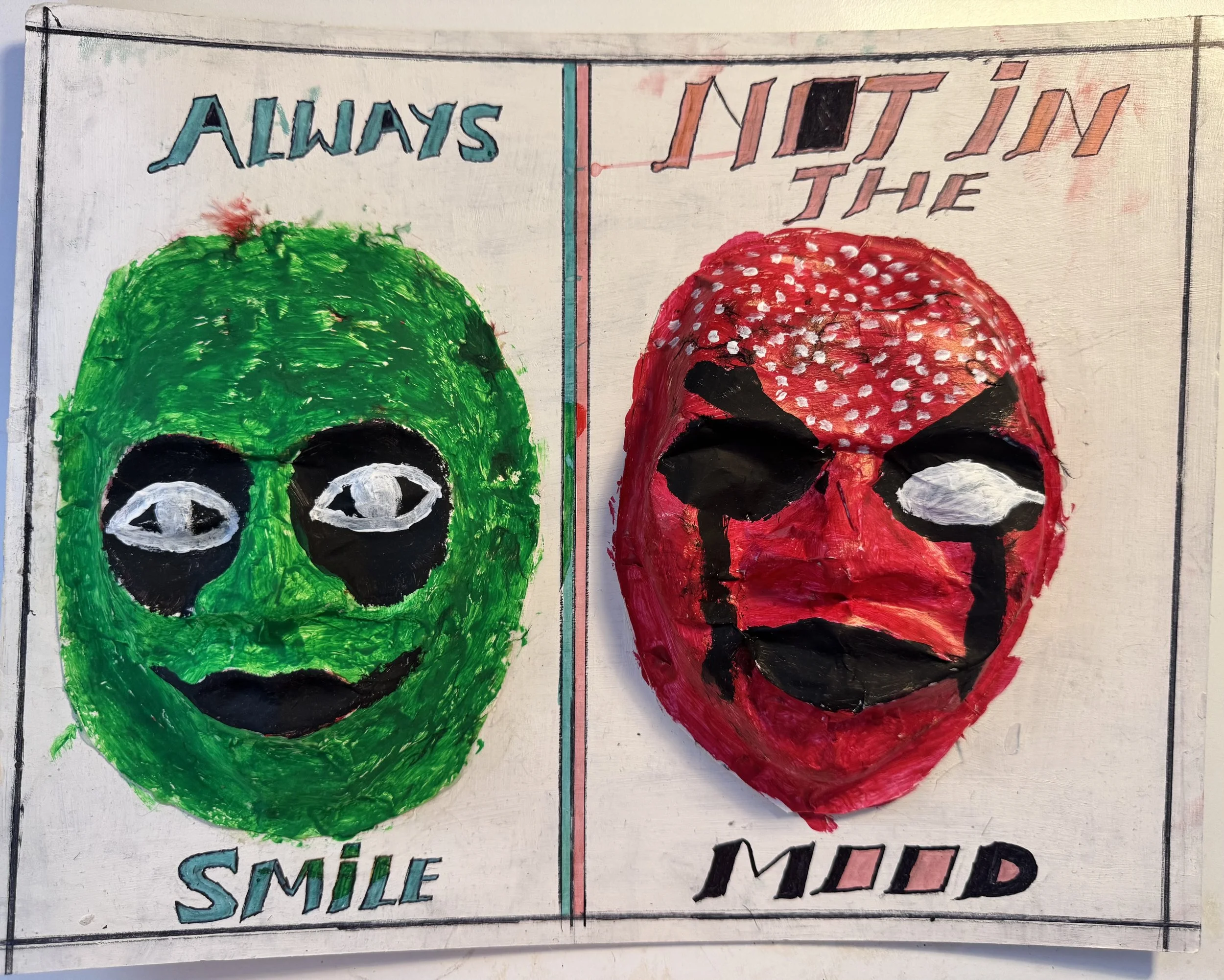
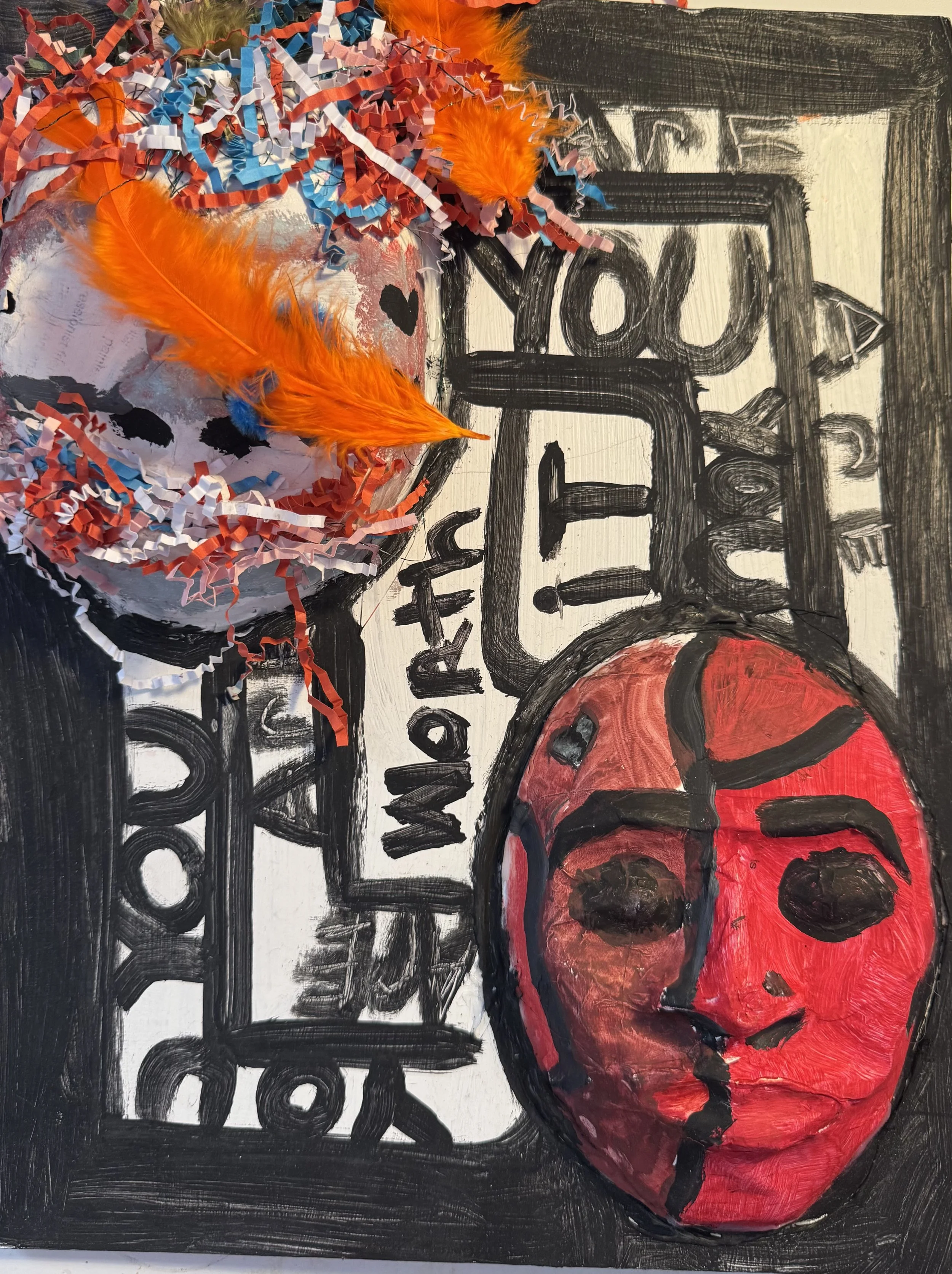
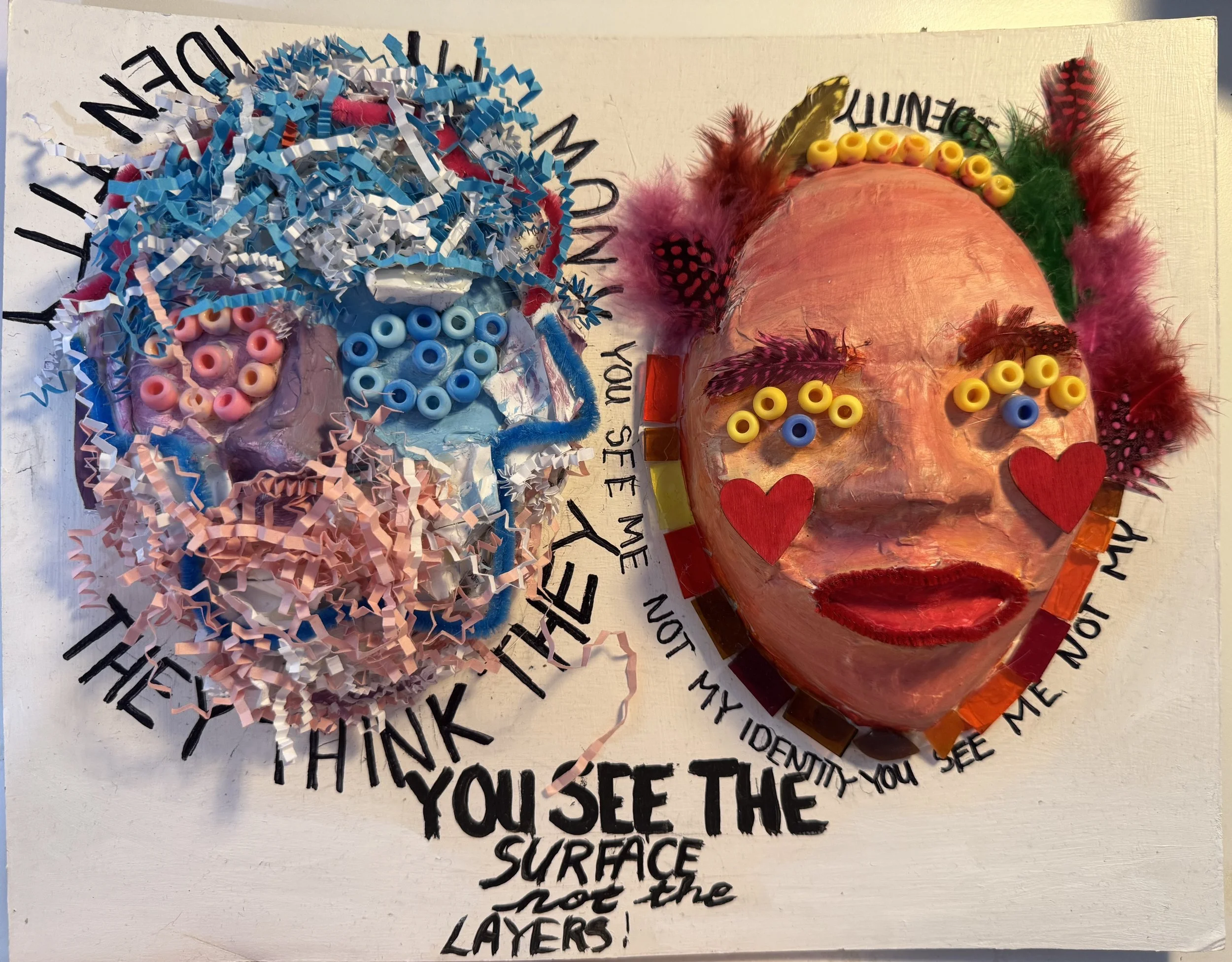
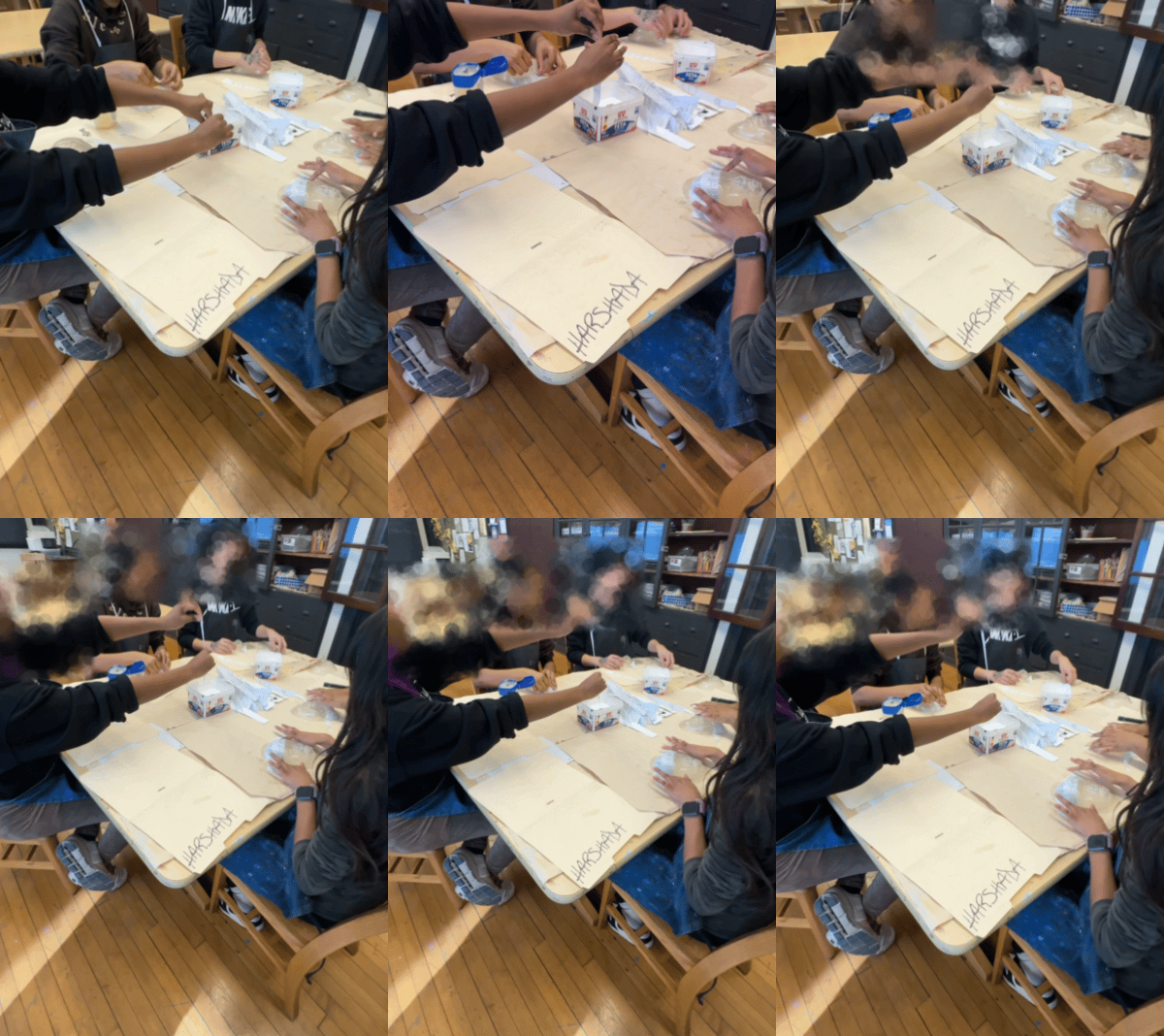
After building faces in two dimensions through printmaking, my high school Art 1 students at Sullivan turned the same question into three dimensions: how can a face say more than what it looks like?
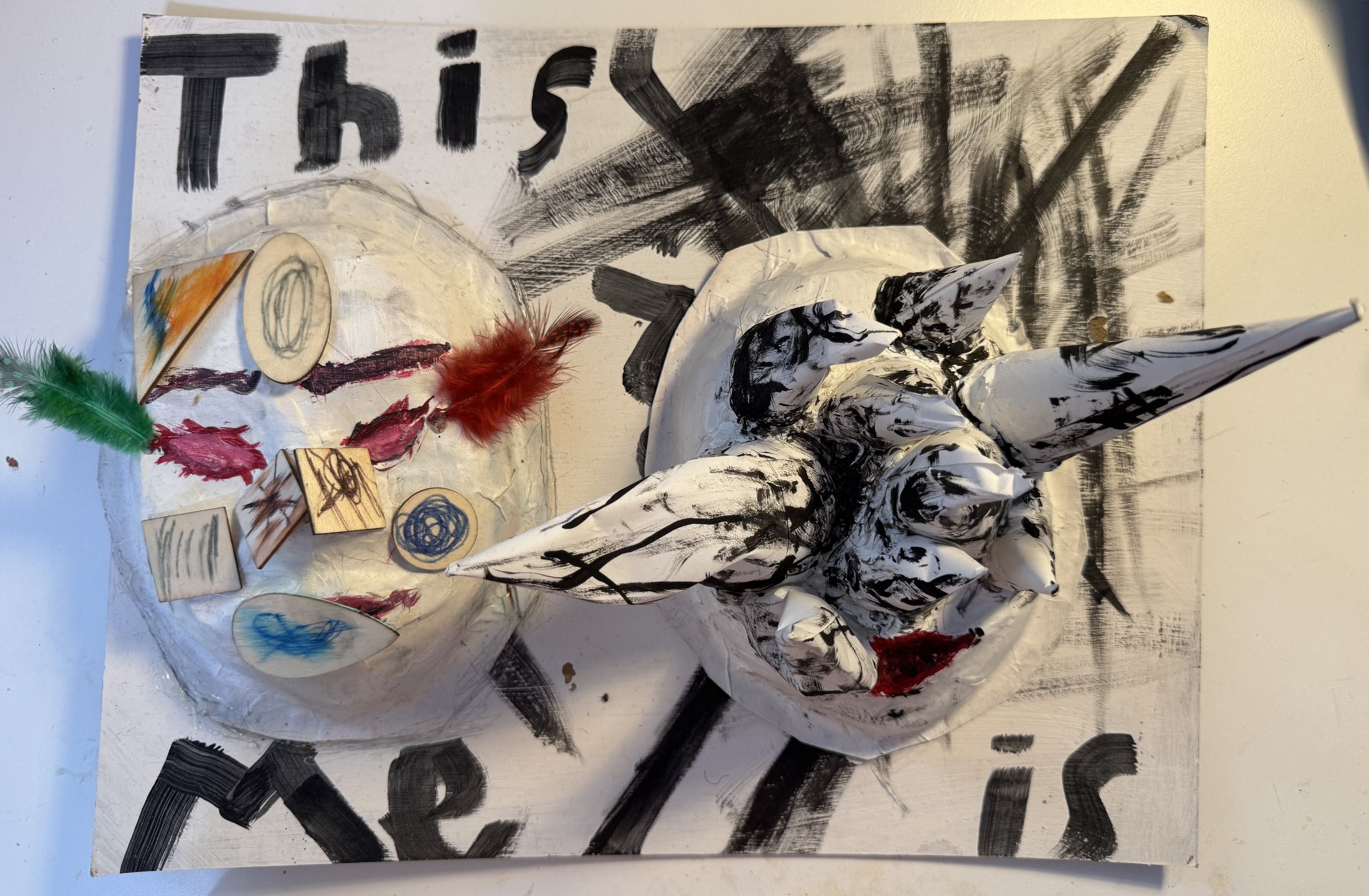
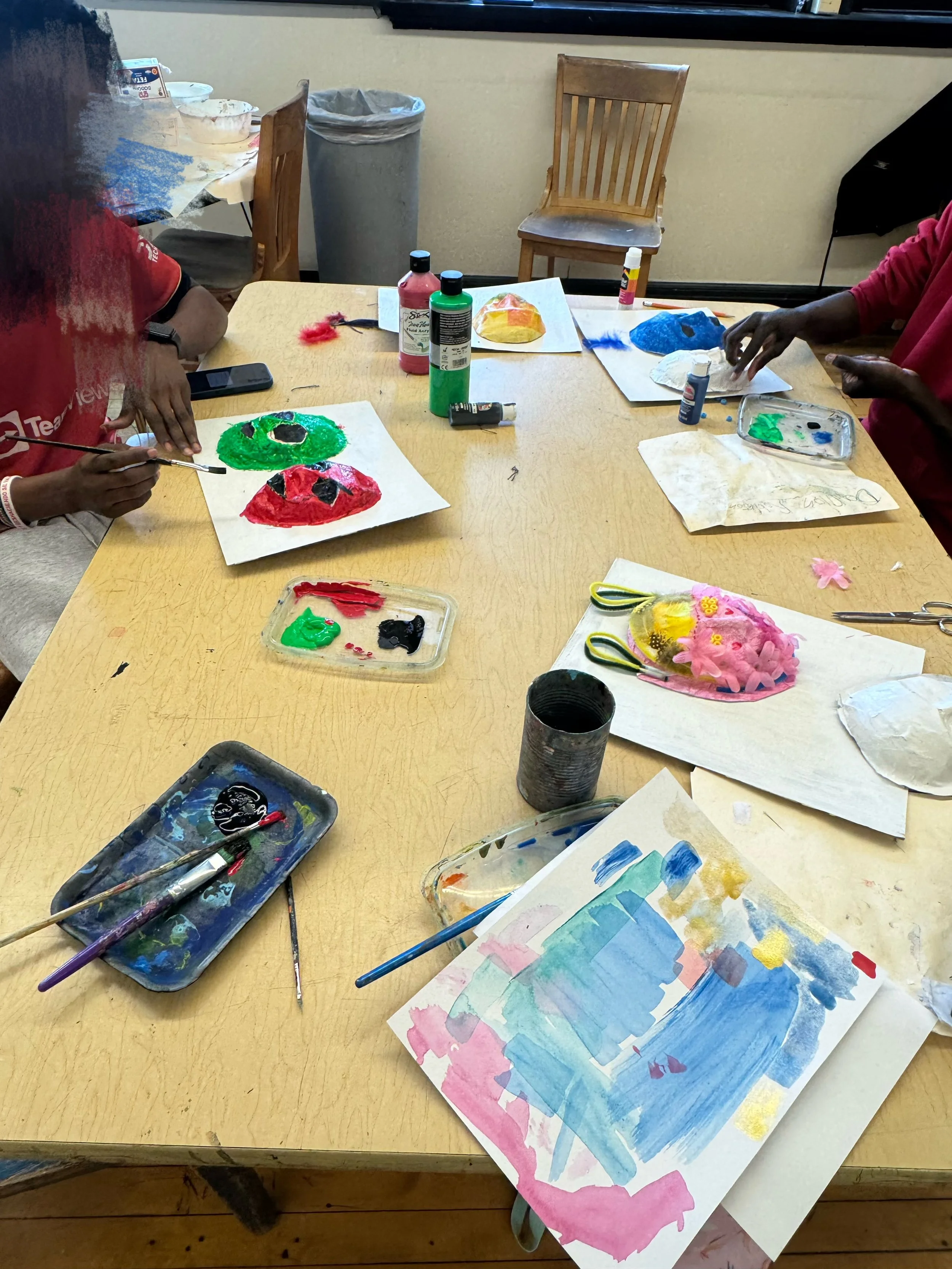
Working from two paper mâché portrait forms, students transformed each surface into an expressive 3D portrait—using texture, distortion, and layering to carry emotion, identity, and experience rather than likeness. Inspired by Wangechi Mutu's textured, layered figures and Barbara Kruger's bold use of language, students built up surfaces by hand and added words or phrases to sharpen the message of their portraits. The project asked them to treat material, surface, and text as tools for visual storytelling.
High School · Art 1 · 7-Day Unit · Sullivan High School, CPS
More Than a Face
Aligned to National Core Arts Standards—material, surface, and text as tools for identity and storytelling.
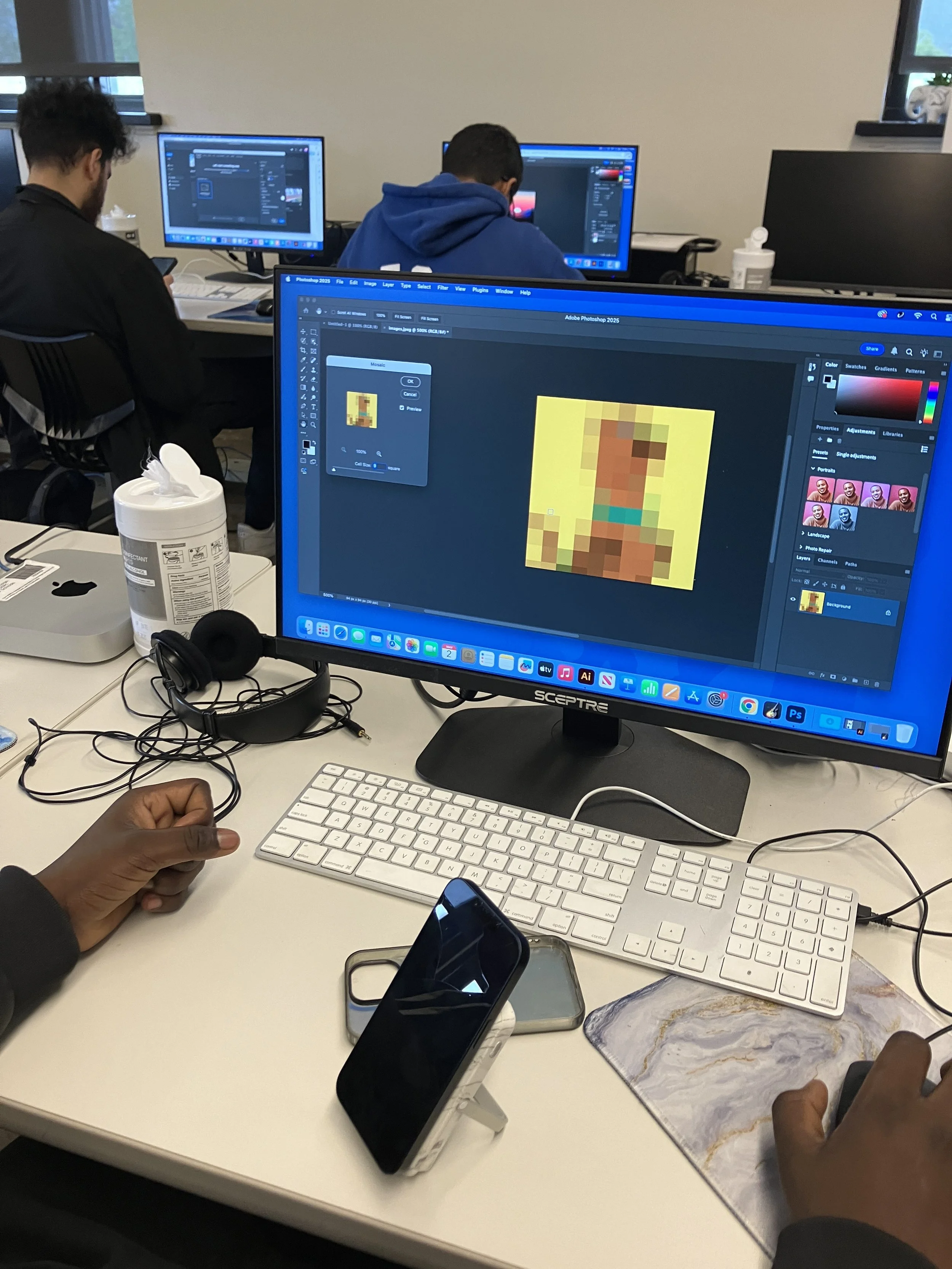
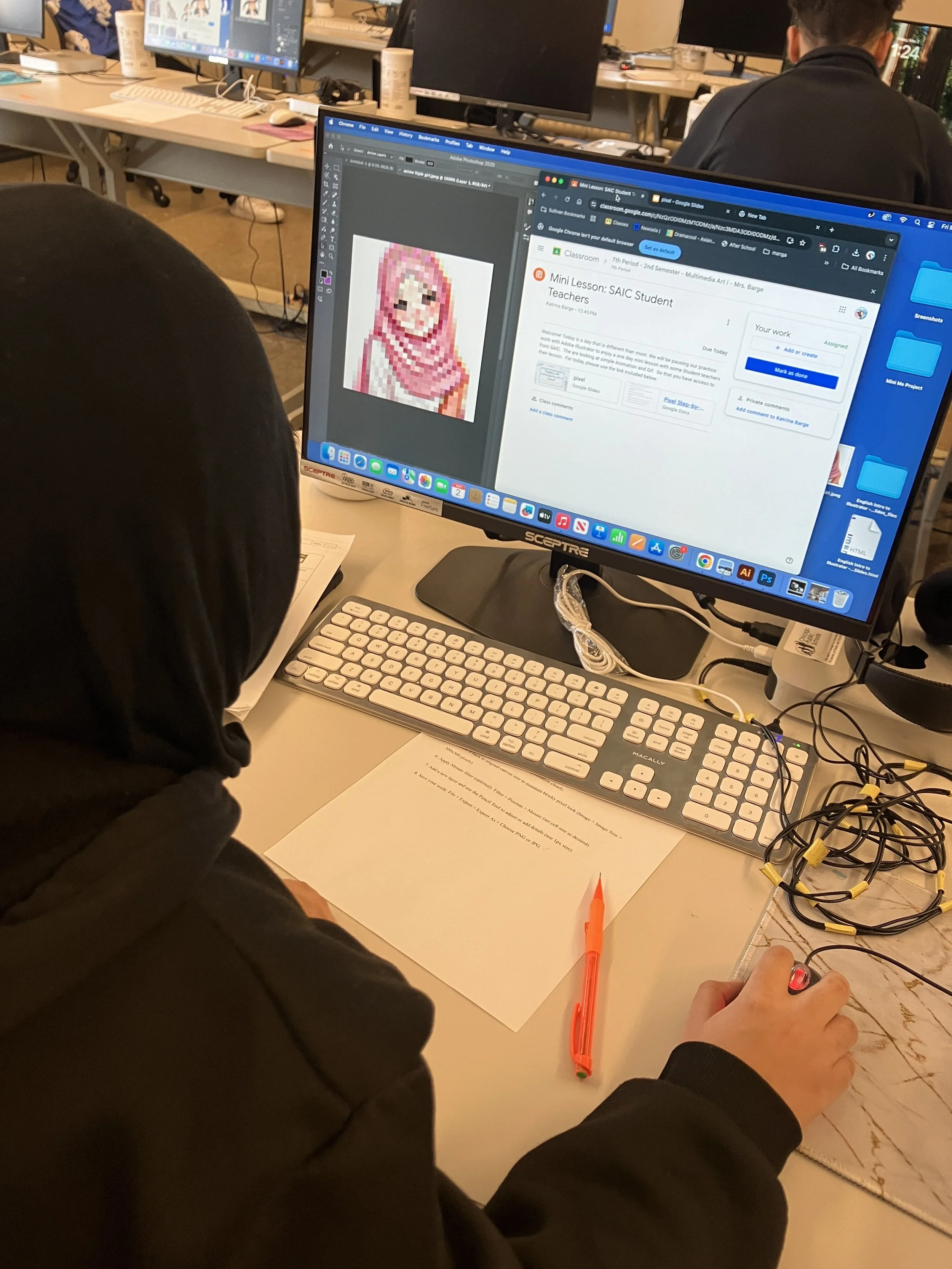
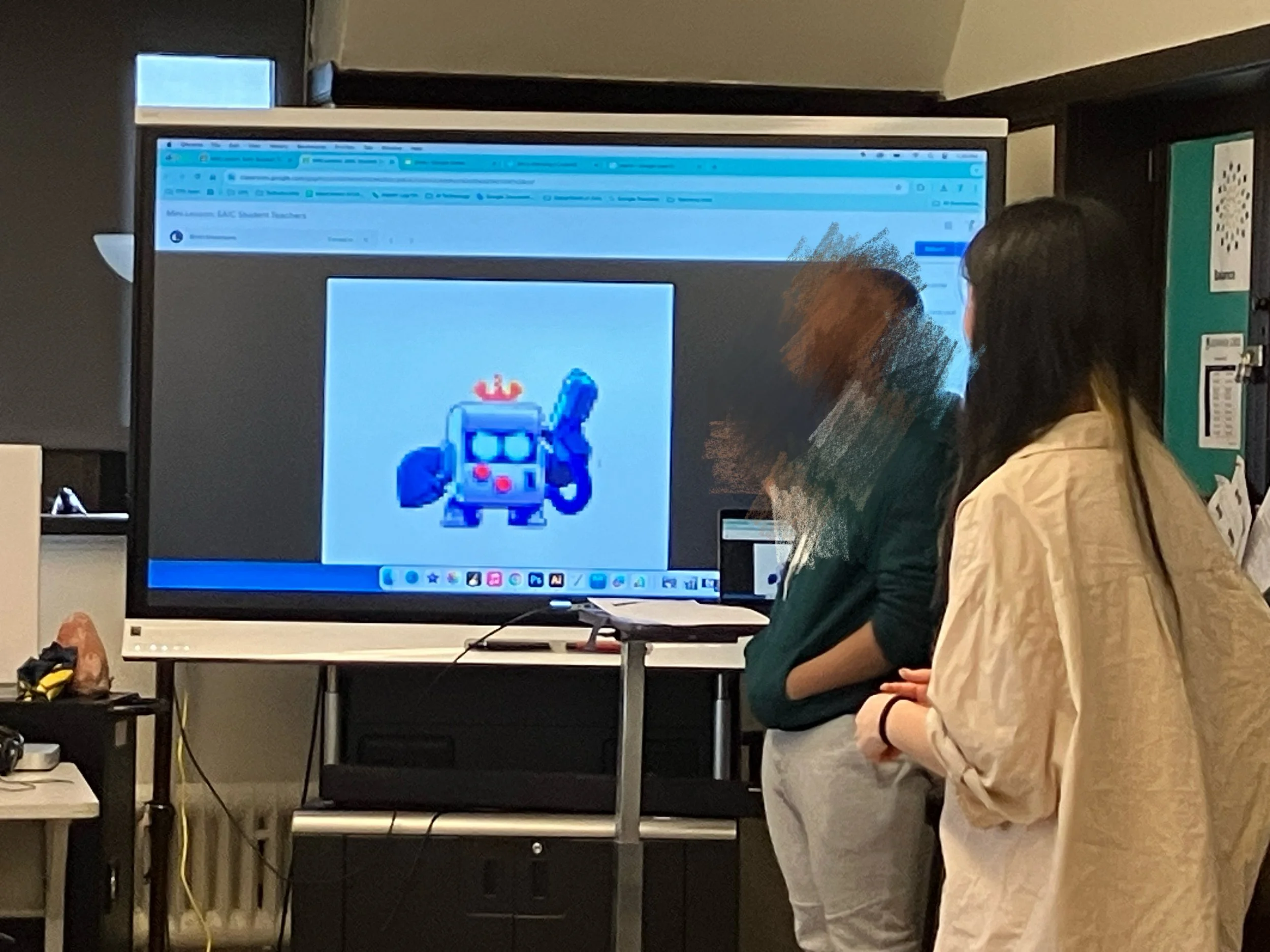
Not every student wants to put their own face on a screen—so this lesson let them decide. In this one-period digital art class, my high school students at Sullivan used Photoshop to build a pixel "self-portrait" out of whatever represented them: a selfie, a favorite character, a food, an animal, or just colors and shapes that matched their mood.
Inspired by the street artist Invader, whose pixel mosaics turn city walls into 8-bit characters, students learned to resize and pixelate an image, work with layers and filters, and draw square-by-square with the Pencil Tool. The goal was never realism or polish—it was using extreme simplification to express identity, and discovering how much personality can come through in a few blocks of color.
High School · 1-Day Lesson · Sullivan High School, CPS
Pixel Me!
Aligned to National Core Arts Standards—digital media, abstraction, and identity through pixel art.

Process in Action