Elementary Student Teaching
Dragons Around World
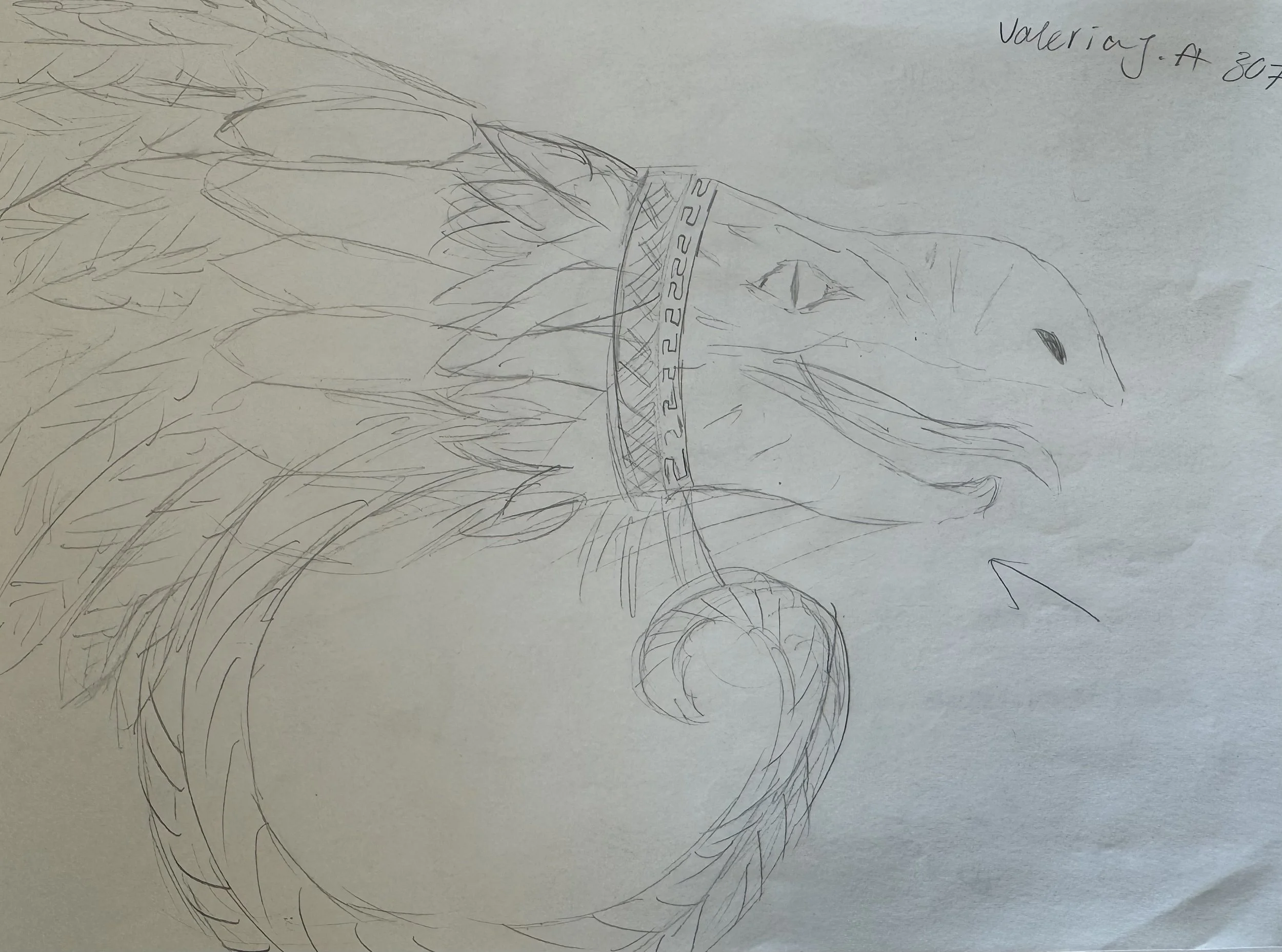
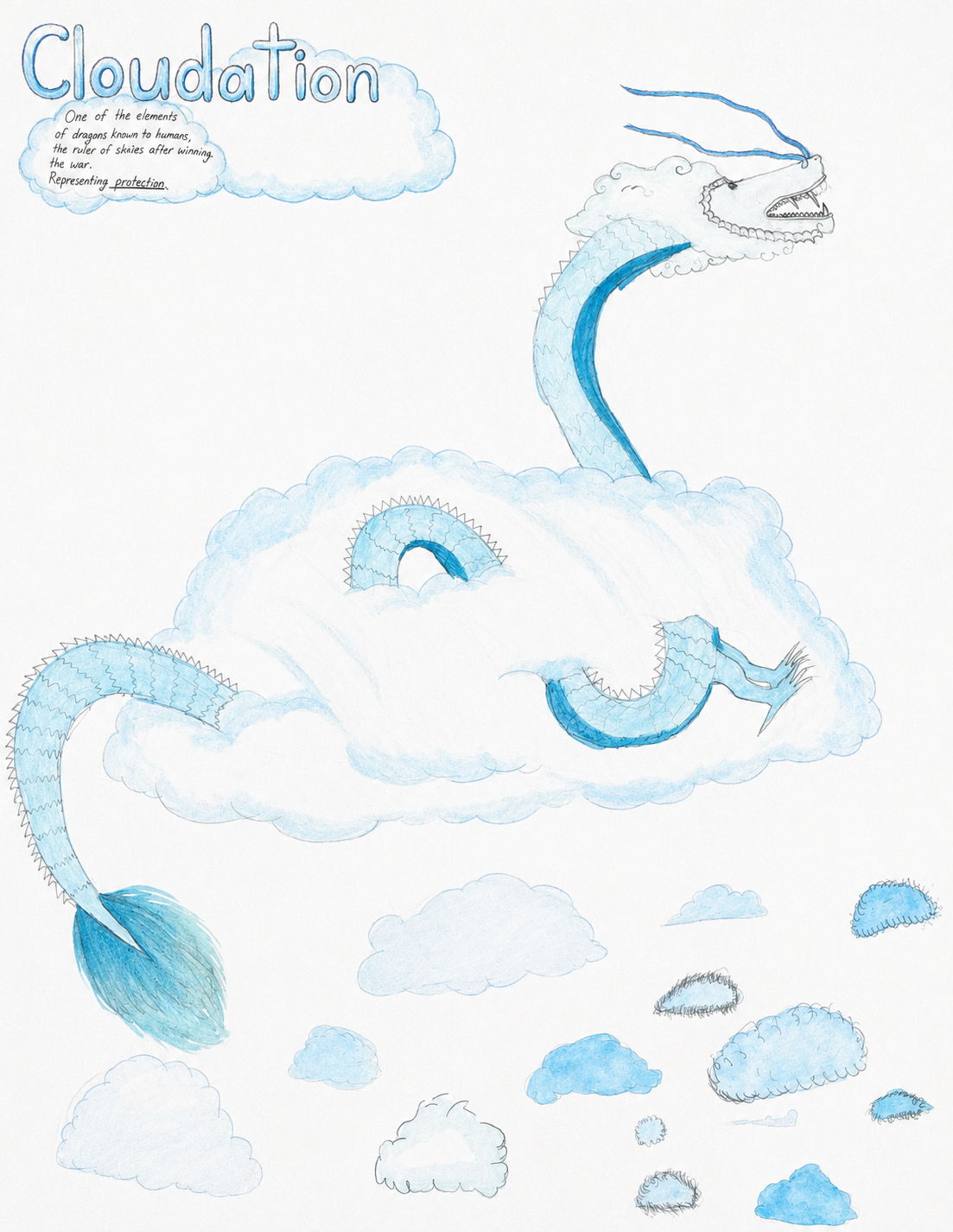
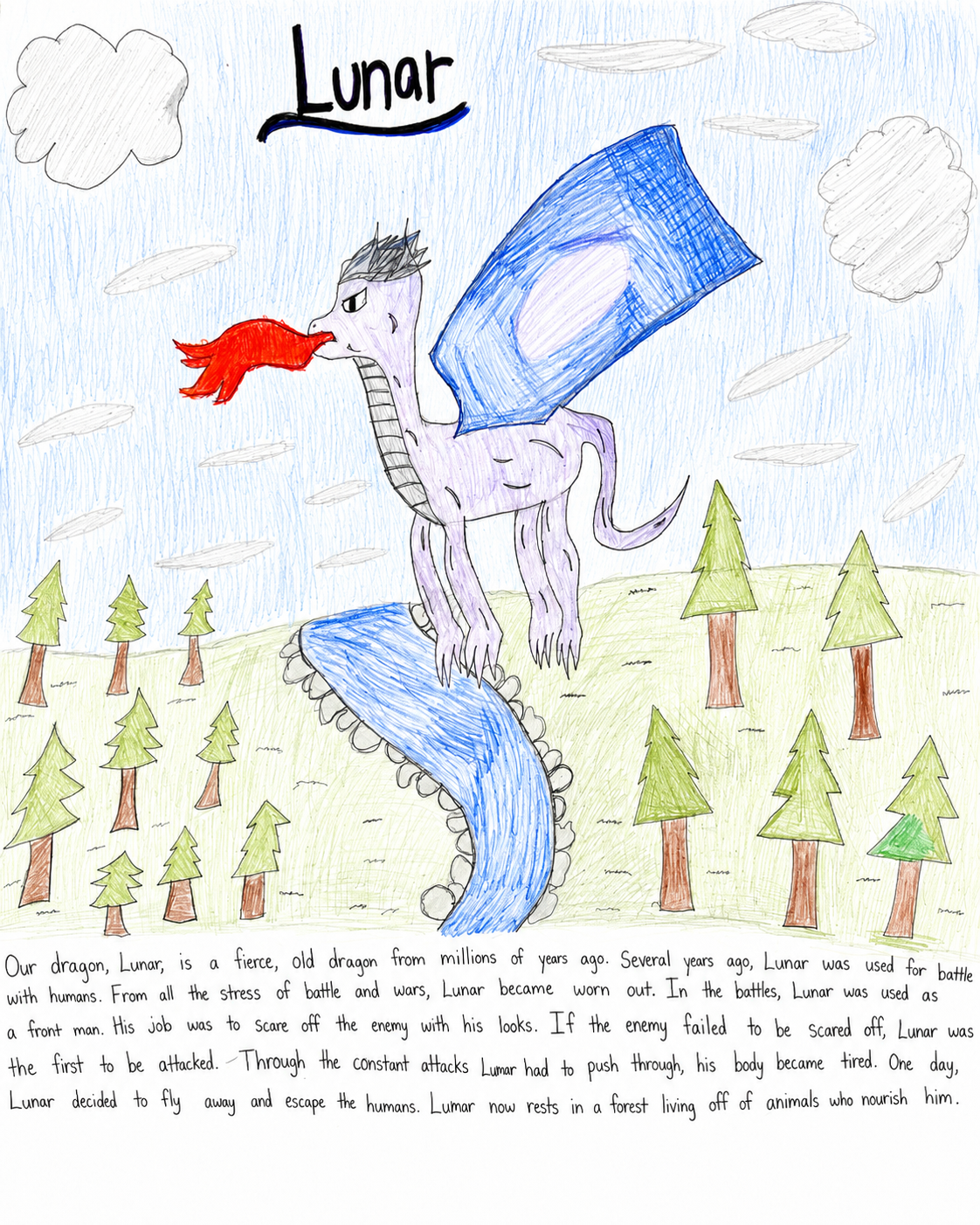
One of my students named his dragon Turqwa. He told me it was ten thousand years old, that it had lost all five of its siblings, and had grown vicious toward the humans who took its family. He was in eighth grade, and had just built an entire emotional history for a creature that didn't exist yet—and that was exactly the point.
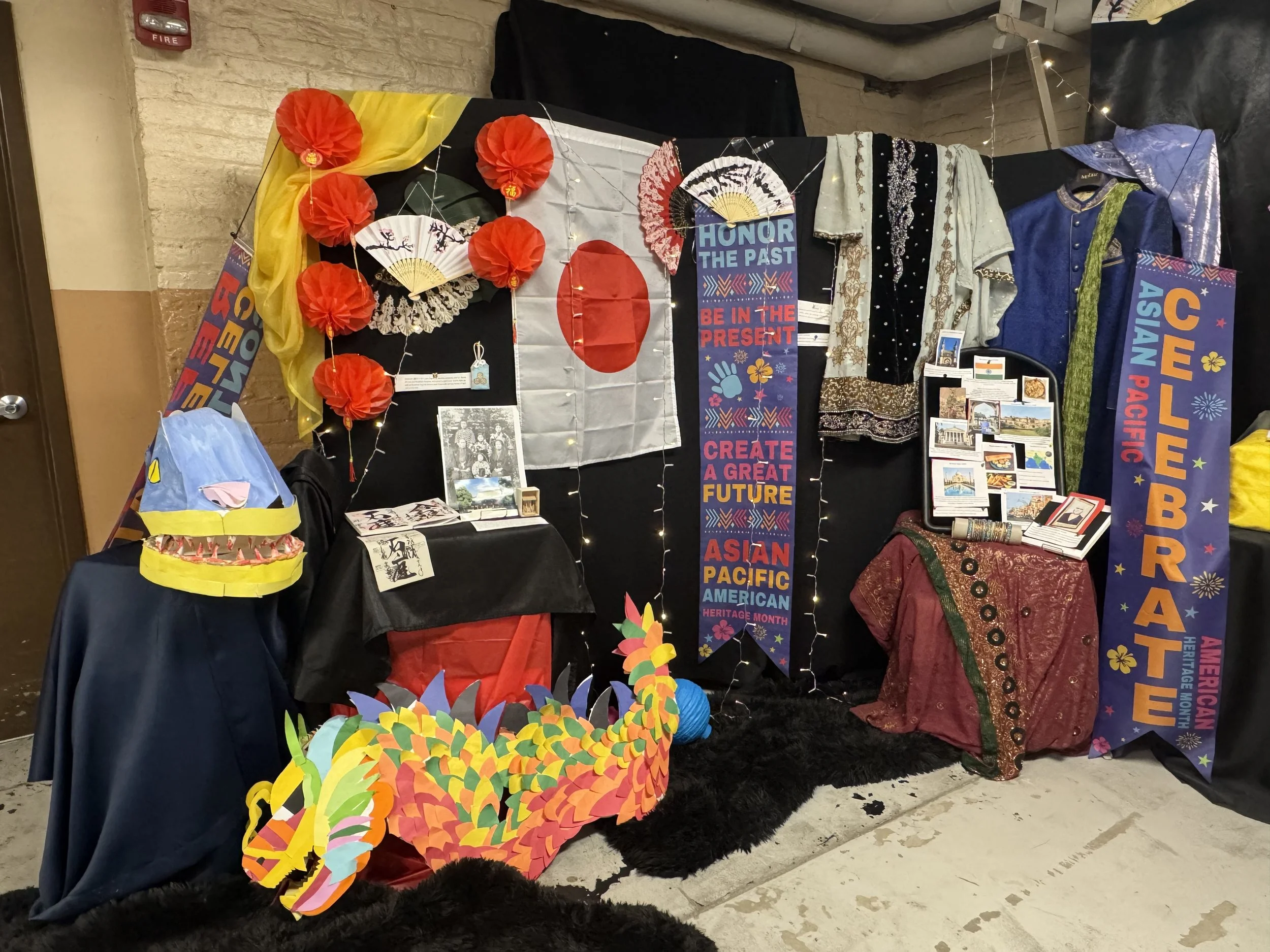
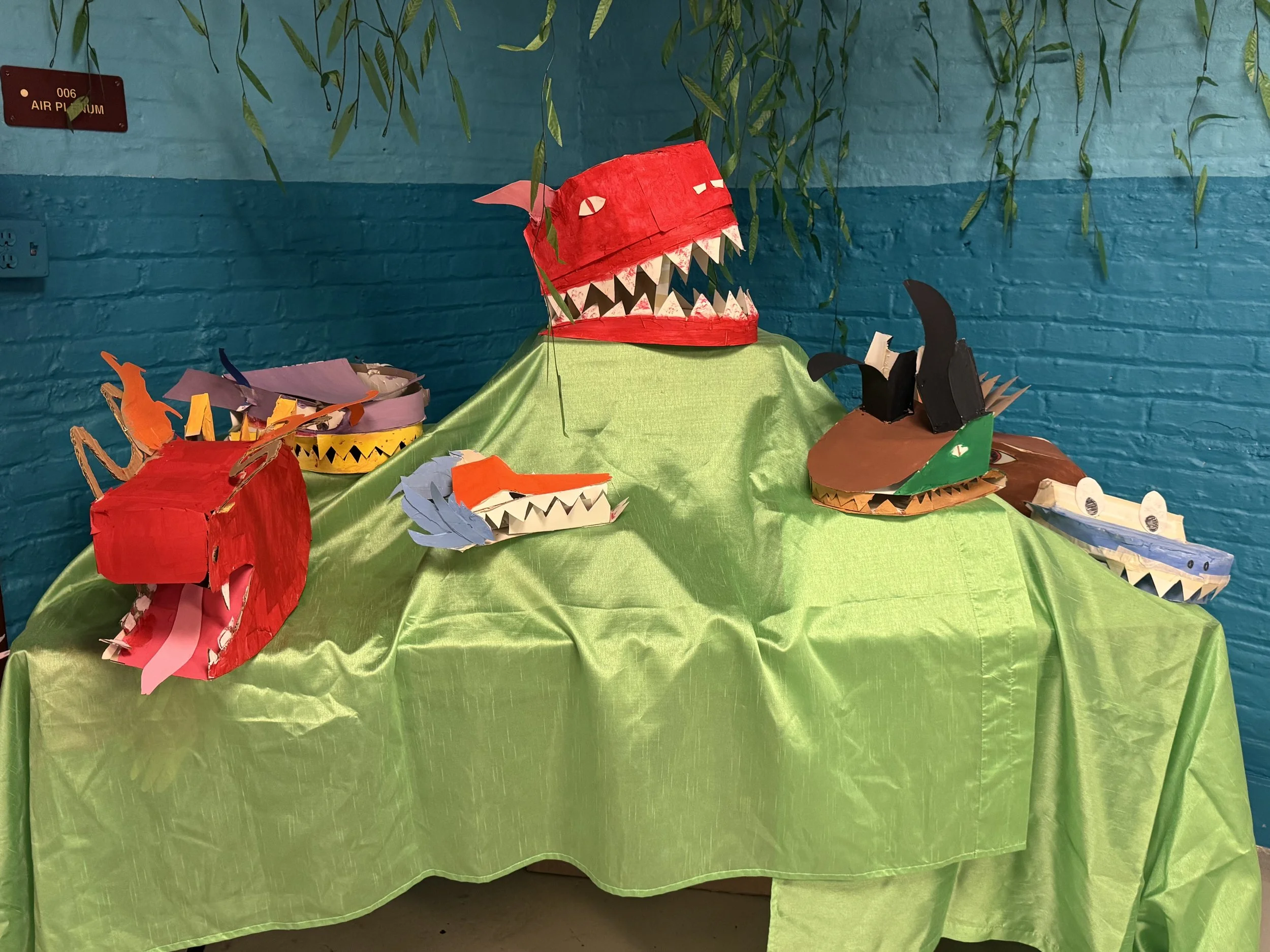
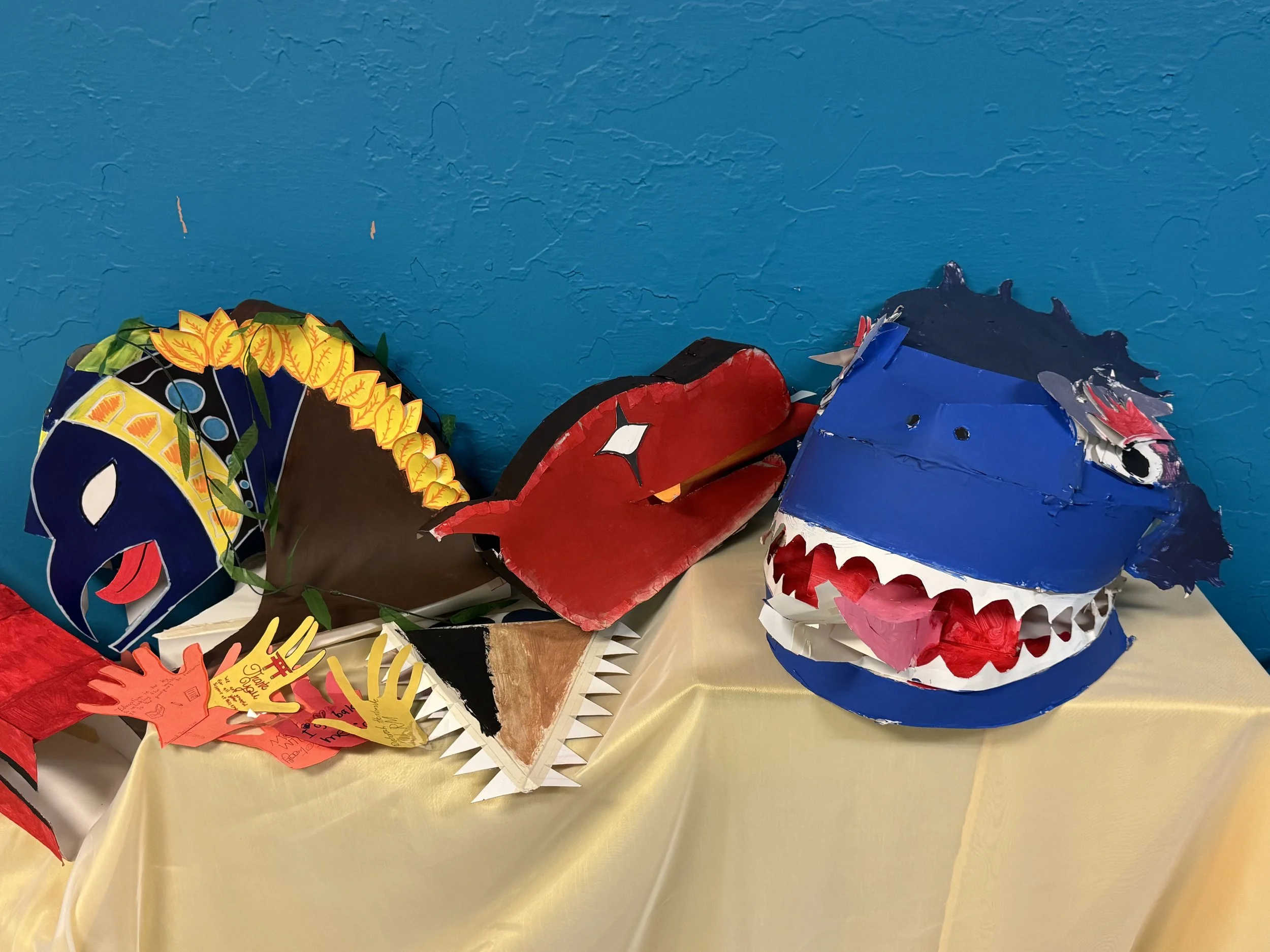
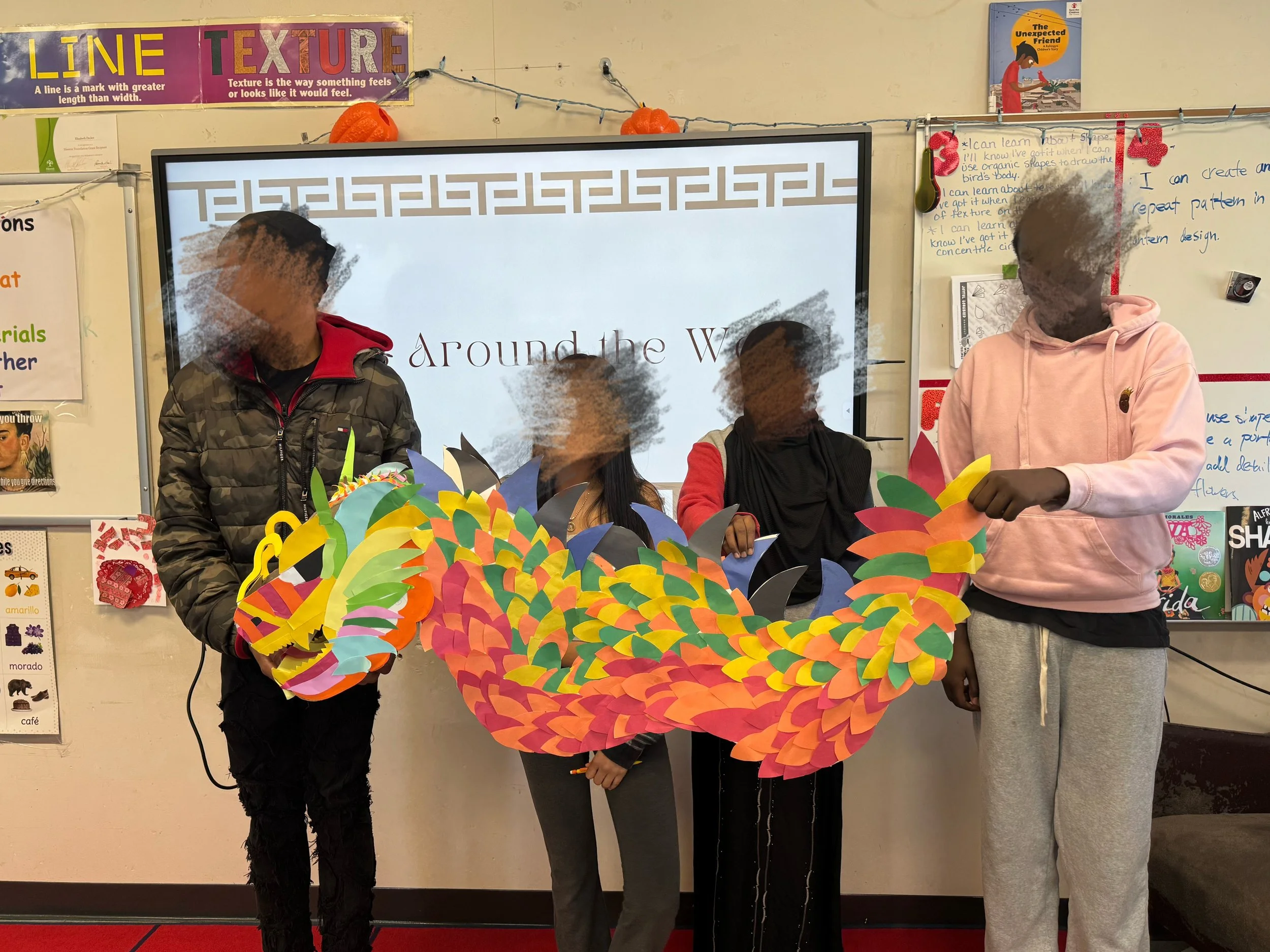
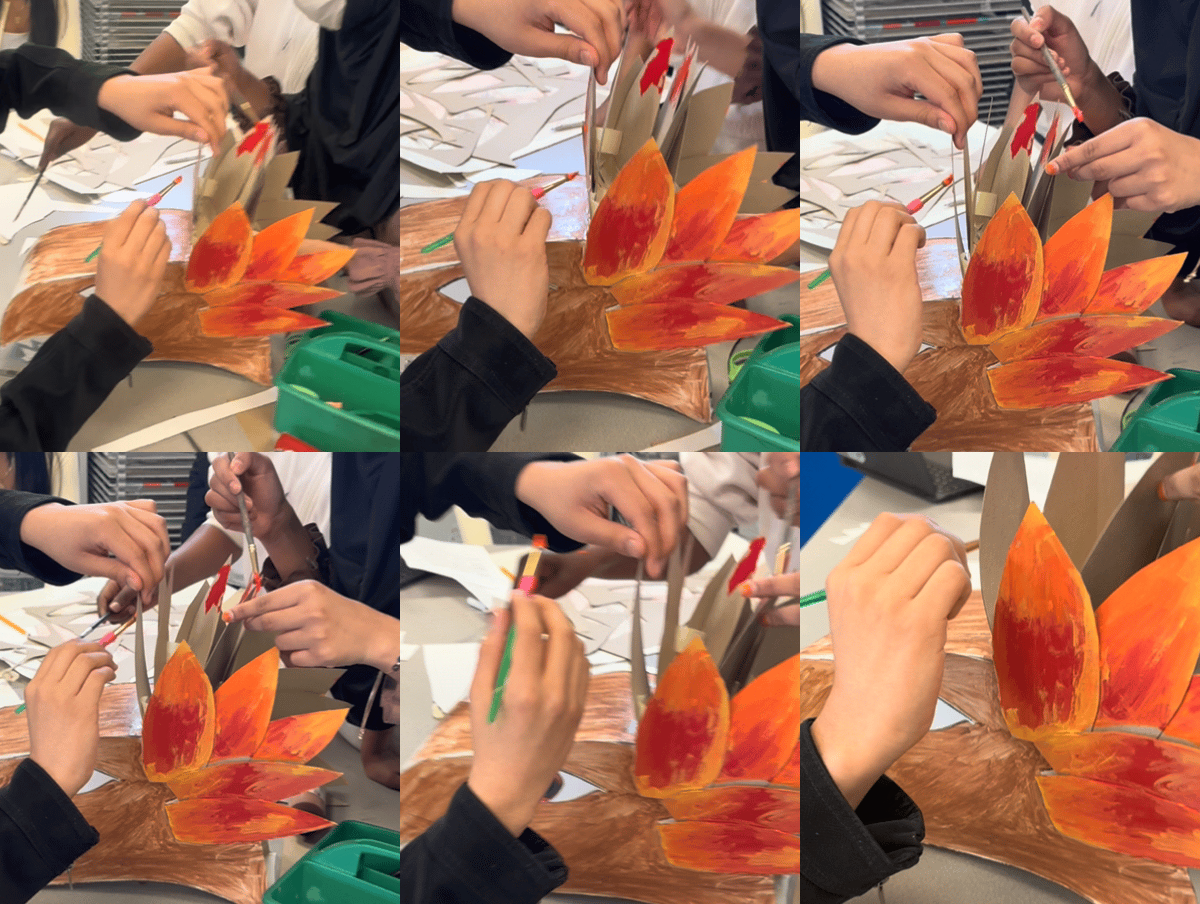
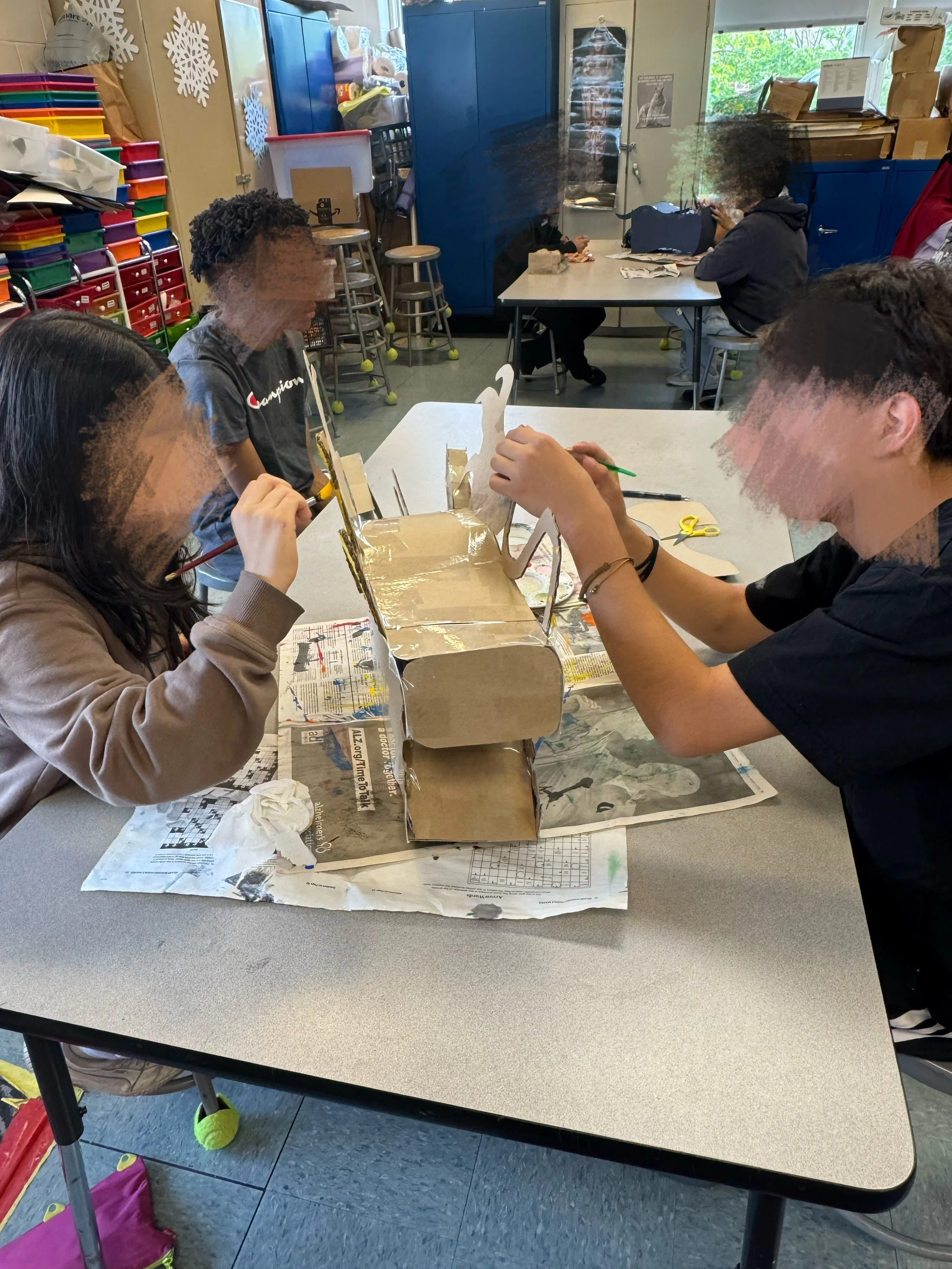
This was Dragons Around the World, a six-lesson unit I designed for my 8th graders at Hayt Elementary in celebration of Asian American & Pacific Islander Heritage Month. We looked at how dragons are imagined across cultures—Chinese, European, and Mesoamerican feathered serpents—then each student invented their own and wrote its story. In small groups, they merged their separate dragons into one and built those drawings into large collaborative cardboard sculptures, problem-solving structure as they went.
The unit closed with group presentations and a school-wide display. Given a theme and room to decide, every student found their own way in.
8th Grade · 6-Lesson Unit · Hayt Elementary, CPS · Designed for Asian American & Pacific Islander Heritage Month
1 · Individual Design & Storytelling
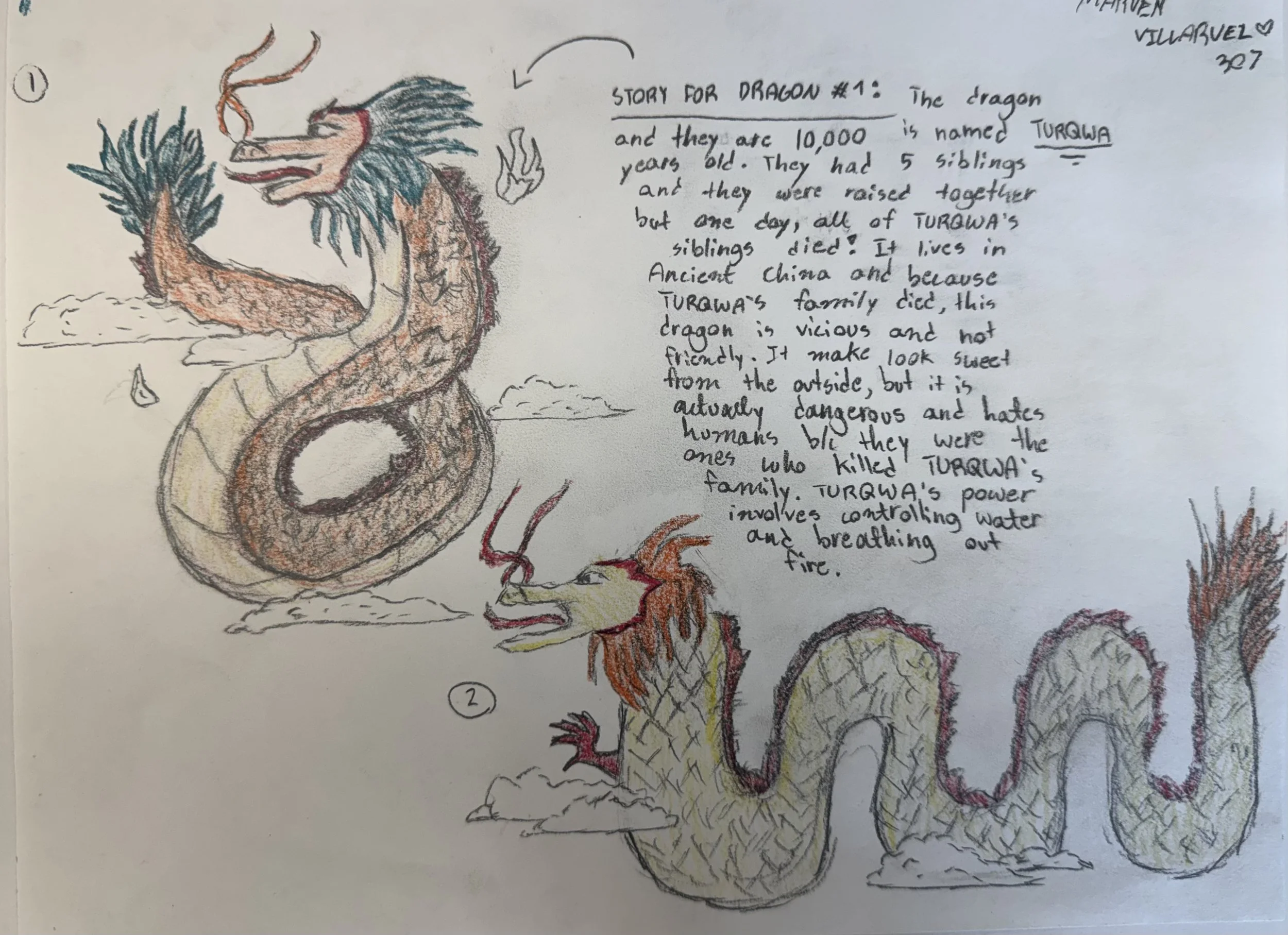
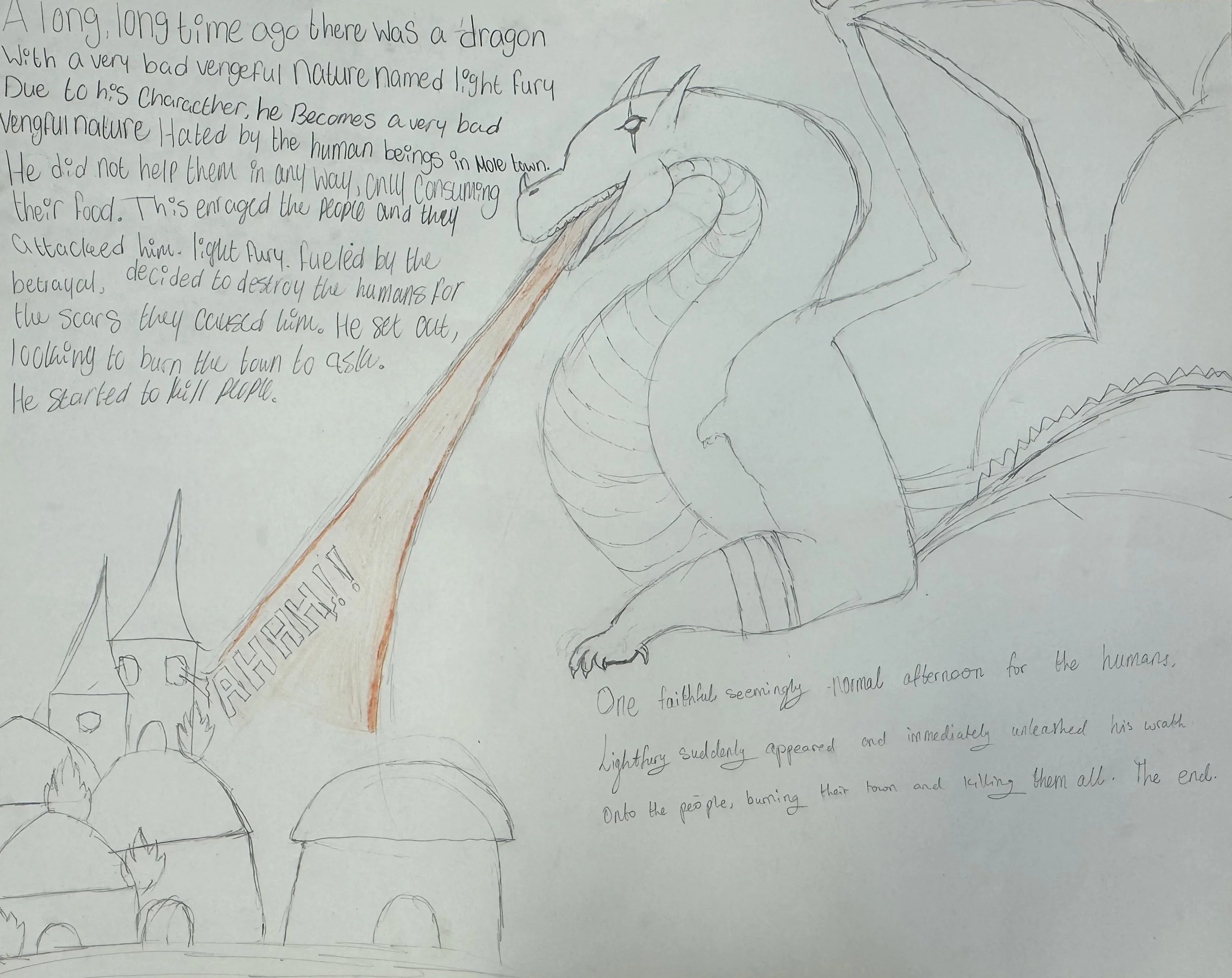
Each student sketched an original dragon and wrote its story—where it lived, what it had survived, what powers it held.
2 · Building Together
In small groups, students merged their individual dragons into one unified design.
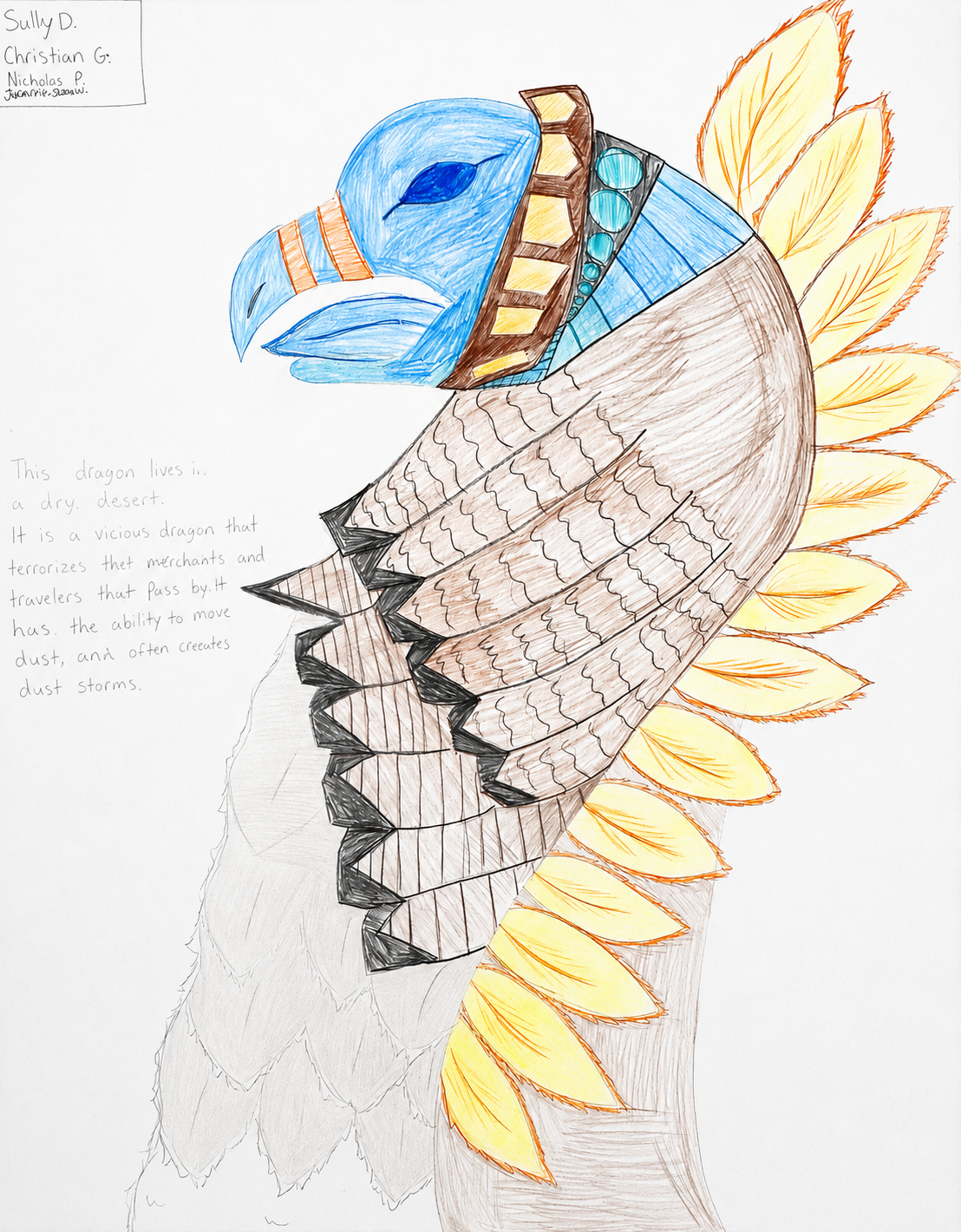
Groups built their 2D designs into large 3D cardboard dragons, then presented them at a school-wide celebration of Asian American & Pacific Islander Heritage Month.
3 · Celebration & Display
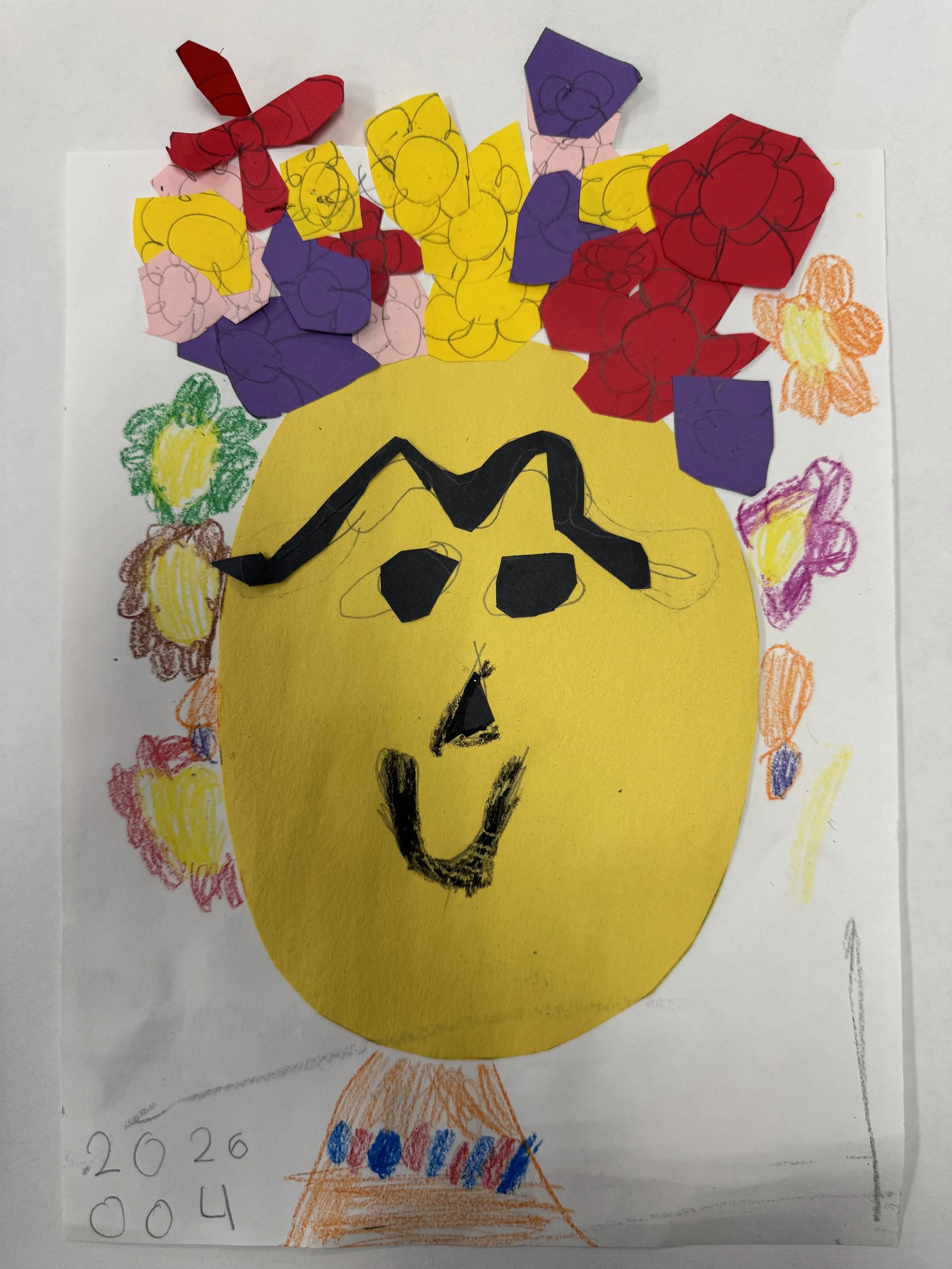
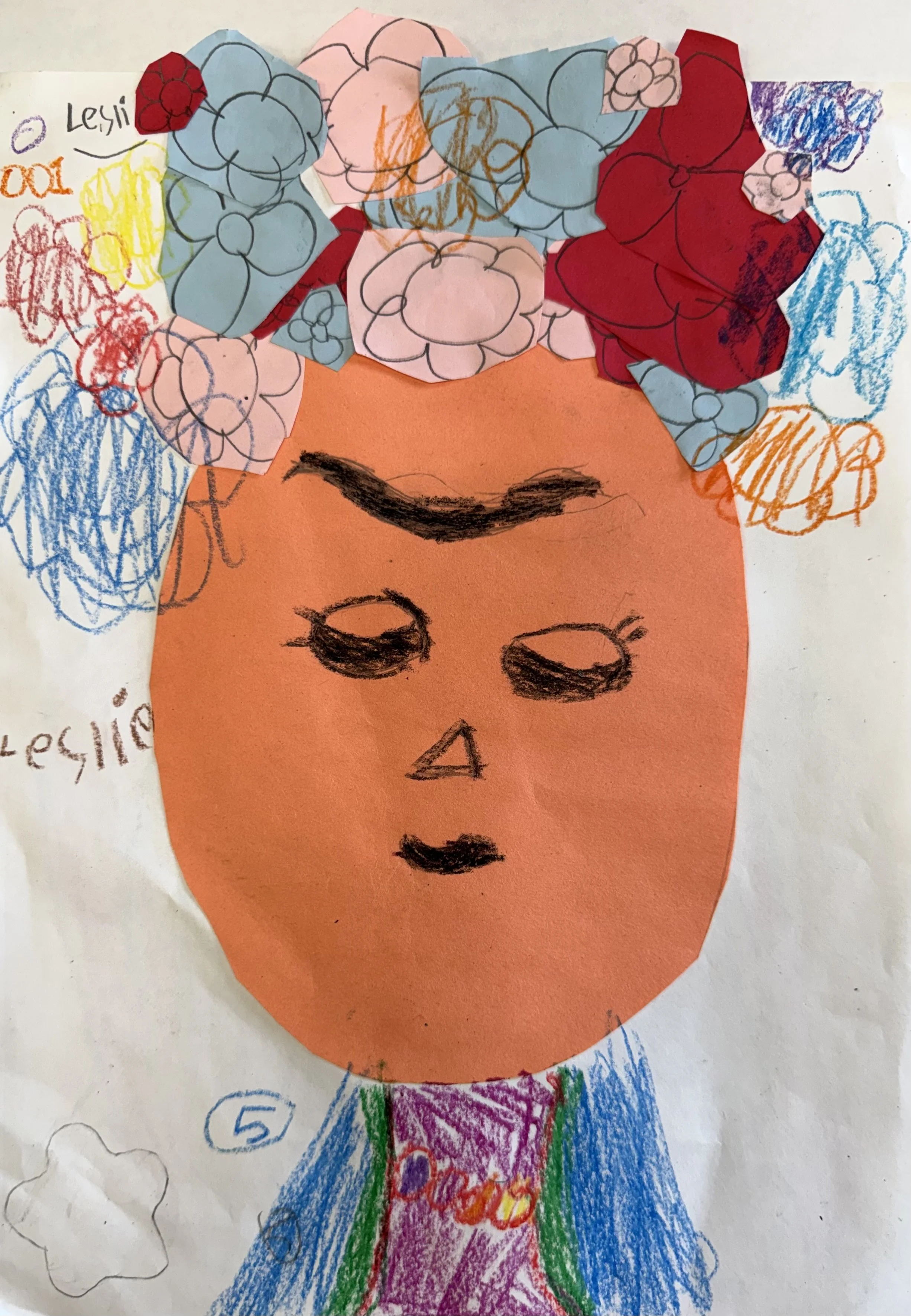
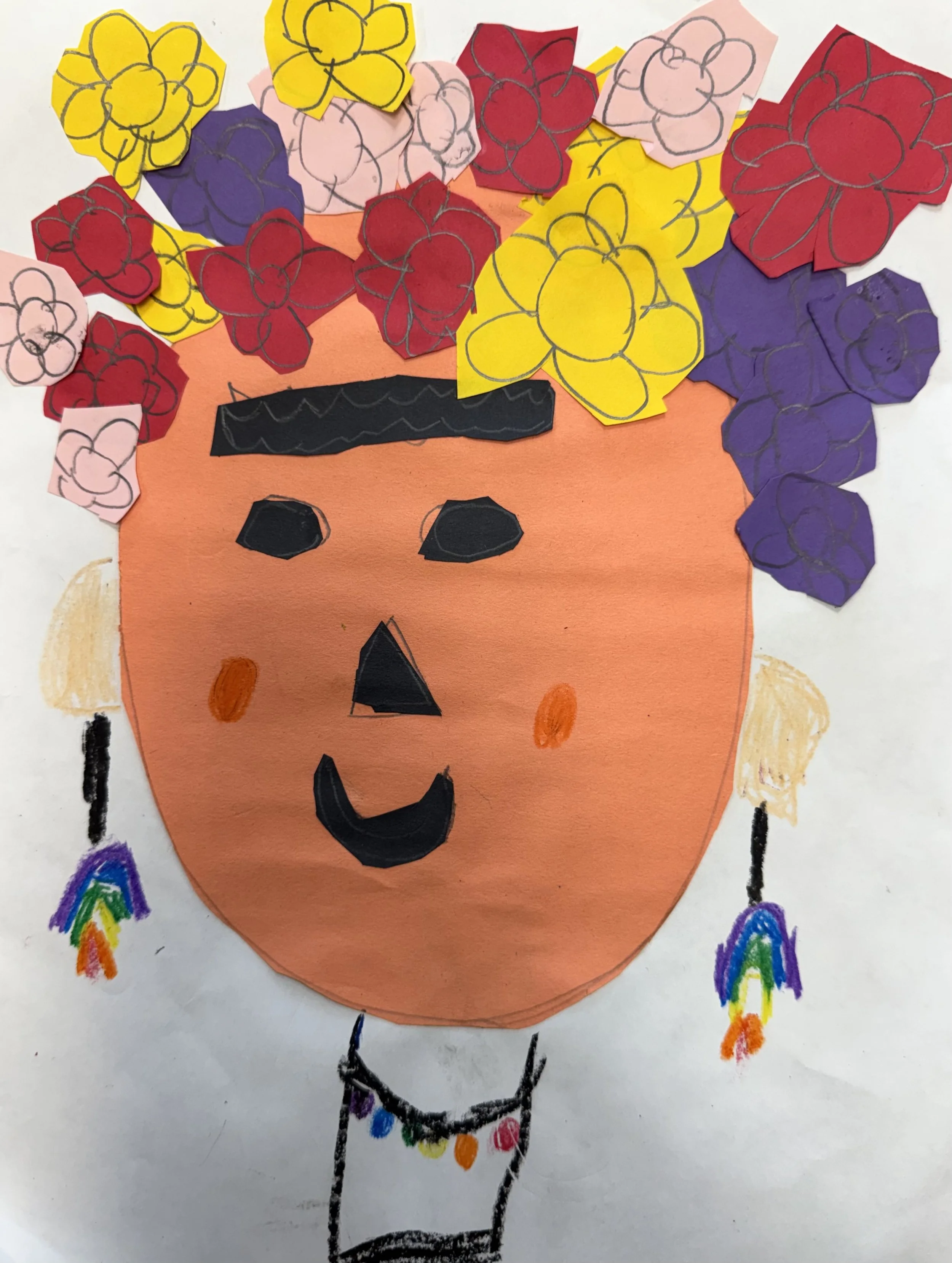
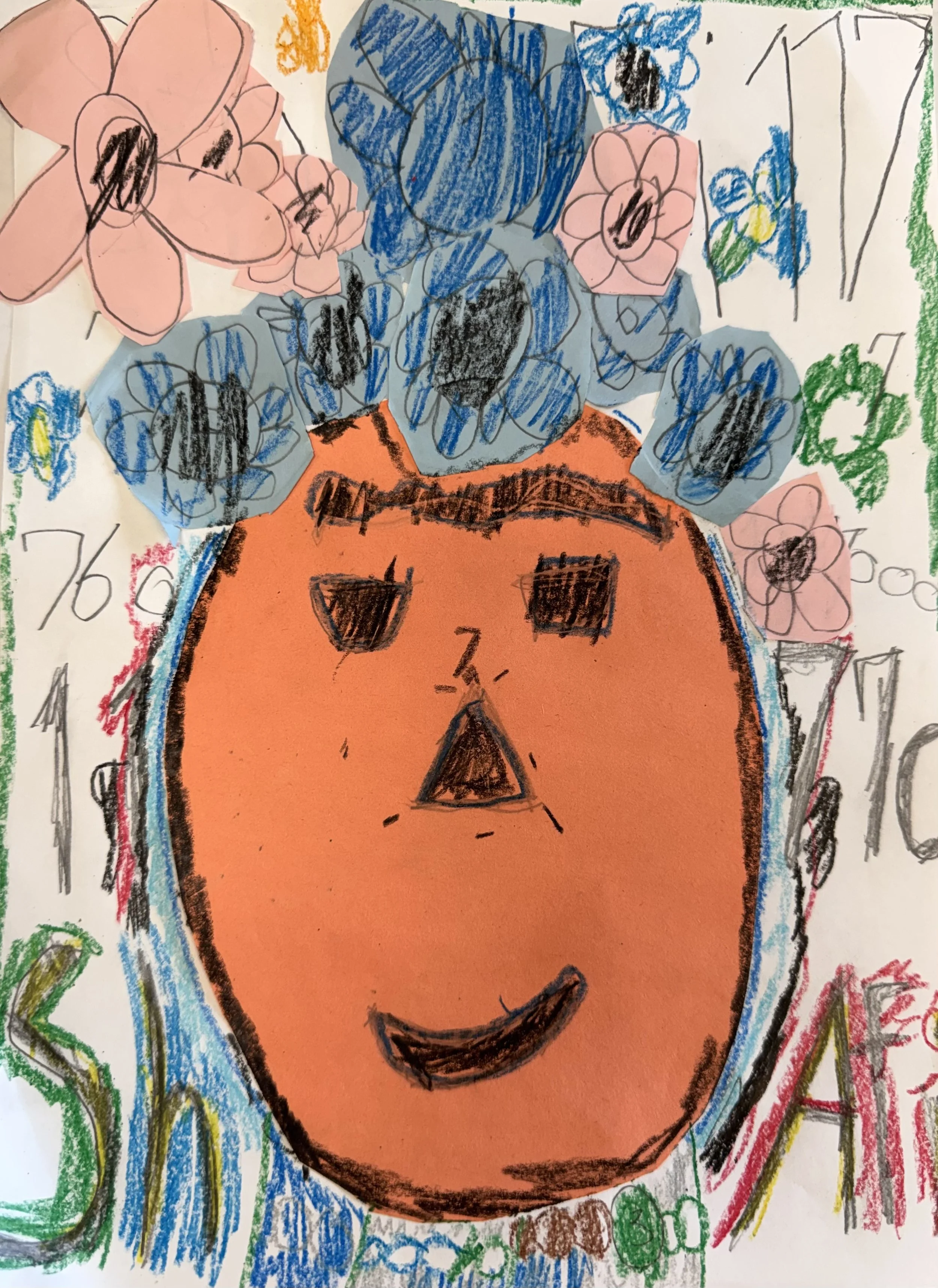
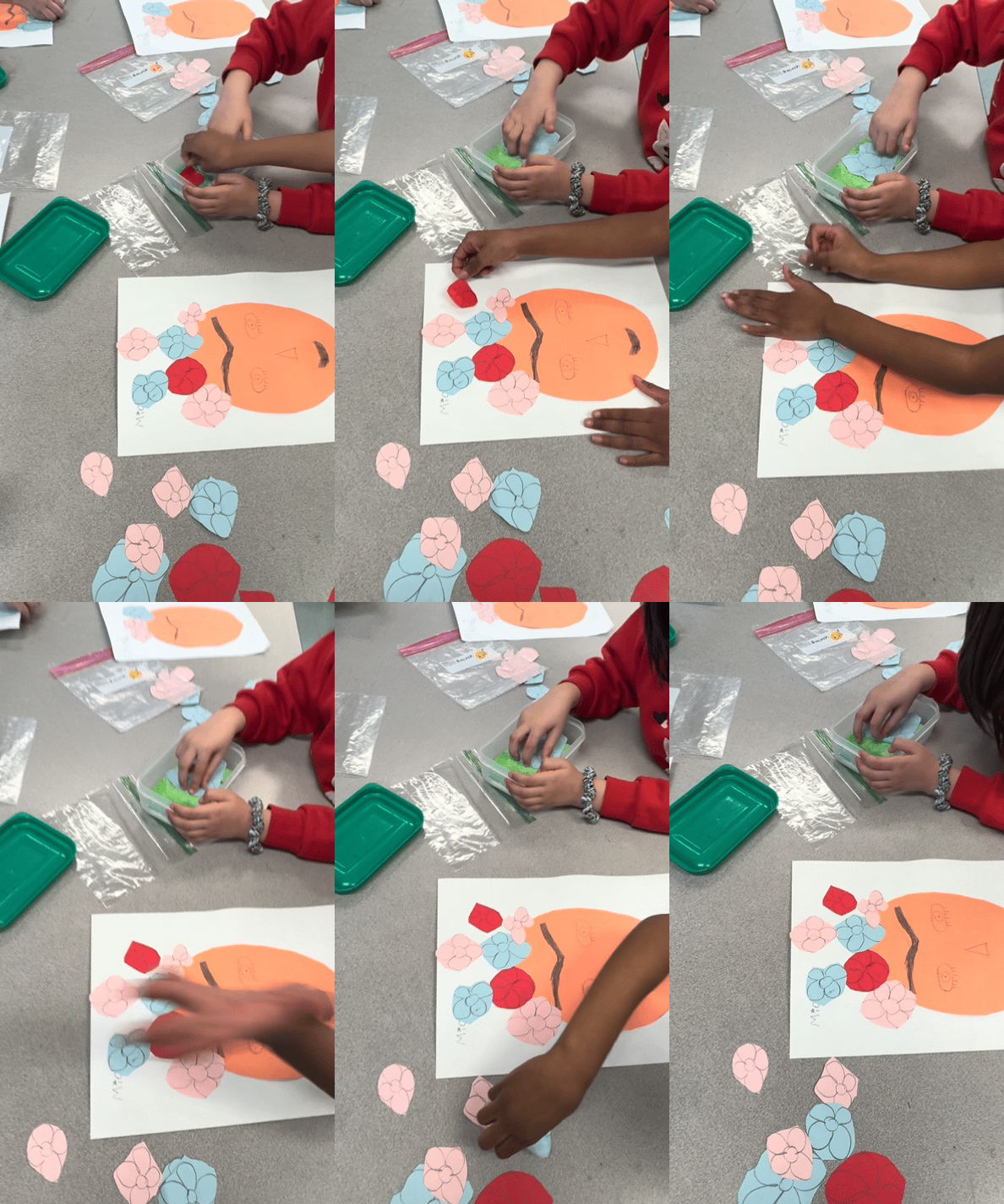
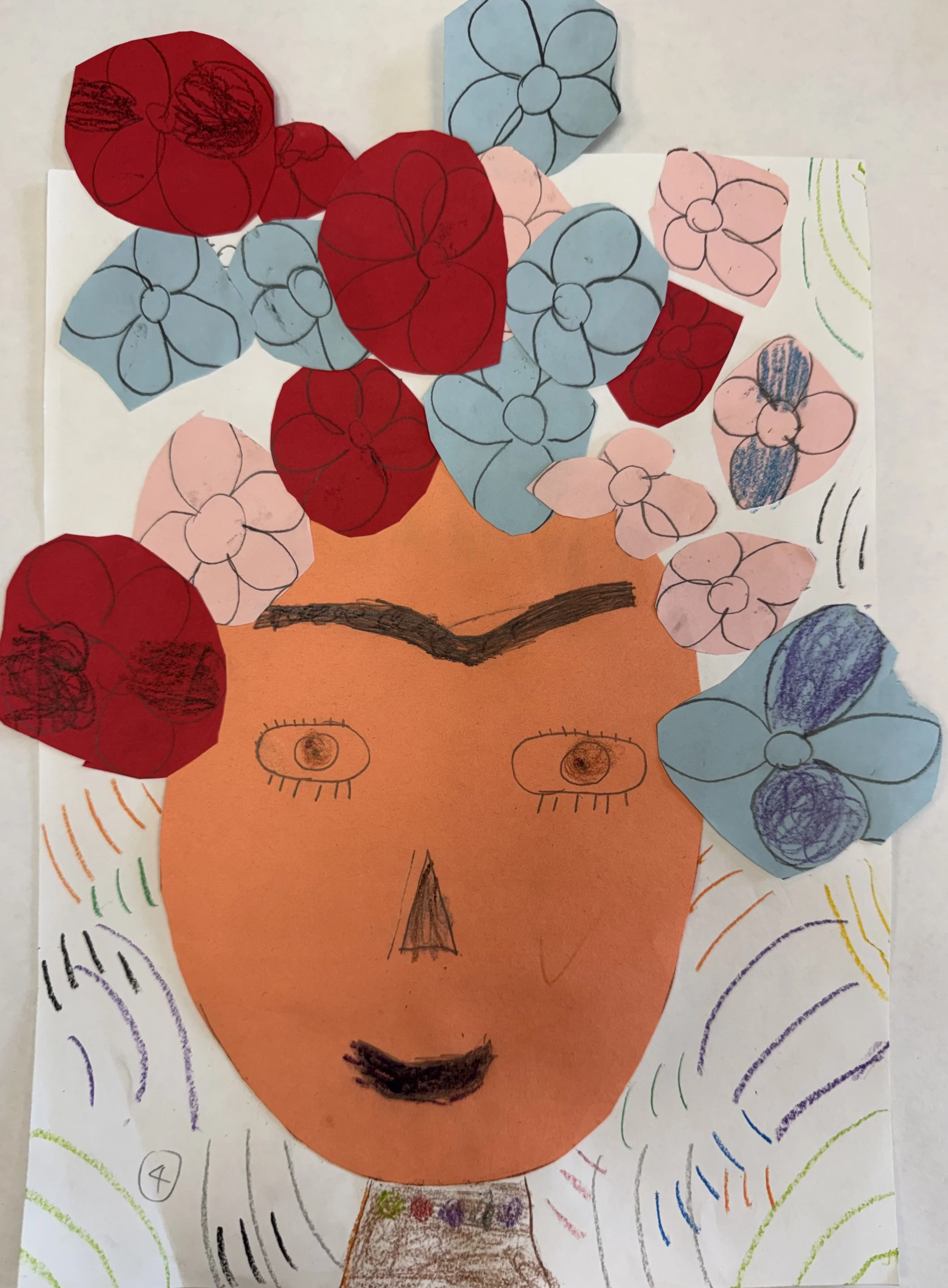
"Can a circle become a face?" I asked, holding up a plain paper circle. A four-year-old looked at it, then at me, and said, "Only if you give it eyes." That was the whole lesson, really. In this three-day unit for my Pre-K and Kindergarten students at Hayt Elementary, we used simple shapes—circles, ovals, rectangles—to build self-portraits inspired by Frida Kahlo. After meeting Frida and noticing her bold eyebrows and signature flowers, students glued pre-cut shapes into a face, then made it their own with drawn hair, flowers, color, and background. For many of them, it was the first time a few shapes became someone—and that someone was a version of themselves.
Self-Portraits with Frida
Pre-K & Kindergarten · 3-Day Lesson · Hayt Elementary, CPS
Quilt Design with Complementary Colors
8th Grade · 2-Day Lesson · Hayt Elementary, CPS
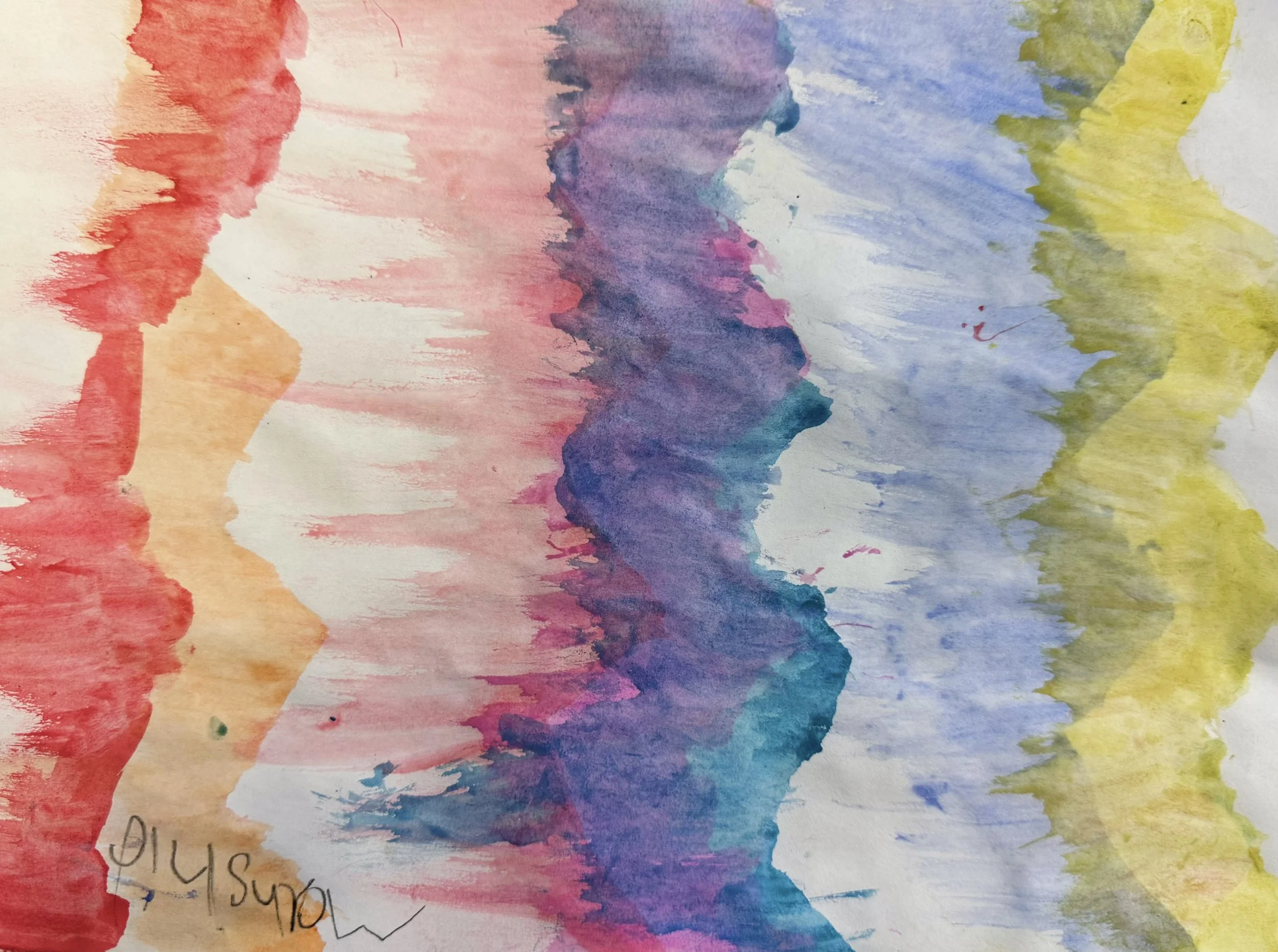
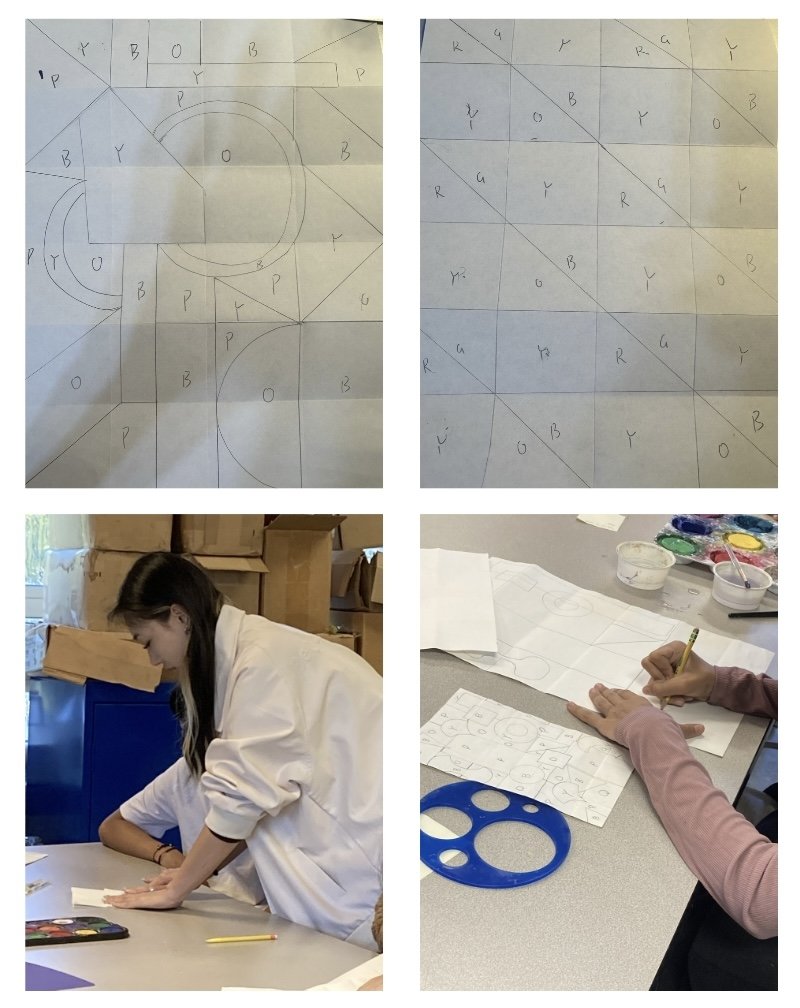
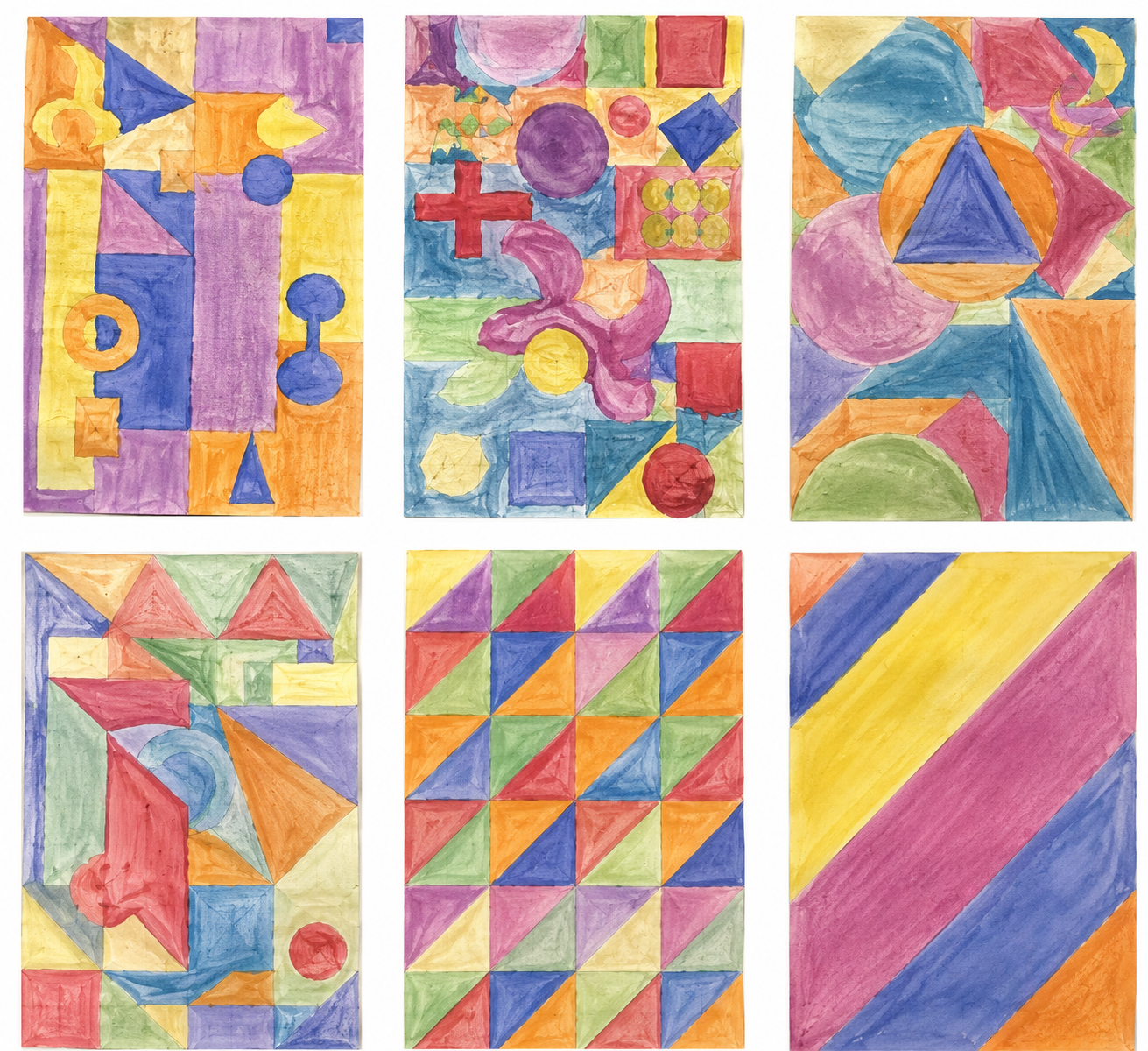
Every student got the same grid and the same rule—two pairs of complementary colors—and no two finished pieces looked alike. Some chased the strict, repeating symmetry of a quilt; others let color and shape run free like Sonia Delaunay. Same constraints, completely different voices.
In this two-day lesson for my 8th graders at Hayt Elementary, students explored how repetition, symmetry, and complementary colors build visual rhythm. After studying Sonia Delaunay's bold geometry and the patterning of traditional American quilts, each student designed a 4×6 grid using at least two complementary pairs, choosing either a free Delaunay-inspired approach or a structured quilt style. They transferred their designs to a final painting and wrote a short reflection explaining their color and symmetry choices.
Day 1 · Designing the Grid
Day 2 · Color & Reflection
The Life of Words—Drawing stories inside Chinese characters
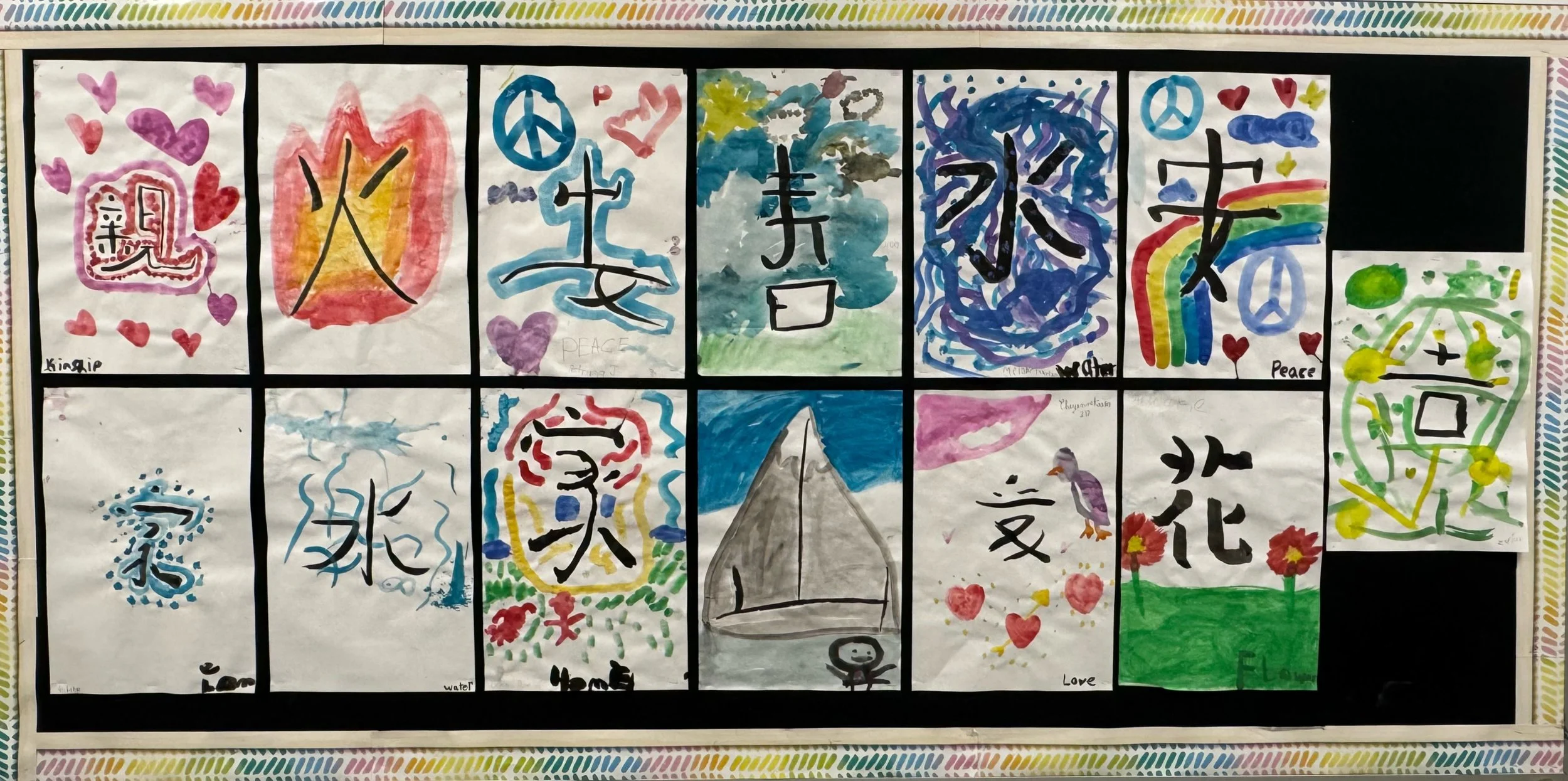
In this two-day lesson for my 2nd and 3rd graders at Hayt Elementary, students explored Chinese characters as both language and visual art. We began with contemporary artists Xu Bing and Gu Wenda, who use writing and symbols as their material, and talked about how a single word can hold meaning, memory, and feeling.
Each student chose a character and turned its outline into a canvas—filling it with images that pictured its meaning: raindrops and waves, suns and rainbows, flowers and homes. Working from word to image, they discovered that the same character can be imagined in countless ways, and that language itself can become art.
2nd–3rd Grade · 2-Day Lesson · Hayt Elementary, CPS
Design Your Own Arab Lantern
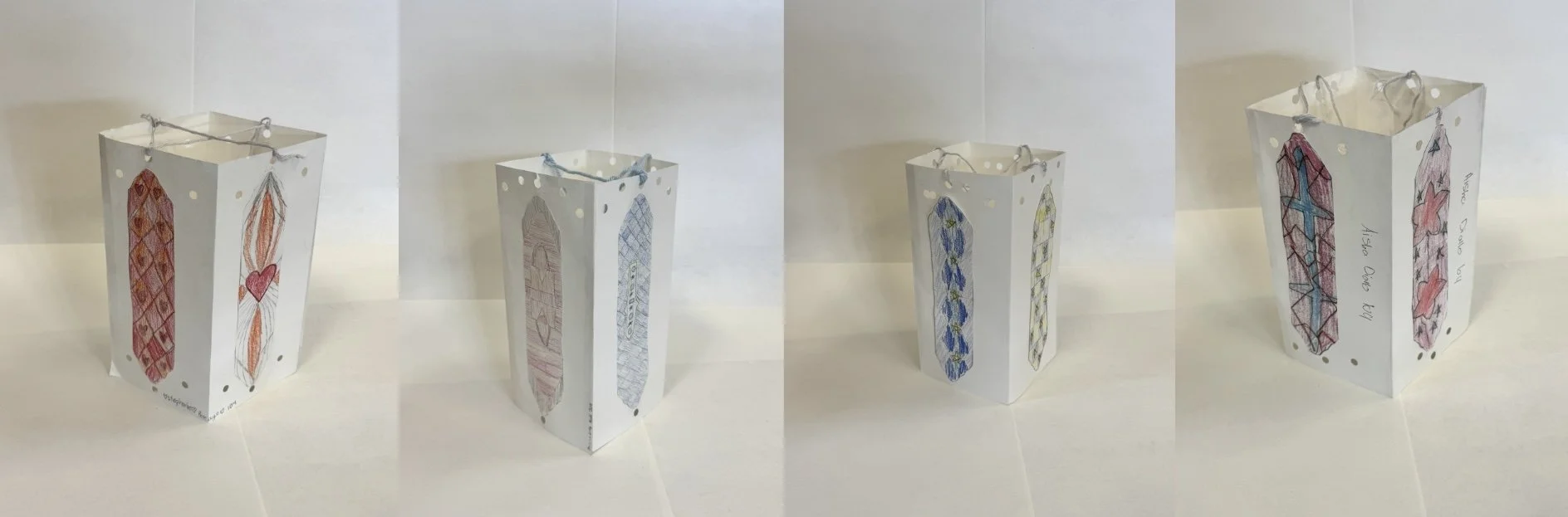
In this three-class lesson for my 4th and 5th graders at Hayt Elementary, students explored the shapes and patterns of Arab lanterns and Islamic geometric design in celebration of Arab American Heritage Month—looking at the role lanterns play during Ramadan, and how artists use symmetry and repetition to turn simple shapes into something intricate and beautiful.
Each student designed their own lantern, dividing it into sections filled with at least three repeating patterns, then outlined, colored, and cut out their finished piece. Along the way, the project asked students to look closely at an artistic tradition different from their own—and to find their own voice within it.
4th–5th Grade · 3-Class Lesson · Hayt Elementary, CPS · Created for Arab American Heritage Month
Pixel Art Monsters
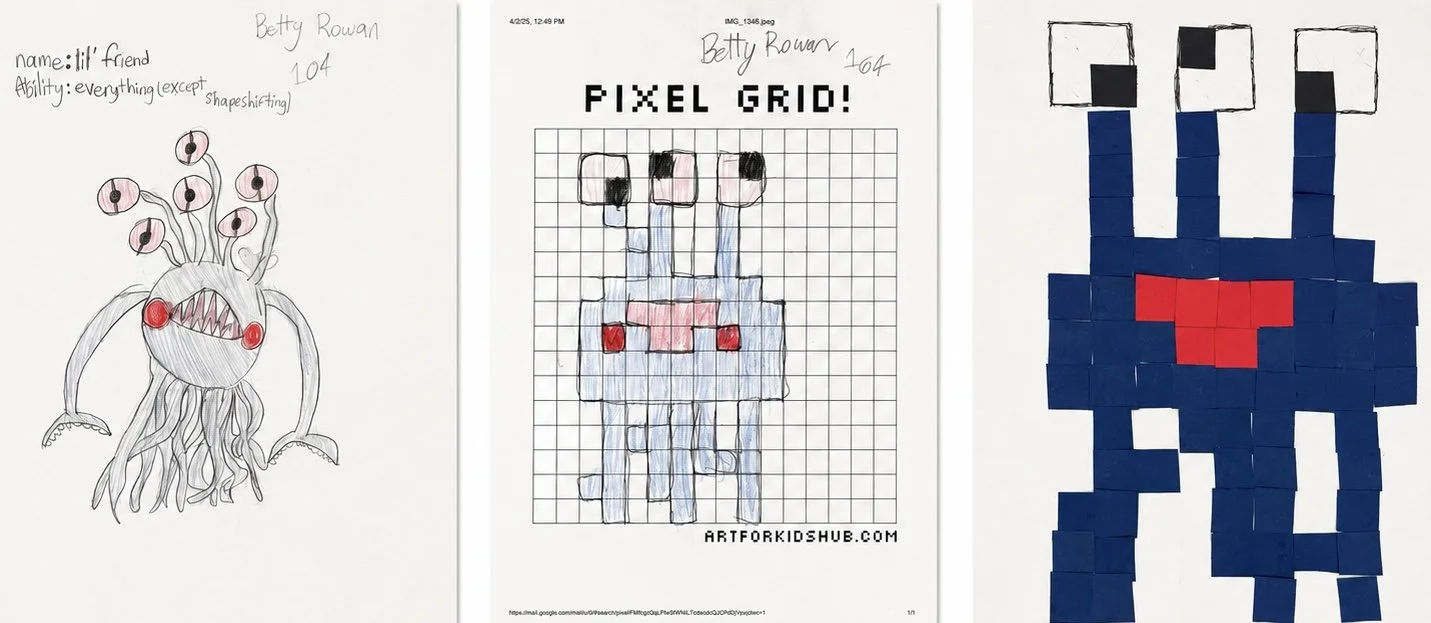
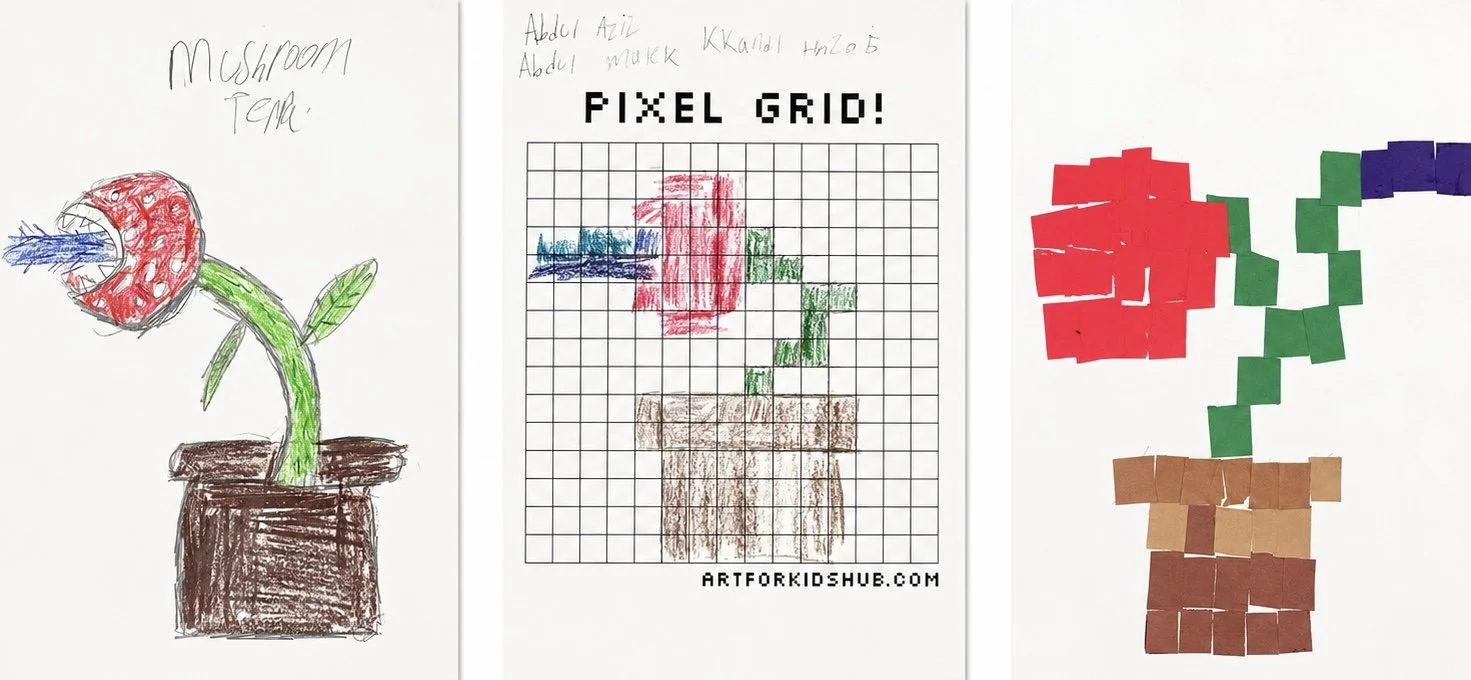
How do you turn a drawing into something a computer could understand? Inspired by retro video games and the street artist Invader, my 4th and 5th graders explored pixel art—how complex images simplify into a grid of small squares.
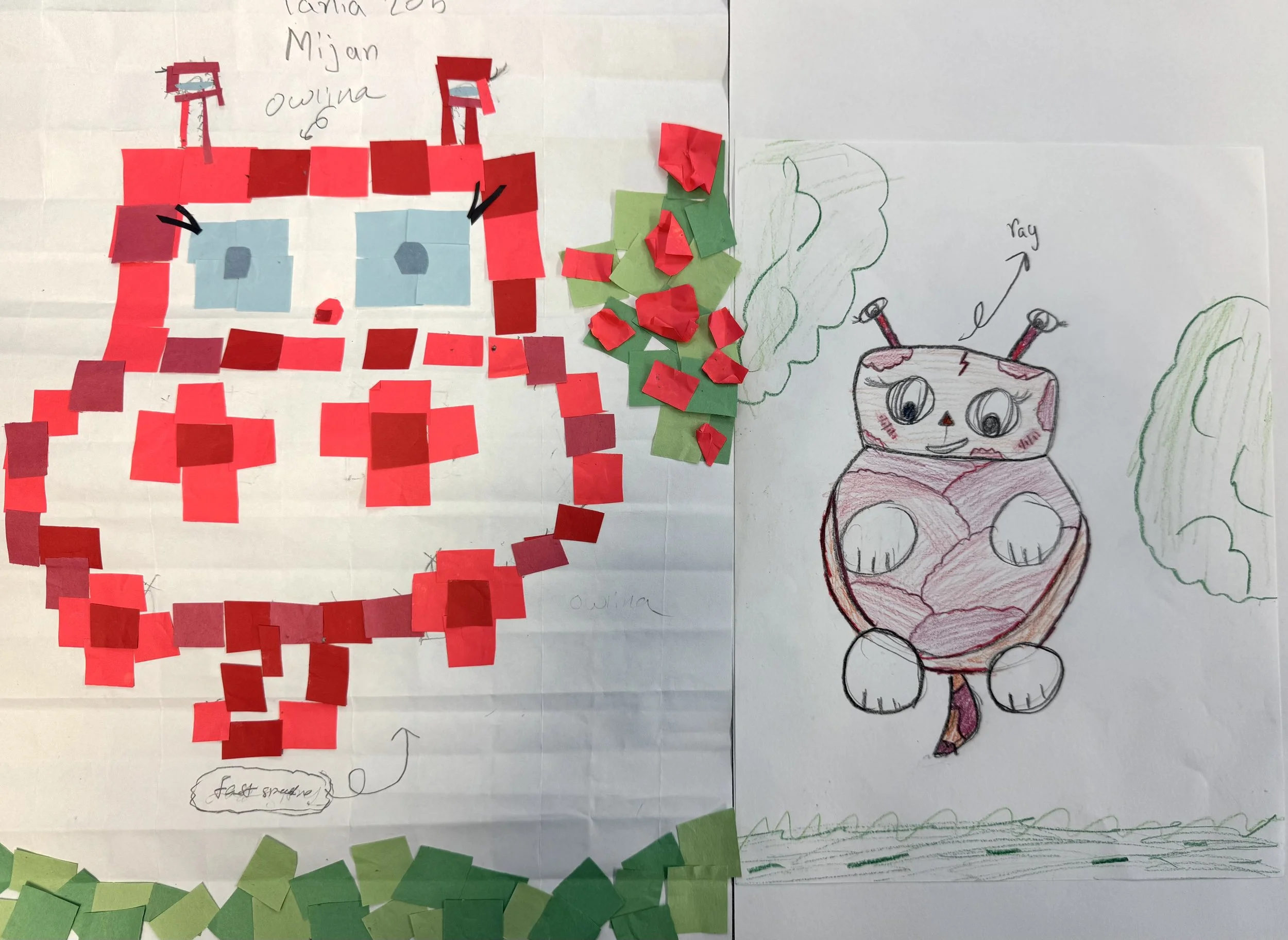
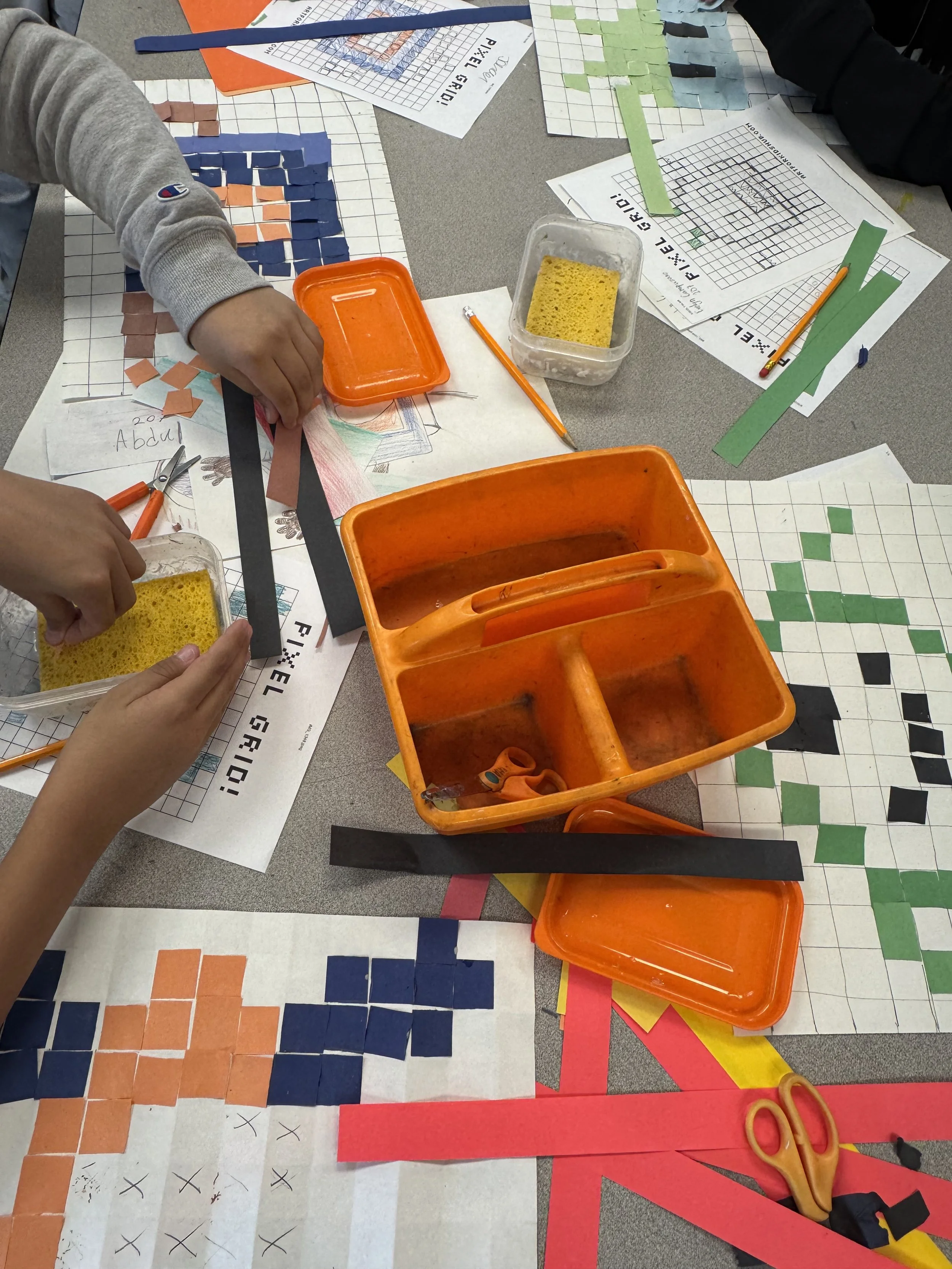
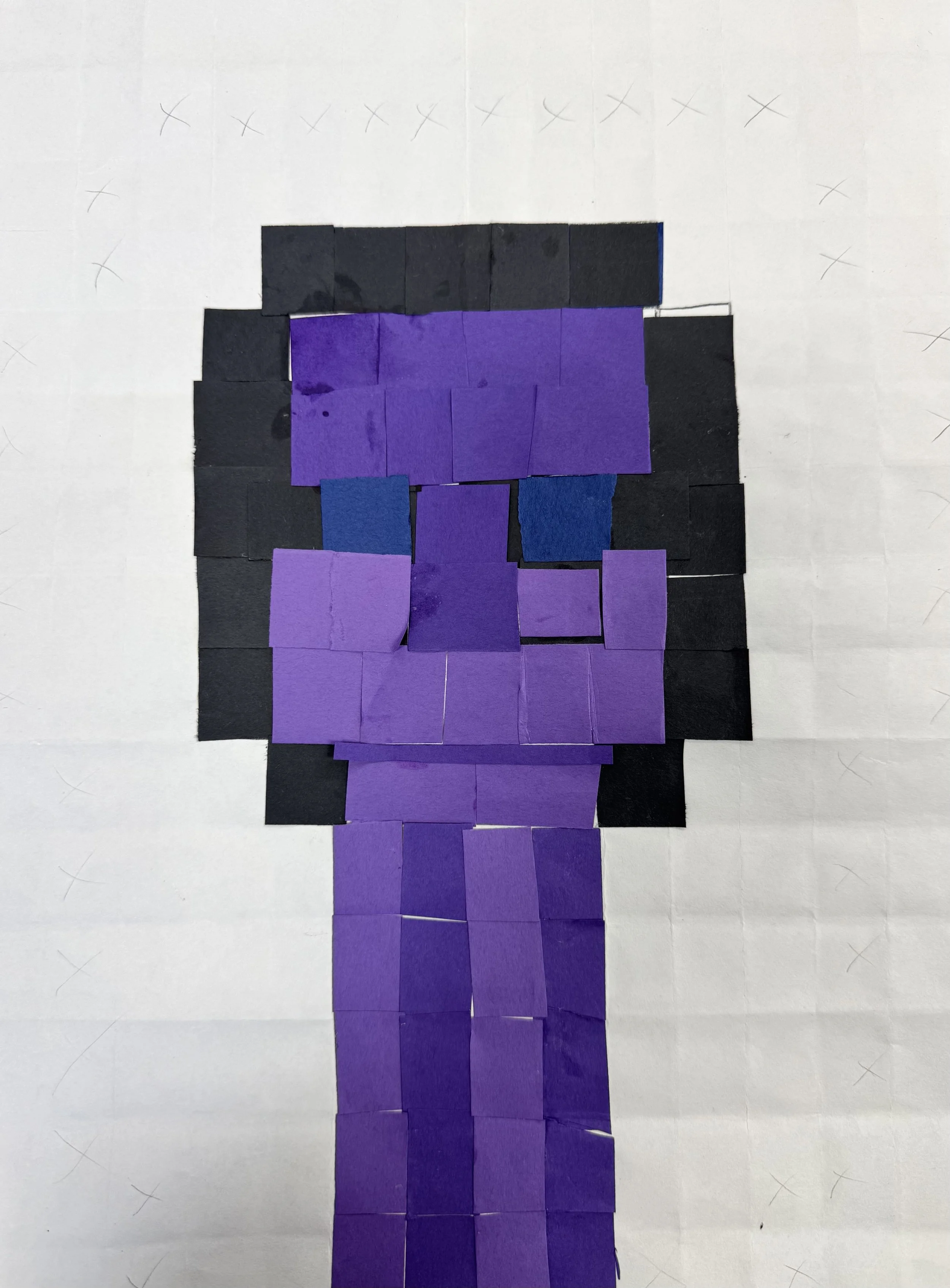
Each student designed an original monster, then translated it onto a grid, simplifying curves into pixels and coloring each square by hand. In the final lesson, they rebuilt their monsters once more as paper collages cut from individual squares—watching the same image transform from sketch to pixel to material.
4th–5th Grade · 3-Day Lesson · Hayt Elementary, CPS
From sketch to pixel grid to paper collage student's monster across all three stages of the project.